




More oil and gas fields must be developed: Petronas chief
More oil and gas fields must be developed to help ease energy industry volatility in the longer term, the head of Malaysia's national energy firm Petronas said on Monday.
More oil and gas fields must be developed to help ease energy industry volatility in the longer term, the head of Malaysia's national energy firm Petronas said on Monday.
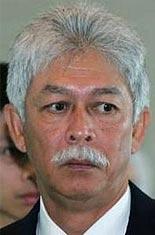 Petronas president and chief executive Hassan Marican told an Asian oil and gas conference that signs point to a new cycle of volatility after a sharp drop in crude prices from mid-2008 highs and growing spare capacity.
He said that "in order to moderate the volatility inherent in the industry cycle, the clear imperative is to continue to develop oil and gas fields without excessive disruption due to market conditions."
The pace of industry contraction is close to levels seen in the early 1980s, with oil prices falling from a high of US$147 per barrel in July 2008 to US$35 per barrel in early 2009, he said.
"There have been signs that the market is beginning to correct itself, as oil prices have strengthened in recent weeks," Hassan said, but added that it was unclear if this was due to economic recovery or speculation.
Opec: Keep price above US$70 per barrel
The benchmark New York light sweet crude contract for July breached US$70 for the first time in seven months last week and hovered around US$68 per barrel in Asian trading on Monday after investors took profits.
After almost a decade of limited growth, spare crude oil capacity in 2009 is expected to rise to 6.4 million barrels per day, equivalent to about 8 percent of world oil demand, Hassan said.
While this has yet to achieve the peak of 17 percent of demand in 1985, the current spare capacity and additional output from new projects coming onstream show "the conditions are clearly in place for a repeat of the cycle" of volatility, he said.
Malaysian Prime Minister Najib Razak also called for the development of more reserves to address future demand, even though growth may be more modest in the next five years than earlier projections.
Opec Secretary General Abdalla El-Badri said in April that the cartel wants to see oil prices rising to more than US$70 a barrel in order to pay for future development.
"The price which allows reasonable and acceptable revenues is more than 70 dollars a barrel," said the head of the Organization of Petroleum Exporting Countries, which pumps about 40 percent of the world's oil.


Are you sure you want to delete this comment?
This action cannot be undone.