




Pig farmers, pork sellers lock hooves over price
Temperatures soared during a meeting between pig farmers and pork sellers in Putrajaya on Tuesday. It was the first meeting between the two parties in five years.
Temperatures soared during a meeting between pig farmers and pork sellers in Putrajaya on Tuesday. It was the first meeting between the two parties in five years.
However, a fierce quarrel erupted when they failed to reach a common understanding on the price of pork meat.
According to reports, the tension escalated when the pork sellers interrupted the pig farmers as they were talking and called them 'cheaters and robbers'.
The meeting was organised by Domestic Trade and Consumer Affairs Deputy Minister Tan Lian Hoe.
Sin Chew Daily reported that pork sellers wanted the price to be set at RM6.30 per kg while pig farmers believed that RM7 per kg was reasonable.
 "We (pig farmers) know more about the cost of raising pigs," said Federation of Livestock Farmers' Association of Malaysia (FLFAM) Pig Unit chairperson Beh Kin Hee.
“We calculate the pork meat price based on the cost, we cannot do anything if the pork sellers refuse to believe our judgements,” he told Malaysiakini .
"The cost of producing one kg of pork is RM6.60, and we are only charging the pork sellers RM7.00 per kg, consider the fact that we need to spend 10 to 12 months to raise a pig until it is mature enough to be sold, this is a very reasonable price," he added.
 When contacted, chairperson of the National Pork Sellers Association (NPSA) Goh Chui Lai responded to Beh's statements by saying that "pig farmers are the ones who raise the pigs, and the pork sellers cannot do anything but to accept the prices set by them."
Pig farmers and pork sellers have always disagreed over the price.
Pig farmers have suffered losses
Over the past few months, due to the continuous increase in the cost of raising pig, pig farmers were forced to impose several increases on the price of pork meat.
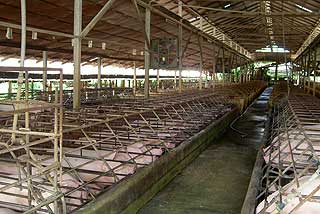 The final increase was on last Sunday, when FLFAM decided on a 30sen increase, raising the price of pork meat from RM6.70 to RM7.00, the highest in five years.
Since then the discord between the two parties has escalated.
NPSA has accused FLFAM of "manipulating" the price by using "excuses" such as increase in the price of imported fodders.
"The truth is, pig farmers did suffer losses several years ago due to the great increase in the price of imported fodders," Beh said.
"At that time we were forced to increase the pork meat price to cover our losses. Although today the price of imported fodders has gone down, we are only making little profit, we cannot reduce the pork meat price because we still need to cover the losses incurre
"We have submitted evidences and information to the Ministry of Domestic Trade and Consumer Affairs to prove that we are not cheating the pork sellers about the increased price of pork meat," he added.
Following the 'unpleasant meeting', Beh said FLFAM has decided to stop quoting pork meat price in Chinese newspapers on a weekly basis and has decided to let market forces determine the price.
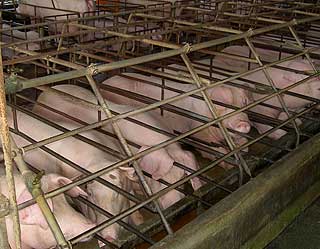 "We will then observe the market's response to this policy (free-float pricing) for three months, and then discuss the next step with the ministry.
"Tan had announced that her ministry will soon create a set of guidelines on pork pricing based on the suggestions from FLFAM and NPSA," he added.
On the other hand, Goh said Tan has assured that these guidelines will strive to protect the interests of all parties including the farmers, the sellers and consumers.
MCA Youth Federal Territory chairperson Chiew Lian Keng said that free-float pricing will not cause any harm to the market of pork meat.
However, he warned of the risk where the price may get too high if no control is imposed and the consumers will suffer.
Imported pork meat
Meanwhile, Goh suggested another solution to solve the price disputes, which is to open up the imports of pork meat from overseas in order to meet the current excess demand.
"With the equilibrium of supply and demand being reached, the price of pork meat will be stabilised again," he said.
MCA's Chiew however questioned the feasibility of this idea, saying it will restrict the opportunities for local pork meat producers to expand their business as competition from overseas increase.
He said the enduring disputes between the pig farmers and pork sellers cannot be solved just by one meeting, both parties need to calm down and decide on a solution together.
Asked whether there will be any future discussions held between NPSA and FLFAM, Goh reacted negatively.
"There is nothing left to be discussed between the pig farmers and us (pork sellers), it's all down to the government to decide on how to solve this problem," he said.
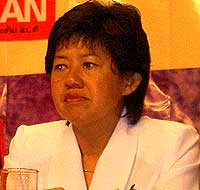 Tan said the ministry is now waiting for FLFAM to submit its proposal so that they can set up a system to monitor the price in each area.
"We must wait for FLFAM to submit their memorandum on the cost and profit before we can go into further research and meet with all parties to settle the problem," she said.
Tan said the ministry will not include pork as a control item to
control the price.


Are you sure you want to delete this comment?
This action cannot be undone.