




Thumbs down for 'selective liberalisation'
Sabah manufacturers are unhappy that the federal government is taking a politically expedient cosmetic approach to the National Cabotage Policy and ignoring the gross economic distortions left in its wake.
Sabah manufacturers are unhappy that the federal government is taking a politically expedient cosmetic approach to the National Cabotage Policy and ignoring the gross economic distortions left in its wake.
The Ministry of Transport announced a "selective liberalisation" last week of the 30-year policy which bars foreign vessels from trade in Malaysian waters.
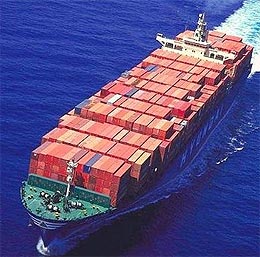 "The selective liberalisation does not go far enough after negatively affecting, directly, or indirectly, the livelihood of the people of Sabah and well as industries all these years," said Federation of Sabah Manufacturers (FSM) president Wong Ken Thau.
"Selective liberalisation only involves transhipment of containerised overseas cargo from the Peninsula to Sabah or vice versa. This is a very small sector and involves less than 200 containers a month," he added.
The ports involved in the selective liberalisation are Klang, Tanjung Pelepas, Kuching, Bintulu and Sepanggar.
The selective liberalisation allows foreign vessels to carry containerised overseas cargo transhipment between these ports from June 3 without the need for a domestic licence, according to a statement from the ministry on May 29.
The implication is that no foreign vessel is likely to be interested in plying the Peninsular Malaysia-Sabah or Sarawak route because of the unattractive load factor for containerised overseas cargo on transhipment.
Also, there is hardly any transhipment of containerised overseas cargo from Malaysian Borneo to the Peninsula. This effectively makes the selective liberalisation of the National Cabotage Policy a non-starter.
"The chances of lowering freight prices may take even longer until there is enough volume to attract foreign vessels to enter the transhipment of containerised overseas cargo in Malaysian waters," said Wong.
"This means that local shipping companies will continue to monopolise this so-called liberalised sector and continue to impose punitive freight charges," he added.
Ministry being held to ransom
Wong is in no doubt that the ministry, helmed by a succession of MCA appointees, is still being held to ransom by the rich and powerful shipping lobby in Kuala Lumpur because of their ties to party leaders.
FSM concedes that the ministry wants to ensure the survival of the Malaysian shipping industry but points out that this continues to be done at the expense of consumers and industries in Sabah.
The result, according to FSM studies, is that manufacturing’s contribution to the state’s GDP (gross domestic product) has dropped from 25 percent over the years to nine percent today.
In the meantime, the shipping industry in Malaysia has grown from four ships to 3,400 ships, according to the latest figures released by the Malaysian Shipping Association (Masa).
"By right, the government should consider giving a matching grant or subsidy to local importers and exporters in Sabah to counter manufacturing’s decline in the GDP but this has not been done either," lamented Wong.
The FSM chief hopes that the federal government would once and for all review the National Cabotage Policy “because the time has come for such an exercise so that it will benefit all industries and not just the shipping industry.”
“In the spirit of 1Malaysia, let’s hope the federal government can do this,” said Wong.
“Let’s not have a policy that only benefits some people. While the government protects the shipping industry, it must not forget the other industries,” he added.
For starters, FSM wants the federal government to step in and allow foreign vessels to freely ply the waters between Peninsular Malaysia and Malaysian Borneo.
Their cargo should not be just restricted to containerised overseas cargo on transhipment, according to Wong, but be extended to also include goods manufactured locally, whether in the peninsula, Sabah or Sarawak.
In making the call, the FSM is aware that “the government may find it difficult to open up and allow foreign vessels to take locally-manufactured goods from the Peninsula to Sabah and Sarawak and vice versa because of the powerful shipping industry lobby which can dictate to the MCA.”
Sabah shipping company
Alternatively, Wong proposes that the Sepanggar Container Port in Kota Kinabalu be officially declared as the international hub port for the region. This is expected to encourage the Malaysian shipping industry to opt for mergers to make it more competitive and efficient.
"Most of the vessels entering Sabah waters are really very old and not efficient at all. The shipping industry is making money but it is not willing to re-invest in new ships to better service the industries and the people," he charged.
"Perhaps, it's high time that the state government set up a shipping company under the Sabah Development Corridor. The federal government should support such an idea by way of a launching grant and soft loans.
"The Sabah shipping company can counter the cartel that Masa has since become over the years," he added.
Wong also reiterated his call for the establishment of a board or monitoring body to probe the transparency of the high freight and other charges levied by local shippers in Malaysian waters.
Masa, in a statement, swore that it would resist any attempt to abolish the National Cabotage Policy and warned that "it (the abolishment) would cause huge collateral damage to the Malaysian shipping industry and also undermine national interests."
Masa chairperson Nordin Mat Yusoff claims that shipping costs made up only 46 percent of a shipper's total transportation and logistics costs and "therefore the shippers cannot be blamed solely for the higher costs of goods in Sabah and Sarawak."
He blames other elements in the transport and logistics cost as well as weaknesses in the supply chain for the higher costs of goods in Malaysian Borneo.
"The National Cabotage Policy must also not be blamed for the reluctance of foreign vessels to call at Malaysian ports in Borneo," said Nordin.
"Other factors like volume of cargo, remoteness, infrastructure and performance of the ports should also be considered.
"Masa is not a cartel seeking refuge in the National Cabotage Policy. There are other shipping companies out there for shippers to shop around for freight rates that suit them," he added.
Analysts in the know point out that consumer prices are generally inelastic when shipping charges or fuel oil prices drop but are quick to respond with increases when freight and energy cost more in the market.
The result is a continuous inflationary spiral which eats into stagnant wages in a small domestic economy, driving local labour to look elsewhere even as cheaper illegal immigrant workers pour in and foreign investors are reluctant to include Sabah and Sarawak in their portfolio.


