




British Parliament to select new Speaker
A Sikh MP and a cat-loving ex-minister are among the contenders as Britain's Parliament seeks a new Speaker and a fresh start after an expenses scandal which sparked a political crisis.
Ten members of Parliament are battling for the job of Speaker of the House of Commons, a role which dates back 600 years and is the public face and top authority of the lower house.
A Sikh MP and a cat-loving ex-minister are among the contenders as Britain's Parliament seeks a new Speaker and a fresh start after an expenses scandal which sparked a political crisis.
Ten members of Parliament are battling for the job of Speaker of the House of Commons, a role which dates back 600 years and is the public face and top authority of the lower house.
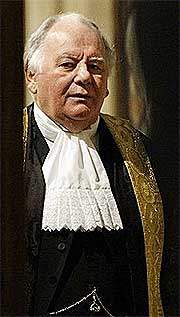 The current Speaker, Michael Martin, steps down today after suffering the humiliation of being the first to be forced out since 1695.
Martin - the highest-profile scalp in a controversy which has claimed some 20 MPs in recent weeks - quit last month after losing authority over his resistance to shaking up the expenses system.
Some say his successor must be a reforming Speaker determined to restore public trust - but there are fears MPs could instead end up with another political lightweight.
"We could easily end up electing a not very good Speaker again," Professor Philip Cowley of Nottingham University told AFP .
"Issues about reform that are not about making MPs lives' easier, that's the interest of a minority of MPs."
The new Speaker will be elected by a secret ballot of all 646 MPs.
The bookmakers' favourite is John Bercow, a Conservative who provokes fury among many on his own side for his perceived Labour sympathies.
Speaker must be politically neutral
Other contenders include Parmjit Dhanda - a Labour former trade union organiser and Sikh - and Conservative right-winger Ann Widdecombe, nicknamed Doris Karloff after 1930s "Frankenstein" actor Boris Karloff, partly for her no-nonsense views.
The job requires the holder to be politically neutral and involves chairing debates in the House of Commons, selecting who can speak and curbing MPs' rowdy behaviour using the famous cry: "Order, order!"
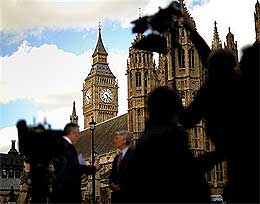 In the current political climate, there is also an expectation in some quarters this time round that the Speaker will be a figurehead for lawmakers trying to regain the trust of voters.
"The brutal fact is that the reputation of Parliament is at rock bottom," Bercow wrote in his manifesto for the job.
"The next Speaker faces an unprecedented challenge - to help clean up politics... and to build a relationship of mutual respect with the electorate.
"Above all, the Speaker must be part of the solution and must drive the process of renewal."
The candidates are mostly standing on a platform of change. But most are also either former ministers or have spent decades in the Commons, in line with a tradition of the Speaker being a senior MP.
Even though the Speaker could not directly propose reforms on expenses, a powerful figure in the chair could work behind the scenes either to ease their passage or damage them.
Should do away with the costumes
He or she could also give the Commons a more modern face by breaking down some of its mystique and making it more accessible.
Martin, by contrast, was suspicious of the media and, in Cowley's words, "fought against transparency to the death".
"The next Speaker should do away with the costumes and the rituals, make the language and the proceedings more straightforward, give media interviews... and by personifying a modern approach, put pressure on the party leaders to make their moves too," commentator Steve Richards wrote in the Independent recently.
But some say it could be unrealistic to hope for too much by way of reform from a new Speaker.
"In one sense, who better than the Speaker to give a lead but in another sense, he's a creature of the House of Commons," Colin Seymour-Ure, emeritus professor of politics at the University of Kent, said.
"Unless the party leaders and whips all agree on a new set of rules... it's not going to work." - AFP


