




Outrage over British massacre decision
Family members today expressed outrage over Britain's refusal to hold an inquiry into the massacre of 24 unarmed villagers by British troops in 1948.
Family members today expressed outrage over Britain's refusal to hold an inquiry into the massacre of 24 unarmed villagers by British troops in 1948.
After a decades-long campaign for an official probe, a British foreign office spokesperson confirmed government lawyers have issued a letter indicating a provisional decision to reject any investigation.
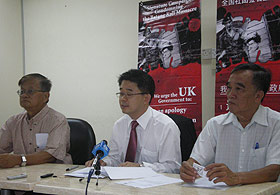 "It is a sickening disappointment for all the victims' families because all the British government has done is prolong their suffering," said Quek Ngee Meng (
centre
), who represents the families.
"It is a sickening disappointment for all the victims' families because all the British government has done is prolong their suffering," said Quek Ngee Meng (
centre
), who represents the families.
The letter, a copy of which was provided to AFP , says the government was willing to listen to further submissions but did not say when a final decision would be made.
"The government is saying that because these events happened so long ago it is hard to find out what happened, but there should not be a sell-by date for justice," said Quek.
"They are depriving these people of recognition of the crimes committed against their relatives and compensation for the suffering they have gone through over the last 61 years."
The "Batang Kali massacre" occurred in a village in central Selangor state on Dec 12, 1948, when 14 members of the Scots Guards killed 24 unarmed ethnic Chinese and torched their village.
British colonial authorities said at the time of the incident - at the beginning of a 12-year communist insurgency in the former Malaya - that the men were shot because they were suspected guerrillas fleeing the scene.
Quek said his group would now approach British lawmakers in a bid to have them raise the issue in parliament "to seek justice".
In April, the British government agreed to re-examine an earlier decision to reject a probe which activists have been campaigning for since 1993.
Victim still feels hurt
Quek said nine former British soldiers and four Malaysians who witnessed the events had been traced, but they are all elderly and could all be dead unless an inquiry is held soon.
The Batang Kali incident was explained away in 1948 with the then Malayan attorney general saying an inquiry had been held and the troops vindicated, although no trace of this investigation has been found.
The massacre remained largely forgotten until 1970 when a British newspaper ran an explosive account of the killings, publishing sworn affidavits by several soldiers involved who admitted the villagers were shot in cold blood.
The revelations triggered uproar in Britain but a promised investigation was later dropped after a change in government.
The guerrilla war left thousands dead and formally ended only in 1989 with the signing of a peace treaty with the Malayan Communist Party.
One of the last Malaysian survivors of the massacre told AFP in a tearful interview last year that she still vividly remembered what she called "the day the British killed our men".
"After so much time, it still hurts me every time I talk about it, I remember it just like yesterday," said Tham Yong, a 78-year-old who is now battling throat cancer after spending decades fighting for compensation.
- AFP


