




Seeing REDD over deforestation
REDD. Not the colour red. Rather, the concept "REDD" - Reduction of Emissions from Deforestation and Degradation. A concept set to be debated upon by the United Nations Framework Convention on Climate Change (UNFCCC) at the Copenhagen summit at the end of this year, a concept which could greatly influence the global climate regime post 2012.
REDD. Not the colour red. Rather, the concept "REDD" - Reduction of Emissions from Deforestation and Degradation. A concept set to be debated upon by the United Nations Framework Convention on Climate Change (UNFCCC) at the Copenhagen summit at the end of this year, a concept which could greatly influence the global climate regime post 2012.
But why should we, in Malaysia, be so interested in deforestation and degradation?
Deforestation and forest degradation make up 20 percent of global anthropogenic greenhouse gas emissions, second only to the combustion of fossil fuels; it is the largest source of greenhouse gas emissions in the developing world today. How does this happen? Well, trees are a large source of oxygen and remove carbon dioxide from the atmosphere through photosynthesis, thus functioning as huge stores of carbon.
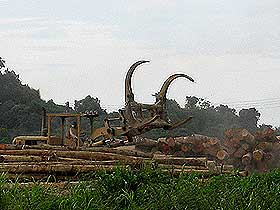 Deforestation not only destroys these large stores of carbon, but also releases more carbon dioxide when these trees either rot or are burnt; the result is an overall increase in the concentration of atmospheric carbon dioxide, a major contributor of greenhouse gases.
Furthermore, over half of all the water circulating in a forest ecosystem remains within the plants and trees. With deforestation, the ecosystem cannot hold as much water, resulting in a drier climate. Trees also help cool the air through evapotranspiration. The loss of trees through deforestation thus results in hotter temperatures.
Tropical forests thus contribute immensely to mankind by providing ecosystem services such as the sequestration of carbon, the regulation of macro and micro climate, the protection of water resources and soils, as well as the conservation of biodiversity and the alleviation of poverty.
Despite this, we lose roughly 13 million hectares of tropical rainforests annually due to deforestation and forest degradation, simply because it is more profitable, in financial terms, to cut down forests rather than look after them. This is where REDD comes in.
REDD is essentially a proposal whereby developed nations, seeking to meet commitments under international agreements such as the Kyoto Protocol, provide compensation and financial incentives to developing nations, to help them voluntarily reduce national deforestation rates and associated carbon emissions below a baseline. Should a country be able to demonstrate successful emission reductions below this baseline, then they may sell these carbon credits on the international carbon trading market, thereby combating climate change and meeting environmental and socioeconomic goals of sustainable development.
On the surface, it's an ingenious concept
A REDD strategy need not refer solely to the establishment of national parks or protected areas; by the careful design of rules, modalities and guidelines, REDD could include land use practices such as shifting cultivation by indigenous peoples and strictly enforced reduced impact logging (RIL), provided sustainable rotation and harvesting cycles can be demonstrated.
On the surface, it is an ingenious concept that could not only combat climate change, but also generate funds for the conservation of tropical forests in developing nations. Two of our neighbours, Indonesia and Papua New Guinea, have already initiated projects in this direction, with the assistance of Australia's International Forest Carbon Initiative.
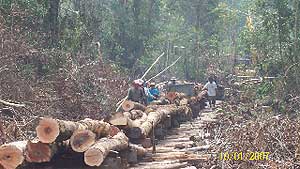 There are, however, certain issues we need to consider should we choose to embrace REDD and implement a national REDD mechanism. First of all, we need to ask ourselves whether we want to engage in a concept which is inherently anti-poor, a concept whereby the underlying principle is "pay the polluter", rather than "the polluter pays".
You see, under an REDD mechanism, carbon offsets must satisfy an "additionality" criterion whereby it needs to be shown that carbon gains would not have happened without a carbon payment. For example, carbon storage would not be additional if forest management is economically viable for timber and oil palm plantations or if there is no threat to the forest.
It will only be additional should forest management be unviable and forests are under threat of deforestation. This means that the "winners" under an REDD mechanism are countries, companies and individuals who have contributed the most to deforestation and degradation in the past as they pose the greatest threat to the forests; incentives will be given to these parties so that they switch to managing standing forests more responsibly. Ironically, those who have conserved their forests all along will be ignored. This seems rather unfair as it rewards those who have engaged in deforestation and ignores those who have had the foresight to conserve their forests.
Another thought is the ambiguity within the UNFCCC's definitions of "forest" and "deforestation". Are plantations considered the same as complex, biodiverse natural forests? Would the clearing and conversion of primary natural forests to plantations be classified as deforestation?
Similarly, what is the definition of "degradation"? Ideally, it should be based on the natural carbon carrying capacity of the forest, hence enabling this parameter to be used as a baseline for the assessments of changes in carbon stocks (emissions from degradation). This will ensure that the carbon accounts show that conversion from natural forest to plantations not only results in high emissions, but also results in carbon stocks that are well below the carbon carrying capacity of the forests they have replaced.
Furthermore, unsustainable timber production and the over-harvesting of fuel wood would unquestionably constitute degradation under this definition whereas sustainable logging and shifting cultivation, which result in a shifting mosaic of cleared areas without long term net emissions, may be considered to cause only minimal degradation.
This would obviously be an incentive for timber companies to practise Reduced Impact Logging (RIL) and for indigenous and poor communities to ensure that intensive land uses and related degradation does not occur as the real value of the carbon stock of the forest has been established and they are the beneficiaries of its protection.
Another point in this regard is that definitions which focus solely on canopy extent exclude peatlands, the largest source of emissions from deforestation and degradation. Peatlands cover just 3% of the Earth's land surface, yet contain twice as much carbon as the entire world's forest biomass, making them the largest and most concentrated reservoir of carbon of all terrestrial ecosystems.
In Malaysia, emissions from peatlands are mostly due to changes in their hydrological regime rather than changes in forest cover. So will the drainage and degradation of peatlands (which do not necessarily result in a loss of canopy cover) be considered as "deforestation"? Peatland conservation and rehabilitation are more efficient undertakings than reducing deforestation due to the much larger reduced emissions achievable per unit area and the much lower opportunity costs involved. Hence, it will be detrimental to countries like Malaysia if peatlands were excluded from REDD incentives due to inappropriate definitions.
Real and justified fear
REDD causes a very real and justified fear among many indigenous and poor communities as the introduction of carbon rights over land occupied and used by their peoples may further compromise their land tenure and use of the land. The increased monetary value placed on standing forest resources opens the door for corruption, tempting the government to evict indigenous and poor communities from protected areas and ignoring customary tenure and other property rights as stipulated under the UN Declaration on the Rights of Indigenous Peoples. If Native Customary Rights (NCR) are neither respected nor upheld, REDD will result in increased levels of corruption and indigenous communities will face increased levels of poverty and alienation from their native lands. Even if NCR are respected, how will REDD incentives be channelled to local communities and farmers? These are critical aspects of an REDD mechanism which need to be looked into.
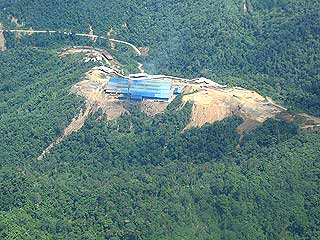 We all have a common responsibility towards reducing greenhouse gas emissions. However this responsibility, though common, is differentiated. Although emissions from deforestation in developing countries constitute a significant portion of the total greenhouse gas emissions, it must be remembered that the main cause of climate change is the emissions from fossil fuel combustion in developed countries.
There is the inherent risk that a massive influx of REDD credits into the existing carbon market would reduce the price of carbon, thereby weakening the incentive to reduce emissions from fossil fuels already agreed upon by the developed world. Why? Because they can simply continue consuming inequitably and unsustainably by funding cheaper carbon offsets in developing countries such as Malaysia.
This is a legitimate concern as many consider the REDD program as a form of "carbon colonialism", whereby the World Bank and the developed nations use the REDD mechanism as a vehicle to project a "green" image by giving generous grants and funds to reduce deforestation in developing nations while at the same time, continue to waste energy and extract fossil fuels as their consumptions will now be offset since they have bought the right to continue polluting. This is extremely counterproductive as it diverts critical resources and attention away from measures to address fossil fuel consumption and the underlying causes of deforestation: corruption, weak forest governance, poverty and the ever growing demand for timber, biofuels and other natural resources.
It is obvious that carbon sequestration accounting in the form of an international REDD regime holds enormous promise not only in terms of combating climate change, but also in generating funds for the conservation of tropical forests in developing nations. However, it is also very obvious that there is still much uncertainty about the form of a future REDD regime, as it faces some very tough challenges that need to be addressed before it can be a truly effective and equitable force in the international arena.
Developing nations should view REDD as an incentive to strengthen governance and combat corruption, improve institutional and regulatory frameworks and policies, build capacity, address poverty and land tenure issues among indigenous and local communities and increase stakeholder participation in sustainable forestry, all with increased transparency and accountability. Developed nations on the other hand, should use the REDD initiative to create a strong demand for emission reductions by maintaining stringent emission targets and ensuring that REDD does not replace other emission reduction efforts.
They should also directly address the underlying cause of deforestation which is their insatiable demand for timber, biofuels and other natural resources. It is crucial that reducing emissions from deforestation is seen as more than simply an exercise in carbon accounting but rather, as a valuable opportunity to help solve what is essentially not a technological problem, but a political one.
JOHN MATHAI is a Kuching-based wildlife ecologist who works for international NGO, the Wildlife Conservation Society (WCS).


Are you sure you want to delete this comment?
This action cannot be undone.