




Red tide event at dangerous level in Sabah waters
Sabah waters along the West Coast have been hit by the Red Tide Phenomenon (RTP) which is at an extremely dangerous level and is expected to prevail until March next year.
Sabah waters along the West Coast have been hit by the Red Tide Phenomenon (RTP) which is at an extremely dangerous level is expected to prevail until March next year.
The situation is expected to worsen from December to February when unusually heavy rains fall.
Sabah Department of Fisheries (SDF) director Rayner Steul Galid said the detection was made in recent days under its year-long Red Tide Monitoring Programme (RTMP).
"The SFD has detected a high presence of Paralytic Shell Fish Poisoning (PSP) toxins in samples of kerang-kerangan (bivalves)," said Galid. "Samples taken from Sepanggar Bay and Pulau Gaya and in the waters off Kota Kinabalu and Tuaran show high levels of PSP toxins."
Four-hundred Mouse Units (MU) is the lowest danger-level for humans. Samples taken by the SFD showed levels of up to 5,000 MU.
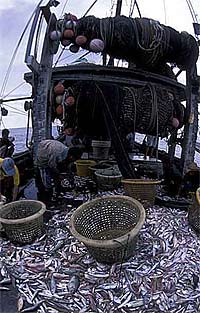 The RTP, according to Galid, seems to be also spreading to the Sitompok Lake area of Kuala Penyu and Papar along the West Coast.
"There is a high possibility that adjoining districts will be affected as well," warned Galid.
Samples of tiram and dalus taken by the SFD at the weekly tamu (fair) in Donggongon and Penampang also contain near-toxic levels of PSP. A public alert has been issued.
They are advised to refrain from collecting shellfish including tiram (sea oysters), kupang (mussels), kerang (cockles), bivalves (remis, dalus, lokan) and any type of clam-like seafood and bivalves, either for consumption, sale to members of the public or export.
According to Galid, the types of seafood that are safe to eat include all types of prawns and crabs including shovel-nosed lobsters, mantis shrimps, all types of coral fish and fish which are predatory such as sharks and stingrays, barracuda, tenggiri, jacks and deep sea fish.
A danger to human life
However, consumers are advised to throw away the guts and gills of any fish and wash the remainder properly before cooking them for consumption.
Cage fish operators are being advised by the SFD to be on the lookout for "algal blooms" as it can suffocate the fish. This happens when the oxygen content in water is depleted by the RTP.
Any type of dried, canned, bottled or salted products is safe to be eaten, according to the SFD.
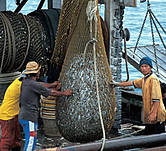 Anyone with symptoms such as tingling of lips and tongue, prickly sensation on the skin and difficulties in breathing after eating sea food food, said Galid, "must seek medical attention and treatment immediately at the nearest hospital or clinic". Failure to do so may result in the victim going into shock and cardiac arrest.
The RTP is caused by a "population explosion" of toxic, naturally occurring microscopic plankton, specifically a sub-group known as dinoflagellates. The population explosion imparts a brownish-red colour to the sea surface.
"These micro-organisms usually do not represent a health threat. It is only when they eaten in large numbers by filter feeding sealife such as shellfish that render these shellfish toxic because of the accumulation in their guts," said Galid. "Some fish which eat these organisms or other sea life that eat the dinoflagellates can also become toxic."
The RTP, according to Galid, could also be caused by the increase in nutrients in the sea because of the more than usual churning of the sea bed. Another cause may be because of the extended lower temperature brought about by the rains especially during the heavy season, he added.


Are you sure you want to delete this comment?
This action cannot be undone.