




MCA: Another promise of greater unity
At hastily arranged press conference yesterday, embattled MCA president Ong Tee Keat announced a "greater unity plan," in an apparent a move to end the internal feuding.
At hastily arranged press conference yesterday, embattled MCA president Ong Tee Keat announced a "greater unity plan," in an apparent a move to end the internal feuding.
A year of acrimonious in-fighting culminated in the dramatic sacking of his deputy Chua Soi Lek and this triggered an extraordinary general meeting on Oct 10.
T
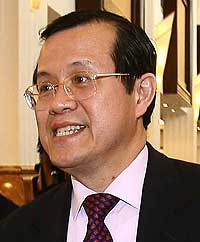 he EGM, instead of resolving the leadership dispute, escalated and complicated the crisis when Ong (
right
) refused to step down after a no-confidence vote was passed against him.
he EGM, instead of resolving the leadership dispute, escalated and complicated the crisis when Ong (
right
) refused to step down after a no-confidence vote was passed against him.
Ong's comrade-in-arms and newly-elected deputy Liow Tiong Lai was accused of deserting him in the central committee, triggering cries of betrayals and back-stabbing.
The turning point came yesterday with the announcement of the peace initiative supposedly brokered and endorsed by PM Najib Abdul Razak.
Will peace and harmony return now to a party infamous for its leadership crises throughout its 60-year history? Stanley Koh talks to Malaysiakini on the latest twists and turns.
Malaysiakini : What are your views on the latest development, the peace compromise made by the principal factional leaders yesterday?
 Koh:
As a party member since 1982 and having worked for the party over a period of 28 years, I have had witnessed many peace plans. I have also heard rhetorical speeches by leaders on party unity during the Tan Koon Swan versus Neo Yee Pan and the protracted Ling Liong Sik versus Lim Ah Lek leadership succession plan.
Koh:
As a party member since 1982 and having worked for the party over a period of 28 years, I have had witnessed many peace plans. I have also heard rhetorical speeches by leaders on party unity during the Tan Koon Swan versus Neo Yee Pan and the protracted Ling Liong Sik versus Lim Ah Lek leadership succession plan.
You can re-package it under whatever label, "greater unity plans" or "peace formula." Unless the leaders walk the talk and are committed, and have the political will to work together, they will remain masters in the art of deception. Party unity is a process and not an end product. Like a happy marriage, it needs constant caring, affection and cooperation between the partners.
With the benefit of hindsight, what do you think went wrong?
After a year of internal feuding, I received much feedback from the ground that this crisis was completely unnecessary. It could have been avoided if only the president displayed wisdom and acumen in handling the situation. I think there is much merit in a Chinese saying which goes like this, 'It is easier to change one's profession than to change one's own character. So I remain sceptical about this peace plan.
A common view is that Ong has failed as a MCA leader. He failed to reach out to those who didn't necessarily share his views and he failed miserably as a team leader. Now he is talking about unity. Will he walk his talk? Or will he justify later, like he is trying to justify now why he should continue as president?
Did this announcement come as a surprise? There seems to be a denial that this moment of peace was actually pressured by its BN partner, Umno?
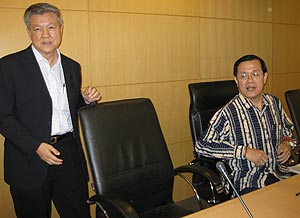 There could be two contributing factors. It does not matter whether the leadership is denying any links to the prime minister. Anyone reading the newspapers knows both the prime minister and his deputy gave clear indications of the formula to end the crisis. That is, using the outcome of the EGM as the basis to bring peace back to the party.
Of course, the leadership needed some face-saving gestures since they claimed that they themselves are capable of resolving its internal crisis. On the other hand, only gullible Malaysians will believe that this peace call was a spontaneous move, or it suddenly happened out of the blue without external pressure. The more important point is, will this be temporary or will it bring about lasting peace?
Compared to past crises and peace plans, is this crisis more complicated to resolve?
Remember, past crises in MCA lasted more than one year. They were issue-driven unlike now. You don't need a Buddhist master to tell you that this current crisis stems from poor leadership and a hawkish personality who had spent more time waging war, instead of promoting goodwill and strengthening unity. Some call this reforming the party. I guess this must be a newly-minted method, or a strange political culture.
The bitter lesson is you can never be sure a good candidate is going to make a good president even if he claims to have courage and armed with promises to create new values. Effective leadership means more than having good rhetorical ability and the ability to sack subordinates with tainted background.
What was the turning point?
After the EGM, there was a breakaway faction within the ranks which was loyal to the president. Some remarked teasingly that the party was akin to the Chinese classical legend, the warring three kingdoms. Others were beginning to compare the Ong-led party leadership to that of former acting president Neo Yee Pan, infamous for his sacking of central committee members.
In the recent episode, those who broke ranks from the president were accused of betrayal despite the much publicised "1 MCA Team" slogan which lasted hardly a week.
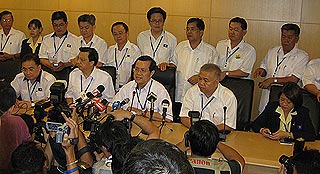 Some claimed that this peace plan was inevitable when the warring factions suddenly realised that they held a 50:50 voting bloc between them. Ong would rather everybody had amnesia and forget his public pledge to step down. He is now justifying why he should stay on in his post despite a no-confidence vote against him.
It was followed by more dramatic scenes of Ong's comrades-in-arm being accused of betraying him. Added on to this, Chua's faction is staying on the sidelines, watching the disintegration of support for the president. Realising this catch-22 scenario and coupled with major signals from the top Umno leadership, came the turning point. Perhaps, those engaging in the power-tussle suddenly realised something needed to be done to change the negative equation of a "no win-win" situation. Of course, Umno's strong signals woke up the leadership.
You mentioned betrayal by the president's men?
In Asian political culture, loyalty and patronage come first. Principles and values seem unimportant within political parties no matter what leaders tell the voting public to the contrary. Generally speaking, in this country, a failed presidency already eclipsed by ebbing public support can still get voted within a political party. His spinners can generate propaganda to indoctrinate public opinion that he is indispensable because he is a hero. Never mind a vote of no-confidence as it could be inconclusive. This is our political culture.
What I'm saying is that, this interpretation as "betrayal" can be quite convincing and many will swallow this, hook, line and sinker. If you are not loyal and fail to deliver your patronage and support even if the leader has done wrong, one can be branded as a traitor or betrayer. In the MCA's case, hopefully the Malaysian public can judge better. But when leaders back track on their open pledges and promises, and yet trumpet that individual's interest as less important than party's interest, and do not walk the talk, it paints a different picture. It is the true test of the leader's level of integrity and credibility.
In the light of this new development within MCA, do you see a more united party leadership heading towards the next general election?
Judging by the press statements issued, there is little (information) conveyed to the public, just a lot of rhetoric, words like wanting to "forgive and forget, greater unity plans, strengthening the party and regaining confidence etc.
Like the Chinese idiom says, "yuan mu qiu yu," a lot of time has been wasted by this leadership. Instead of implementing tangible reforms, effort has been wasted organising the EGM, travelling around and campaigning for personal political survival. Yes, this leadership for the past one year has been like climbing a tree to catch fish.
Any predictions on the leadership being successful in uniting the party?
I won't dare make predictions on this unity thing. Ong is a shrewd leader who can overturn and upset any prediction. Most political observers predicted he would step down but it did not happen. I guess those who made this prediction were not wrong, including me, because they like me had assumed it would happen on the basis of integrity and principle.
I was also shouted down by a wanita leader when I remarked that the peace plan came about because of Umno's pressure. She accused me of knowing "nuts" about the inside running of the party leadership.
 In short, my reply is, as far as uniting the party is concerned, Tan Koon Swan and Ling Liong Sik (
right
)were effective leaders compared to Ong despite the unique crises of their times. Ling did not sack a single top leader despite facing two major leadership challenges over a span of 18 years. Within a year, on record, the Ong leadership has already sacked two leaders. You can make your own predictions, but sorry, no prizes (given).
In short, my reply is, as far as uniting the party is concerned, Tan Koon Swan and Ling Liong Sik (
right
)were effective leaders compared to Ong despite the unique crises of their times. Ling did not sack a single top leader despite facing two major leadership challenges over a span of 18 years. Within a year, on record, the Ong leadership has already sacked two leaders. You can make your own predictions, but sorry, no prizes (given).
Do you see any winners and losers in this so-called 'greater unity plan'?
Under this leadership, nothing comes across as transparent. I think this vague plan, with no details have been disclosed so far. Probably like a movie serial, more details will emerge in later episodes.
The public has been kept in the dark, normal in political negotiations. I guess peace can come about if all factions are satisfied with "sharing" posts and positions in government and within the party.
 I think Ong will be one of the winners, managing to keep his cake and eat it too. He may continue his presidency. Chua may be another winner having a fair share of his supporters in party and government posts. That includes a possible conclusion soon to be given by the Registrar of Societies. Don't be surprised if Chua is re-instated as deputy. Nothing will be a surprise if a status quo formula is indeed being implemented in stages.
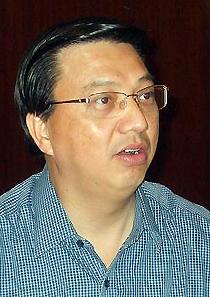
Liow Tiong Lai ( left ) is a loser until he proves his lost loyalty again. The so-called third force comprises "have been" leaders who have been shut out without an EGM. They've lost the opportunity to bask in glory again.
I also think, there will be rumblings within the youth and women's wings led by Wee Ka Siong and Chew Mei Fun when they return home from their overseas trips. They are also losers.


Are you sure you want to delete this comment?
This action cannot be undone.