




S'gor won't fight over 'secret' Hazardous Map report
Selangor government has chosen to refrain from disclosing another red-taped report - the Hazardous Map - following a recent major controversy over the Bukit Antarabangsa landslide report declassification.
Selangor government has chosen to refrain from disclosing another red-taped report - the Hazardous Map - following a recent major controversy over the Bukit Antarabangsa landslide report declassification.
The Hazardous Map report, which was released on Sept 11 - earlier than that of Bukit Antarabangsa landslide report - to Ampang Jaya Municipal Council (MPAJ), indicates the level of risk in residential areas in Hulu Klang.
 Although the state government had earlier
intended
to declassify the report, state executive councillor Ronnie Liu (
right
) told
Malaysiakini
that this time around, "we are leaving the ball at the cabinet's court".
Although the state government had earlier
intended
to declassify the report, state executive councillor Ronnie Liu (
right
) told
Malaysiakini
that this time around, "we are leaving the ball at the cabinet's court".
"They are the owner of the report and it seems that there's no one else except them with the power to disclose such reports.
"If we do it, then we would go to jail," said Liu, sarcastically.
The cabinet has yesterday decided to declassify the Bukit Antarabangsa landslide report after coming under pressure from the Selangor government.
Liu said that the state government will nevertheless make use of the classified Hazardous Map report to "implement preventive measures to prevent another disaster without disclosing it".
This, he said, will be done through a task force set up by Selangor Menteri Besar Abdul Khalid Ibrahim and led by the MPAJ president, which had been activated two days ago.
"The task force will understand the issue based on the information in the report. Once they identify the issues and critical problems, they will carry out the necessary work based on this knowledge," he said.
Refusing to reveal further details on the 'critical issues', Liu said the task force is currently monitoring the hills deemed not suited for housing development.
"So based on these problems, we have to come up with measures that could stabilise the slopes," he said.
Repairs could cost more than RM500 million
Although Hulu Klang is dubbed as one of the most popular residential areas in Klang Valley, several landslides have occurred there mainly due to deforestation.
According to Liu, most parts of Hulu Klang - which are not suitable for housing development - need repairing, especially the drainage system to prevent further accidents and the rough cost could well over RM500 million.
"
 For instance, Bukit Antarabangsa is not suitable at all for development. There are a lot of things that need to be fixed there because over so many years, it has shown some signs (of instability).
"MPAJ has estimated that more than RM500 million is needed. This amount shocked me, but they (MPAJ) explained that each housing area required about RM10 million for repair work," he said.
Furthermore, said Liu, the cost could balloon because the research on hillside development is also costly.
"Before we do any necessary work, we need to have engineers to study the area, and this definitely costs money too," he said.
But his lament is that the state government has insufficient funds to undertake such projects as the "federal government has no mechanism for such purposes".
"However, the task force will do the necessary repairs and things that in our jurisdiction, we leave the rest to the federal government," he said.
Hulu Klang comprises 10 residential areas including Bukit Antarabangsa, Villa Sri Ukay, Taman Hillview, Ukay Heights, Ukay Perdana, Estana Court, Kemansah Heights, Dataran Ukay, Taman Sri Ukay and Taman Pinggiran Ukay.
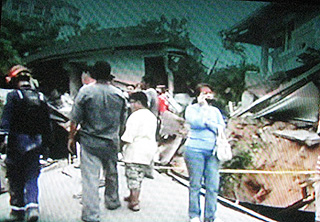
Over the years, the residential areas have become prone to disastrous landslides including the Highland Towers collapse, Taman Hillview bungalow collapse and the latest Bukit Antarabangsa landslide, all claiming many lives.


Are you sure you want to delete this comment?
This action cannot be undone.