




Double trouble in Sabah labour market
The Sabah government sees employees in the state as "overworked and underpaid" - a double syndrome. As locals seek their fortunes elsewhere, more foreigners are flooding in to fill the gap between supply and demand in the local job market.
The Sabah government sees employees in the state as "overworked and underpaid" - a double syndrome. As locals seek their fortunes elsewhere, more foreigners are flooding in to fill the gap between supply and demand in the local job market.
At last count, the estimate was 1.7 million foreigners in Sabah.
"The people, especially locals, find it hard make ends meet with the high living costs," said State Minister for Tourism, Culture and Environment Masidi Manjun.
He was speaking at a MTUC/ILO conference on 'Realisation of Decent Work' in Kota Kinabalu yesterday.
Masidi reiterated the double syndrome was the reason why many locals chose to work outside Sabah because they can earn more, thus depriving the state of their skills.
The solution, said Masidi, was in creating a minimum-maximum wage range to address the salary dilemma faced by employees, local and foreign, in the state.
 "A minimum salary will ensure local workers would not flee because they can live comfortably. If local workers stay home, there would be no reason to hire foreigners as at present," he said.
"It is important that workers are paid accordingly. How can one live on a salary of RM250 or even RM400 per month. It's not enough to support the family," added Masidi.
"Even the workers' welfare and rights are not protected. We must not treat our workers like slaves."
Masidi, however, acknowledged that the minimum wage idea is easier said than done since many multinational companies "are more powerful than the government of Malaysia".
The minister also took time off to point out the pitfalls to the Sabah MTUC's proposal that a minimum wage be set at RM900 per month for a bachelor to survive in urban areas.
The Sabah MTUC proposal, based on the Thai and Indian models, has been gathering dust at the Ministry of Human Resources.
While it is not in the interest of the government to tolerate employers paying their workers poorly, it had no choice but remain silent in the face of global economic trends, said Masidi.
"If Sabah, and Malaysia, fix a minimum wage, foreign investments will stop flowing in and those already here will probably move to Vietnam and Indonesia," he said.
Driven by plentiful supplies of cheap labour, these emerging economic powerhouses are a threat to Malaysia, according to the government's analysis of foreign investments trends.
Exodus of workers
The hope lies in wage rates in Indonesia and Vietnam rising to the levels in Malaysia, noted Masidi. This is already happening in the oil palm industry in Indonesia.
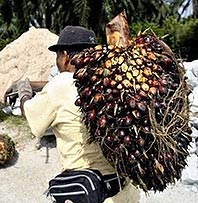 "Wages are already as high as that in Malaysia and in many cases even higher. So, there's an outward rush of Indonesian workers in the Sabah oil palm sector," said Masidi.
In the meantime, locals who stay home to compete with the influx of foreign workers, present a dilemma all its own which has political ramifications for the state government.
Masidi cited the refusal of hotels and private lounges in the state to employ local entertainers examples of double standards that Sabahans face in their own land.
"I have seen how staff are treated when it comes to eating, for example," said Masidi. "Foreigners are allowed to eat in the premises but not locals. This discrimination must end."
Masidi related his personal experiences to drive home the point of the hardships he had to face in various different jobs before settling into his current position as a minster.
"I know the difficult and easy parts of life," said Masidi. "I was lucky. I had the chance to go up step by step. That way, you tend to appreciate whatever you have."
The Sabah state government, Masidi assures, takes a serious note of employers discriminating against local workers on the perception that foreign workers are somehow better.
"This colonial mentality must be discarded as locals are capable, hardworking and loyal. Where foreigners are better, it's because they have been exposed to the workplace far longer," he said.


Are you sure you want to delete this comment?
This action cannot be undone.