




CIA may take advantage of Allah issue: PPIM
Malaysian Islamic Consumer Association (PPIM) President Ma'amor Osman is concerned that the Central Intelligence Agency (CIA) may take advantage of the Allah issue in Malaysia.
Malaysian Islamic Consumer Association (PPIM) President Ma'amor Osman is concerned that the Central Intelligence Agency (CIA) may take advantage of the Allah issue in Malaysia.
"I'm worried that this is an opportunity for CIA to destroy our country. They (America) will not be satisfied if they see a strong Malaysia or Indonesia," he said.
Ma'amor was commenting on the possibility that the recent attacks on places of worship might have connections to other religious conflicts around the globe.
11 churches, four mosques, and a temple had been vandalised following the outbreak of anger at last month's Kuala Lumpur High Court overturning the ban on the Catholic weekly magazine, Herald's use of the word ‘Allah' in its publication.
"We saw how... after we gained independence without bloodshed, there were groups who said that there would be chaos and Malaysia would be destroyed. They were happy when May 13 happened. But after May 13, we emerged stronger and greater. We created the Rukun Negara and the social contract," he said.
Who's adding oil to fire?
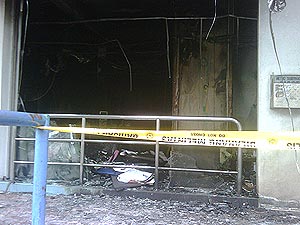 "The disturbance at the churches are merely provocation from those trying to take advantage of the situation, stressed Malay Empowerment Group (TERAS) President, Mohd Azmi, who was asked to comment on the recent string attacks on places of worship.
"This should not be interpreted as a conflict between different religions but rather a conflict between those who are adamant about not accepting reality, against the anger of those who felt that they have been challenged," he added.
Ma'amor added: "We feel that their (Herald) motive is to test how far the government will go to defend the special status of Muslims and Islam."
He pointed out that this is putting a lot of pressure on the government because the international community will perceive this as minorities being discriminated - even though this is untrue.
Former Perlis Mufti Asri Mohd Zainal Abidin also acknowledged that there is genuine anger among Muslims over this issue but they would not attack places of worship.
"If these desecrations keeps happening, my concern is that it is because there are parties who are trying to prolong this matter," he said.
No to ISA
When asked to comment on the ‘Control and Restriction of the Propagation of Non-Islamic Religions Enactment' in 10 states that prohibit the use of the word ‘Allah' as well as other Islamic words by non-Muslims, Asri said that he is in favour of revising it.
Pointing out that the name of Allah is also used on police berets worn by non-Muslim personnel, he said: "I'm worried that if we make laws that put a blanket ban on non-Muslims, there will be abuse of the law in future."
 Giving an example, Asri (
left)
said that the Internal Security Act (ISA) was designed to detain communists but had also been used against politicians.
Giving an example, Asri (
left)
said that the Internal Security Act (ISA) was designed to detain communists but had also been used against politicians.
Ma'amor conceded that if the issue could not be solved through discussion, the state enactments prohibiting the use of the word ‘Allah' should be enforced.
As for states without such laws, he offered, "The Agong with the endorsement of the Conference of Rulers can consult the Federal Court before coming out with an edict. I believe that this edict will be binding."
Concerring, Azmi said: "The absence of such enactments at the federal level should not be an obstacle because the Agong still has the power to ensure that Islam's position is not challenged."
However, all three were against the use of the Internal Security Act (ISA) on issues of this nature.
Ma'amor acknowledged that the ISA has to some extent contributed to the progress of race and religious relations but noted that it was not something to be used at a whim.
Azmi, too, stressed that the existing laws are enough to punish those responsible.
"The ISA is not necessary as it will only add to the dissatisfaction among people," he explained.


Are you sure you want to delete this comment?
This action cannot be undone.