




Umno's risky strategy to win Malay votes
The caning of three women under Islamic law is the latest move by the government to woo conservative Muslims, a risky tactic that could cause a backlash by ethnic minorities and damage economic reforms.
The canings came hot on the heels of a row over the use of the word ‘Allah’ by Malay-speaking Christians that triggered attacks on churches and mosques and ahead of another court case over Christians' right to use the word.
The punishments have been endorsed by officials from Umno, the party of Prime Minister Najib Razak...
The caning of three women under Islamic law is the latest move by the government to woo conservative Muslims, a risky tactic that could cause a backlash by ethnic minorities and damage economic reforms.
The canings came hot on the heels of a row over the use of the word ‘Allah’ by Malay-speaking Christians that triggered attacks on churches and mosques and ahead of another court case tomorrow over Christians' right to use the word.
The punishments have been endorsed by officials from Umno, the party of Prime Minister Najib Razak.
 Najib says he is committed to economic reforms to roll back preferential treatment for ethnic Malays, but he is desperate not to alienate the 55 percent of the population that is Malay and Muslim and is the cornerstone of support for the Barisan Nasional after ethnic Chinese and Indian voters deserted it at the 2008 general election.
"There is an overt thinking by many in Umno that it is going to be difficult to regain lost support especially among the Chinese," said Ibrahim Suffian, director of the Merdeka Center, an independent polling organisation.
The controversies have registered with fund managers who last year asked Najib in New York about the beer drinking case during a roadshow to promote reforms and win investment that has increasingly chosen Indonesia and Thailand.
A Merdeka poll showed about two-thirds of Malays find Islamic punishments for immoral behaviour appealing and Umno now finds itself battling a resurgent Islamic party for those votes.
 Malaysia's economy leaked a net US$2.5 billion of portfolio investment in the first three quarters of 2009, according to the latest available government data, while neighbouring Indonesia saw US$10 billion inflows for all of 2009.
Analysts say the religions issue could cause economic damage.
"The unanticipated backlash, both domestically and internationally, could distract Najib from tackling some of the larger economic problems," political analyst Ong Kian Ming said.
Caning issue a ‘political bait’
As Najib has unveiled economic reforms that have started to scratch away at a decades-old New Economic Policy (NEP) that gave preferences to Malays, groups have started to sprout up to
defend Malay rights, seen as synonymous with Islam, leading to a ratcheting up of ethnic and religious tensions.
It is predominantly poorer Malays who will be hit by a new goods and services tax and the removal of fuel and food subsidies to shrink a budget deficit that hit a more than 20-year high of 7.4 percent of gross domestic product in 2008.
"With a large number of Malays relatively low income and more dependent on government assistance and services, any cutbacks might pose to be a challenge (for the government),"
said Ibrahim.
Some Malays have set up an organisation called ‘Perkasa’ (Strength) to defend their rights including privileges under the NEP. They endorse the canings and Islamic punishments.
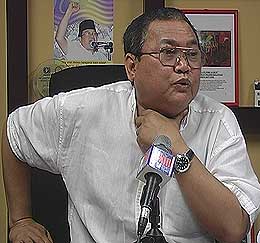 "Many Malays support the canings and even PAS has been left behind on this as I was expecting that canings would first take place in Kelantan and Kedah (two PAS-ruled states)," said
Perkasa leader Ibrahim Ali, an independent MP and former deputy minister.
While the canings may appeal to ‘conservatives’ and to rural Malays, PAS only broke out of its rural strongholds when it successfully allied with a mainly ethnic Chinese party and reformists in a grouping led by former deputy premier Anwar Ibrahim, himself a former Islamist student leader.
PAS proved astute in handling the attacks on churches, by showing solidarity with Christians while Najib bridled at suggestions that the government had fostered an atmosphere of hatred that had lead to the attacks.
PAS officials say Umno's approach on the canings was a political ploy to win over the 15 percent of Malays who remain undecided as well as to split PAS from its ethnic Chinese allies.
"The caning issue is just political bait," said Dzulkifli Ahmad, a senior PAS official.
"Because if you take them on their own argument, then the question they need to answer is do they really want to take it all the way and have full implementation of Islamic law?"
- Reuters


