




Miti sec-gen justifies AP giveaway
Speaking to Malaysiakini, M inistry of International Trade and Industry secretary-general Abdul Rahman Mamat explained the reasoning behind extending the grant of Approved Permits (AP) to state assemblypersons.
Speaking to Malaysiakini , Ministry of International Trade and Industry secretary-general Abdul Rahman Mamat explained the reasoning behind extending the grant of Approved Permits (AP) to state assemblypersons.
 In an exclusive interview at his office in Jalan Duta last Friday, Abdul Rahman (
right
) also refuted claims of widespread abuse of APs by elected representatives.
In an exclusive interview at his office in Jalan Duta last Friday, Abdul Rahman (
right
) also refuted claims of widespread abuse of APs by elected representatives.
He said the few cases of abuse are being monitored and would be dealt with.
Abdul Rahman also said the ministry has also instituted new transparent guidelines and safeguards to ensure that there is no abuse.
He also reiterated the government's stand on why APs are not distributed by open tender and clarified some other concerns with the AP system in general.
Below are excerpts from Malaysiakini's exclusive with Abdul Rahman, edited for brevity and content:
Malaysiakini: How did the idea come about?
Abdul Rahman Mamat: It was a government decision.
Why APs for foreign cars?
I am not in a position to question that decision, I am just an implementer. I am sure the government has looked into various aspects.
 APs are to be phased out by 2015, why expand the practice to assemblypersons?
We have been giving APs to parliamentarians since 1997. Recently the government extended it to assemblypersons at the state level as well. Because of that and in the interest of being transparent, we have issued clear and transparent guidelines to ensure it is fully understood and only those entitled (to APs) will enjoy the facility.
The reason why the 13-year-old policy was extended to assemblypersons is because or their contribution to the country.
How will it affect the second-hand car market?
The government has looked at every angle and (found that) it does not have much impact on the economy in general. They (the politicians) are entitled to much more than that. Since 1997, politicians have only imported roughly 500 units in the last 13 years. On a yearly basis, 500 divided by 13: that is not much.
How many APs for the industry per year?
 It depends. But it was roughly 20,000 last year but not all were utilised.
What about possible abuses by elected representatives. How do you monitor them?
There are some abuses. But the number of abuses are not that many. I would like to curb (the misconception that there is rampant abuse).
Miti has a proper database; we have registered the IC numbers and chassis numbers. The application must be endorsed by the parliament office and state exco office - there are checks and balances there.
Miti also has a system to monitor their names. This can only be used once; once used (the AP holder) is off the list forever. It is very easy to countercheck and we have a condition that they cannot sell the cars (immediately).
The condition requiring no sale of the vehicle for two years was just set recently?
Yes. we have improved (the guidelines). The government has given some conditions to curb abuse...also for all other private AP holders, similar conditions were imposed.
Can an elected representative get two APs?
With the extension to the state level, if they hold two elected positions that is where that comes in. If you are just an MP you get only one. If you are holding two (elected positions) you can get two maximum but you can only use or get them once.
I want to make it very clear that having an AP doesn't mean that they can skip the taxes. They (still) have to pay import duty and adhere to the conditions imposed. They must keep (the cars) under their names for two years. If the cars are second-hand, then no less than five years.
Do they need to pay the RM10,000 per AP?
No, this AP falls under the private category. Students and Malaysian expatriates come under that category.
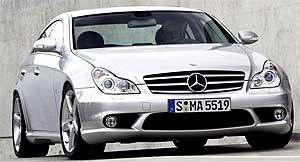 List of MPs who have used APs?
That is not relevant, it is just a policy now. We just wait for them to apply and then we process (their applications). There is no discrimination (between) opposition or government, government or state; the government is very fair and very transparent (in this).
But in general, 500 APs have been utilised by parliamentarians since 1997, under the private category.
Not everyone takes advantage of this. The tax is still expensive and to do the importing themselves, they may end up paying more. If an AP came with exemption from duties, that is something else. Here, the AP comes with import duties and conditions.
I have seen some MPs say that it is cheaper to buy from local dealers than to import direct. There are no exemptions.
What about the list of MPs who abuse APs?
We don't have the figures. They fall under the private category. This is not our core business. Our main purview is international trade.
In general why do we still have APs?
I refer to the National Automotive Policy (NAP) announced last year. Under the NAP, the government made the decision by 2015 to remove APs. The gradual elimination has already been put in place; there is a roadmap for this. We have explained this to the industry.
To remove or make drastic policy changes, there are other implications. We have to make sure industry players will continue doing their business, with no disruption to the existing arrangements in the country, especially in the auto sector.
The auto sector is a very sensitive sector and very highly competitive with multinationals in the fray. You know even GM and Chrysler are having problems especially during difficult times.
It is moving towards becoming market-driven, but it cannot do so drastically. We are afraid that the entire sector will be wiped out if we don't manage it properly.
What about the suggestion by some quarters to distribute the AP by open tender?
 The government has decided that RM10,000 per AP is the way to go. We have new guidelines and a roadmap in the NAP. To implement open tender before abolition is not as easy and as straightforward as in construction tenders. Dealers put investment in showrooms and employees. If you lose the tender you are out of business. These are the considerations.
What about complaints of AP holders selling their APs?
We are addressing this. There are some abuses, but we do regular audits.
Those who abuse APs? How many and what have you done?
We are not letting it go. There are 157 companies indicted so far. We have been monitoring, (them). We have evidence and we are taking action.
AP for state reps: 'Do they deserve it?'


Are you sure you want to delete this comment?
This action cannot be undone.