




No plan to turn pension fund into Islamic EPF
State pension fund, the Employees Provident Fund (EPF), wants government institutions to further reduce their ownership in the stock market to create greater liquidity, said its chief today.
State pension fund, the Employees Provident Fund (EPF), wants government institutions to further reduce their ownership in the stock market to create greater liquidity, said its chief today.
 The fund, with about RM360 billion in assets, is one of the largest investors on the local stock market.
The fund recently said it plans to increase its overseas investments to 10 percent of its total assets from about 6 percent currently and Prime Minister Najib Abdul Razak said in his 'New Economic Model' for Malaysia announced on Tuesday that this process should accelerate.
Here are highlights from Reuters' interview with its chief executive officer Azlan Zainol, who rarely speaks to the press.
On sales of stakes in GLCs
"We would love to see all the other institutions like Khazanah sell down their stocks so that there'll be a bit more liquidity for these stocks for other institutions to come in.
But for EPF, we have an internal limit that we can go to (for) each stock and we've kept it at a good level for us to ensure that these counters are not blocked up by the big local institutions.
Sure we will sell down on some of those stocks that we think are fundamentally good to exit and already have good value. But if we do, it will be on a structured basis, slowly.
But that does not mean that we would not come in again if the timing is right. We are different (from Khazanah and PNB). Khazanah is very strategic.
We're quite happy. But we also do not want them to disrupt the market by dumping all their shares in one day. They also have got to do it in a structured way otherwise we would be affected."
On EPF's impact on the stock market
"It's true that EPF is a major player in the market but it's never our intention to push the market up nor down. We do not manipulate the market. Let's be very frank about it - we don't manipulate the market.
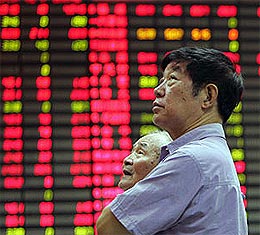 But sometimes, as the prime minister said (on Tuesday), on a quiet day we could be having a 40 percent, 50 percent share of the trade on the day. But on a normal day, it's very, very much less than that.
Because our volume is big, we tend to, as we buy in even how slowly it is, the market will move a bit. But that's because of the nature of our market here. But if you say the question is that it will make it a less attractive destination for institutional foreign investors, I think that's not true.
There are a good number of stocks on our Bursa that a lot of foreigners invest (in)."
On EPF's asset allocation strategy
"We have our asset classes that we have to look at in order to give a yield of 2.5 percent, that is a guaranteed yield.
We're always mindful of that plus the preservation of capital. Because of that, we need to have a very conservative asset class and we can't gamble away and put 100 percent of our assets in equity for example.
We need to have a mixture of government securities, government bonds, Treasury assets, property and so forth. Our allocation for equity, we can go up to 30 percent but going overseas I would feel a comfortable level for us is about 15 percent of our total funds and in various asset classes."
On EPF's Islamic investments
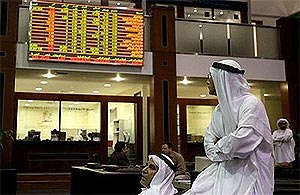 "We will invest in Islamic assets if they can give us better value. Right now if you look at the bond market, between the Islamic bonds and conventional bonds, Islamic bonds seem to give a better yield than the conventional bonds.
We have no particular (plan) to try and turn the EPF into an Islamic EPF, for example, we don't have that, nor do we have a target say we must have 70 percent of Islamic assets. We just look at value."
On Hong Leong Bank's buyout offer for EON Capital
"We are supportive of this deal, because we feel that Malaysia needs to reduce the number of banks in this country, we need to have a smaller number of banks in this country, I believe in that.
As far as EPF is concerned, we have not really looked at the figures and details. When a decision needs to be made, I am
sure our investment management committee will make a decision that will be in the best interest of our members.
It does look attractive from Hong Leong's point of view. At 1.3 times book, it's a reasonably good price, and we are in Hong Leong so we are quite happy. We would have loved Hong Leong to buy cheaper."
On Astro's privatisation plan
"There's no specific document to come to us yet. When it comes, at 4.30 ringgit, we will have to look at it and make a decision.
As CEO of EPF, I share the sentiment of the chairman of the Securities Commission (Zarinah Anwar), that she's very unhappy
that a lot of companies are going private.
I would like to more big companies that are listed, I am not happy that companies get delisted then it reduces one more
investment opportunity for us."
- Reuters


Are you sure you want to delete this comment?
This action cannot be undone.