




Ku Li runs into hornet's nest in Sabah
Tengku Razaleigh Hamzah's rare foray into Kota Kinabalu last night for an invitational talk, ‘Minyak Sabah, Untuk Siapa?' - Sabah's oil for whom? - was more than a walk down memory lane for the former Petronas chairman and finance minister.
Tengku Razaleigh Hamzah's rare foray into Kota Kinabalu last night for an invitational talk, ‘Minyak Sabah, Untuk Siapa?' - Sabah's oil for whom? - was more than a walk down memory lane for the former Petronas chairman and finance minister.
The management of the country's energy reserves is his new constituency on a political comeback trail.
It was also a sounding board of sorts for Sabahans to express their unhappiness over the state's dubious distinction of being among the poorest states in the country, despite its considerable oil and gas reserves.
"
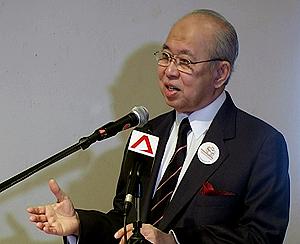 It is not for me to advise the Sabah government," pleaded Kelantan Umno strongman Razaleigh, or Ku Li, in fielding questions from the floor in Bahasa Malaysia and English.
This was at the end of his talk on the history and future of the oil and gas industry in Sabah.
Former Sabah state secretary and current Suhakam vice-chairman Simon Sipaun moderated.
Ku Li conceded that the state could have done much better given its considerable resources.
Value of speaking up in time
He places the blame for the unhappiness among Sabahans over their relative economic backwardness on the people and leaders not speaking up enough.
The shipment of Sabah gas to Sarawak for the LNG complex in Bintulu, a case in point, was cited when it came under question.
The decision did not make sense to the audience when the state was facing chronic power shortage and "being forced at the same time into accepting the dirtier coal option".
"I can't tell you why Sabah gas is being shipped to Sarawak when it is badly needed here to meet the power shortage," confessed Ku Li. "I am sad to learn this. I have often wondered about this myself."
He said such a situation had never risen during his stewardship of the national oil corporation.
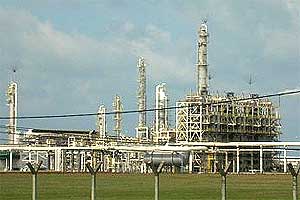 He stressed that there was no reason why the state could have LNG facilities just like Sarawak in Bintulu when Sabah's proven gas reserves were much larger.
"The people and their leaders can stake their demands here."
They can be dragged to court
A member of the audience wanted to know whether the state government could take the federal government and Petronas to court to recover the state's oil and gas rights.
Ku Li assured the skeptical crowd that the oil agreement between the Sabah state government on the one hand and Petronas and the federal Government, on the other, did indeed exist.
Besides, it was very much valid, he said. "Some constitutional experts in Kuala Lumpur were not quite right on the matter. The oil agreement is not against the Federal Constitution as they claim."
Former Sepa (Sabah Environment Protection Association) Secretary-General S. M. Muthu wanted the 5 per cent royalty collected by the state to be substituted with equity instead in the national oil corporation.
There is nothing to prevent the state government, pointed out Ku Li, from re-negotiating the oil and gas agreement with the federal government and Petronas or even going to court.
As an example, he cited the ability of Petronas and the federal government to recover vast concession areas in Malaysia which had been granted in perpetuity by the colonial British administration to international oil companies.
"The oil companies refused to recognise Petronas or re-negotiate what they had obtained from the British," recalled Ku Li. "Eventually, they came around when we employed a carrot and stick approach."
Queue of unanswered questions
He described the Petroleum Development Act as the stick but declined to dwell on the carrot after Kota Kinabalu lawyer Christina Liew raised a question.
She wanted to know whether six Petronas option holders had tied up 80 per cent of the country's oil production on 30-year leases.
Liew went largely unanswered as Ku Li described this approach as something from the past. The country wanted to wrest back its oil and gas reserves which had been given away by its colonial masters before independence, Ku Li explained.
It was not clear whether the options were the price the country had to pay in getting the oil contractors to cave in and re-negotiate their perpetual leases. Left unsaid was whether Malaysians were among the option holders.
One poser from the floor was whether Petronas's production estimates were reliable amidst public speculation that "the country's oil and gas is being stolen in mid-sea by rogue elements.
Sad history of rights signed away
"Anything is possible in theory but highly unlikely in practice," said Ku Li. "The production and export figures match. All of Petronas production is exported."
Cigma (Common Interest Group Malaysia) chair Jeffrey Kitingan queried the nature and structure of the oft-mentioned Production Sharing Contracts (PSC).
His query was followed by one from Malaysiakini on whether the PSC gave 10 per cent royalty to the federal Government, 20 per cent to the oil contractor as cost oil and 70 per cent of the balance 70 per cent to Petronas (49 percent) and 30 per cent of the balance 70 per cent to the oil contractor (21 per cent).
To recap: Federal Government 10 per cent oil royalty; oil contractor 20 per cent for cost oil: Petronas 49 per cent (revenue); and oil contractor 21 per cent (revenue).
"The PSC varies from place to place, field to field, well to well," said Ku Li briefly. "Generally, the PSC means 70 per cent to Petronas and 30 per cent to the oil contractor."
Ku Li does not think that Petronas was taking too large a slice of the pie considering the "paltry" 5 per cent which Sabah and Sarawak receive in the form of royalty and Kelantan and Terengganu as wang ehsan (compensation money).
"We must remember that Petronas is investing heavily overseas especially in Sudan, Iraq, Iran and elsewhere," said Ku Li. "All this needs considerable resources especially since we can run out of local oil by as early as 2014."
Asked about Petronas's "find of the century" which made headlines recently when Ku Li made the claim, he pointed out that it had already been denied by the national oil corporation.
"I was told about it by a geologist working with a company contracted by Petronas," he said. "But since they have denied it, there is nothing more to be said."
 Questions on oil and gas reserves in Timor Leste - speculated to be "the find of the century" - Natuna Islands, Spratly Islands, and Ambalat near Tawau were raised.
"The reserves in Natuna, not far from Sarawak, belong entirely to Indonesia," was all Ku Li would venture to comment.
Earlier in his brief 30-minute talk, Ku Li went through the early history of Petronas and how Sabah and Sarawak signed away their oil and gas rights to the federal government and the national oil corporation.
"Every time I am in Sabah, I am reminded of the tragic death of former Chief Minister Donald Fuad Stephens in an air crash in 1976 just as his plane was approaching Kota Kinabalu," said Ku Li as a hush fell over the audience.
"I was also seated in the same plane next to him in Labuan, my seat belt on. Then his deputy, Harris Salleh, insisted that I and two others get off the plane and follow him to Pulau Bangi to inspect a cattle rearing project."
The audience could not understand how the Deputy Chief Minister, in breach of protocol and good manners, could pull out the Finance Minister and Petronas chairman who was seated next to his boss, the Chief Minister.
Besides, the cattle rearing project was not as important as the oil agreement which was supposed to be signed in Labuan but delayed to later in the day in Kota Kinabalu.
Ku Li, in response to a question from Malaysiakini during question time, denied that Stephens had refused to sign the agreement.
"Stephens agreed to accept the Sarawak model which Chief Minister Abdul Rahman Yakub had signed," he said.
Ku Li's talk was organised by the United Sabah Dusun Association (Usda) headed by Kalakau Untol, formerly a member of the federal cabinet during the administration of Dr Mahathir Mohamad.
Kalakau recently quit Upko (United Pasok Momogun KadazanDusunMurut Organisation) headed by Federal Minister Bernard Dompok and joined the PKR.


Are you sure you want to delete this comment?
This action cannot be undone.