




Swiftlet rearers in Sabah sore over ban
Swiftlet entrepreneurs in Sabah are refusing to comply with a state government ban imposed last weekend on their trade in Kota Kinabalu, Sandakan and Tawau.
Swiftlet entrepreneurs in Sabah are refusing to comply with a state government ban imposed last weekend on their trade in Kota Kinabalu, Sandakan and Tawau.
The ban was imposed on health and environmental grounds.
It's just impossible to shift the birds out of their comfy homes in urban areas, said the Sabah Swiftlet House and Bird Nest Industry Association (SHoBNIA), who would rather wait for the guidelines promised by the federal government on proper swiftlet farming practice.
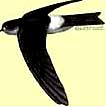 The association cites experience elsewhere to stress that the birds would not re-adapt to the wild and would continue to return to the same buildings to nest.
In Bintulu, birds started nesting outside the building when there was no more space inside.
"The state government should not just rush into this but allow us time to help re-shape the industry," said SHoBNIA president George Ng. "There's no evidence that swiftlets or swallows carry the avian flu or other diseases."
He pooh-poohed suggestions by the state government that the bird houses in towns attracted colonies of snakes, lizards and pests like cockroaches besides giving off a stink from the droppings.
No reservations
Ng claimed that the World Health Organisation (WHO) has no reservations against swiftlet farming in town areas. He also pointed out that bird farming is carried out even in bigger cities like Ipoh and Johor Baru and saw no reason why there should be a blanket ban on the trade in the comparatively smaller main urban centres in Sabah.
The SHoBNIA chief drew attention to the large flocks of pigeons that have made Jalan Gaya in downtown Kota Kinabalu, and the nearby Kampung Air and Tanjung Aru as their nesting grounds. These birds, according to him, are even noisier and dirtier than swiftlets and swallows but "the authorities are turning a blind eye to the problem".
One perennial complaint not acted upon by City Hall is that the birds rain their droppings every night from their perches in trees on parked vehicles, taxi stands and park benches below.
"Most swiftlet farms in town areas use music to attract the birds to return home but it will be turned off by 7.30 pm," said Ng in denying that the industry was a source of noise pollution as well. "I think that the karaoke centres are even noisier than our music and they go on the whole night."
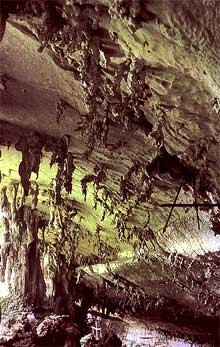 He does not deny that unlike karaoke music which people generally enjoy, bird houses employ more boring kinds of music. This includes music to attract the birds, the sounds of young birds asking for food and mating sounds to lure young swifts to enter the bird houses.
Sarawak has clear policy
Ng wants Sabah to take a leaf from neighbouring Sarawak which has a clear cut policy on bird nest farming. The policy provides for a one-stop centre where entrepreneurs can apply for licences from, among others, the health, environment, land and survey authorities. Sarawak disallows bird farms near educational, health and religious facilities.
"Following Sarawak's example will be the right approach for all of us since the industry promises good economic returns," said Ng. "We hope that the state government will be willing to enter into a dialogue with us before enforcing the ban."
The Sarawak model, according to SHoBNIA, calls for the establishment of eco-parks - "well-planned, sustainable and eco-friendly" - across the state for the purpose of bird farming. The eco-parks, on eight hectare sites, encourage joint-ventures and makes available technical advice from a firm of swiftlet farming experts.
He did not say what SHoBNIA's options would be if the state government snubs its attempts to initiate a dialogue on the ban.
Kimanis state assemblyperson, Karim Bujang, is among the bird farmers represented by SHoBNIA. He thinks the association has a case even in rated areas since not all places are too crowded for bird farming.
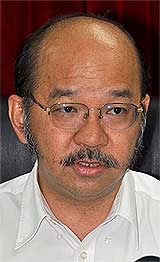 Bird keepers have also enlisted the support of former Sabah Chief Minister Yong Teck Lee (
right
) to flog their cause to the public. Yong, also the president of the Sabah Progressive Party (Sapp), blasted the ban on swiftlet farming in urban areas as an example of "bureaucrats knowing nothing about how the economy works".
Bird keepers have also enlisted the support of former Sabah Chief Minister Yong Teck Lee (
right
) to flog their cause to the public. Yong, also the president of the Sabah Progressive Party (Sapp), blasted the ban on swiftlet farming in urban areas as an example of "bureaucrats knowing nothing about how the economy works".
"The industry costs the government nothing while it merely collects taxes," said Yong in citing his own experience in government. "The industry has become a major export earner for the country, employed thousands and created wealth for the people."
He urged the state government to ensure that bureaucrats don't appear from nowhere to impose new rules and regulations which stifle economic life.
State Local Government and Housing Minister Hajiji Mohd Noor meanwhile pledged that swift action would be taken against those who ran foul of the ban on swiftlet farming in urban areas. He would however leave it to the various local authorities to decide when the ban would take effect in their areas. Kota Kinabalu City Hall, for example, is in the process of issuing a final notice to owners of swiftlet birdhouses in downtown KK.
"We have nothing against swiftlet farming," assured Hajiji. "It can be done but not in the city or towns or highly populated areas."
The birds are rared for the nests which are made from the saliva of the male bird and are rich in minerals and other nutrients.
There is a huge demand in China, Hong Kong, Taiwan, Singapore and Chinese restaurants all over the world. Raw birds' nests fetch about RM5,000 per kg and up to RM12,000 per kg for processed ones. It takes 100 to 150 birds' nests to make up one kg of birds' nest.


Are you sure you want to delete this comment?
This action cannot be undone.