




Joshua Wong caper marks a nadir
For perspective the brouhaha over producer Joshua Wong’s resignation from NTV7 over alleged interference – from the Prime Minister’s Department no less – must be seen against the history of politically-aligned ownership of privately-owned media outlets.
For perspective the brouhaha over producer Joshua Wong’s resignation from NTV7 over alleged interference – from the Prime Minister’s Department no less – must be seen against the history of politically-aligned ownership of privately-owned media outlets.
This history would mock the pretensions of some solid practitioners of the craft of journalism who in the early 1970s felt that they could weather the threat of undue interference raised in the wake of government-owned companies buying equity in privately owned newspapers.
The avenue for government interference was paved in the early 1970s when Umno Youth clamored for the ‘Malaysianisation’ of the ‘Straits Times’, then the largest selling English newspaper in the country, owned by AC Simmons who resided in Singapore.
This ‘Malaysianisastion’, which turned out to be essentially ‘Malay-isation’, was justified under the mantle of the New Economic Policy, one of whose aims was to equip a Malay managerial class with the skills to run companies whose majority stake had been purchased by government-linked companies (GLCs, a term not yet in vogue in the early 1970s).
The Simmons-owned ‘Straits Times’ was the obvious target of a takeover, not for reason that Simmons was a Jew (imagine what the outcry would have been if that situation was transposed to these times!), but because of the rise of nationalistic assertion in Umno.
 The buying-into Straits Times by Pernas, avatar of Malaysian GLCs, resulted in the creation of the wholly Malaysian-owned ‘New Straits Times’ (NST) in late 1972, with Lee Siew Yee appointed the group editor and Samad Ismail managing editor.
Both were journalists were of proven calibre, with the bilingual Samad needing no affirmative action-assist to qualify for the ME position, having been a political writer for the Straits Times’ for several years while helming the ‘Berita Harian’, a title under the ‘Straits Times’ stable, from its inception in 1957.
Samad, in particular, must have rated his chances of deflecting interference because he was a versatile practitioner of his craft and head-and-shoulders above the run of most politicians of his time, a stature gained from his immersion in anti-colonial agitation in Singapore between 1941 and 1959, when ‘Berita Harian’ moved the locus of its operations to Kuala Lumpur.
Moreover, he was close to Abdul Razak Hussein, the prime minister responsible for the launch of the NEP, a policy seeded from the ideational matrix on political economy espoused by the lawyer James Puthucheary, Samad’s ally from their early days in the People’s Action Party in Singapore.
In the early years of the NST, the threat of government interference was not as palpable as that of self-censorship.
Police brutality
A case in point was the coverage by the NST of student demonstrations at the Universiti Malaya (UM) in Kuala Lumpur and in Baling (Kedah) and Tasik Biru (Johor) in November 1974.
The students were expressing solidarity with the poor affected by a slump in rubber prices and with the squatters threatened with eviction in Tasik Biru.
It was these disturbances that brought Anwar Ibrahim, then Abim president and ostensible leader of the unrest, to the forefront of the national political arena.
Police infringed the autonomy of UM by making several arrests on the campus. NST cameramen came back to the office with some pictures of what looked like evidence of police brutality.
Lee Siew Yee was in a huff when Production Editor Ambrose Khaw, a journalist of liberal instincts, marked out in the contact prints of the police action against students pictures for couriering to the ‘Straits Times’ in Singapore (though separated in ownership from the NST, the two newspapers collaborated on editorial material).
 Lee countermanded the order and was said to be in a sour mood with Ambrose for at least a week thereafter.
Samad fared better though he too practiced self-censorship, playing down or spiking reports considered not in sync with the government of Razak.
The wily Samad, however, displayed mettle in fending off Umno Youth president Suhaimi Kamaruddin who came to see him in early 1976 over supposedly inadequate representation of Malays among NST’s corps of journalists.
Samad obtained from the human resources departments a list of recruitments he had made since becoming ME wherein the qualifications of non-Malay recruits were juxtaposed with that of the Malays’.
The latter was markedly inferior, causing firebrand Suhaimi to slink away in embarrassment at being shown the disproof of his assumptions.
To be sure, in those days there was an ‘invisible wall’ against interference in the running of the NST, compounded of the top Umno leader’s reluctance to encroach on the professional judgment of senior editors and of the latter’s apprehension of the parameters beyond which they should not go.
‘Imperial premiership’
This mutuality of restraint would be a thing of old by the time Dr Mahathir Mohamed came to power in mid-1981.
He was no respecter of trammels on an Umno president’s powers and proceeded to look at conventions, both constitutional and notional, that limited his freedom to act as baggage to be jettisoned.
The ‘imperial premiership’ in Malaysian political history began with his assumption of power in July 1981 and for 22 years thereafter its deleterious effects on the judiciary, press freedom, and the independence of the civil service and the police force, would be felt.
 In the NST the casualties were seen in the brevity of tenure of the groups editors – Dr Nordin Sopiee, Dr Munir Majid and, eventually, Kadir Jasin, the last, little more than a hack who despite abject editorial subservience (the reason he lasted the longest at 11 years) could not escape the inevitable fault-finding that followed the BN’s relatively poor performance in the November 1999 general election.
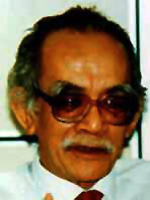
Long before he died in September 2008, Samad Ismail ( left ) had derided the progressive diminution of the value of professional competence in the post of the top editorial person in GLC-linked media outlets (‘Even a chimpanzee can become group editor,” he once observed of the post of NST group editor).
That value was in steady decline from the time of Malaysia’s fourth premier. How precipitous the degradation has become can be deduced from word that the sixth premier’s wife has allegedly gotten into the downgrading.
If true, the farce would have become burlesque.
TERENCE NETTO has been a journalist for close on four decades. He likes the occupation because it puts him in contact with the eminent without being under the necessity to admire them.


Are you sure you want to delete this comment?
This action cannot be undone.