




TV producers operating in the dark
Censorship, to a greater or lesser extent, is something media practitioners have to live with. At its worst, it is used as a tool for suppression when politically expedient.
RTM's Chou Z Lam and ntv7's Joshua Wong found out the hard way that they work in a world without clear-cut regulations as to what could be snipped by invisible scissors.
exclusive Censorship, to a greater or lesser extent, is something media practitioners have to live with. At its worst, it is used as a tool for suppression when politically expedient.
RTM's Chou Z Lam and ntv7's Joshua Wong found out the hard way that they work in a world without clear-cut regulations as to what could be snipped by invisible scissors.
In an interview, both said they had been steadfast in ensuring that their work did not suffer from any form of self-regulation, but in the end were resigned to the fact that they were mere pawns in the hands of the generals.
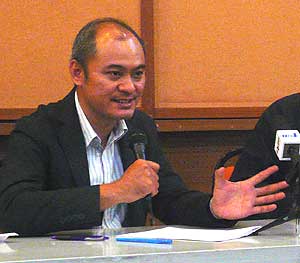 "We don't have guidelines from the Censorship Board and they didn't tell beforehand (what is allowed or not). So I seldom practise self-censorship. If I do so, I may as well be an officer of the Censorship Board," said Wong.
The producer of 'Editor's Time', he resigned in protest after the programme allegedly came under pressure from the Prime Minister's Department and the premier's wife, over the presence of purportedly seditious content.
Wong explained that pre-recorded shows such as his are sent to the Censorship Board for approval before being aired, unlike news feeds which are 'live'.
"My programme had two roadshows - one in Kuala Lumpur and Penang. We decided to air (trailers) on March 18 and 25 before the broadcast on April 1," said Wong.
The only instructions he had received were that the programme was not to cover any political issues, or invite any opposition politicians as guests and there should be no discussion of the Hulu Selangor by-election.
"In the past for 'Edisi Siasat', I hardly censored the content. In 2008 three episodes were banned. In the first episode, we documented the controversies on the conversion to Islam (and the demonstration outside the Bar Council) and we also traced the families affected. (We included the custody case) where a single spouse converted to Islam."
"The second one was (banned) twice because of sensitive material - it was on the sudden growth of the civil society movement and we interviewed (Writers' Alliance for Media Independence president) Wong Chin Huat. We took out all the sensitive material and the second time (we submitted it) it was also banned."
No logical explanation
Chou's documentary for TV2's 'Galeri Mandarin Nasional' was axed allegedly to avoid controversies being raised in the upcoming by-election in Sibu, Sarawak.
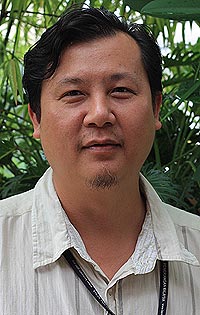 Chou, who is passionate about issues afflicting marginalised communities and the environment, had his documentary on the forced relocation of natives in the Bakun Dam project taken off the air, for potentially affecting voter sentiment in the run-up to the polls.
"The first part of the documentary was aired. The next day when the second part of the documentary was on air, I was called and informed that there is a complaint via SMS that the issue is sensitive.
"At that time they did not (even) know what's on air. They (didn't yet) know the content, and (yet could) say it is sensitive, and send an anonymous text message."
There is yet to be a "sane explanation" from the management why the nine-part documentary was prohibited, he pointed out.
In the state-owned television network, there is no censorship unit to review the content, he said. There is only "repeated reinforcement" from above stressing that reports should be positive to the ruling government.
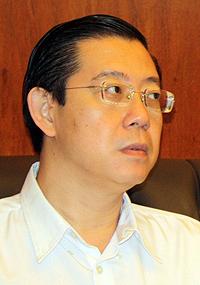 "When Najib (Abdul Razak) became prime minister, we received advice not to have opposition leaders in our documentaries," said Chou.
"It was just verbal advice most of time. Since it is not written, we (tend to) forget about it. Last year, for example, I did a documentary on the heritage status of Georgetown (in which) I interviewed (Penang Chief Minister) Lim Guan Eng (left ) .
"When they (the management) saw his face on television I was asked to see them. I argued that he is not an opposition figure in this context and that he is the leader of the state government, so they accepted that."
Despite the difficulties, Chou has no plans to leave the network.
Tomorrow: When colleagues don't understand


Are you sure you want to delete this comment?
This action cannot be undone.