




Journalists not just 'regular' employees
exclusive Journalists who have attempted to walk the professional path in Malaysia often find themselves on a lonely road - few of their colleagues understand the need to push the envelope in a highly restricted media environment.
exclusive Journalists who have attempted to walk the professional path in Malaysia often find themselves on a lonely road - few of their colleagues understand the need to push the envelope in a highly restricted media environment.
Two television producers, who have often crossed swords with internal censors, said they get a lot of sympathy but no support for decisions that superiors or external parties deem to be problematic.
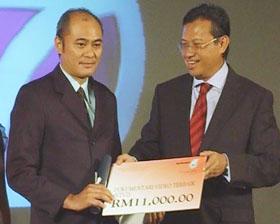 Former ntv7 producer Joshua Wong (
left in photo
), who
quit his job
in frustration over the most recent incident of censorship, said co-workers had told him to compromise in order to keep his job.
Former ntv7 producer Joshua Wong (
left in photo
), who
quit his job
in frustration over the most recent incident of censorship, said co-workers had told him to compromise in order to keep his job.
“They were sorry for me and they told me to stay on but I have a reason for my resignation. We journalists are not regular employees. We have ... (a) responsibility to the public,” he said in an interview.
“My colleagues don't see things from this perspective so it is difficult to persuade them to understand why I tendered my resignation.”
His decision was prompted by complaints that his programme ‘Editor’s Time’ had featured opposition leaders and political analysts who had made ‘negative comments’ on government policies.
Wong also described an instance when he had wanted to follow up on the Lina Joy apostasy case. His superior rejected the proposal on the basis that the network does not allow any religion-based stories.
“Sometimes I (have compromised), but this time I could not tolerate it any more. Why do I have to be punished by restrictions? It is not fair to my reporters and to my audience,” he said angrily.
Eight days after Wong announced his reasons for quitting, another television producer complained in a blog entry that the state-owned RTM2 had axed his nine-part documentary after the second segment had been broadcast.
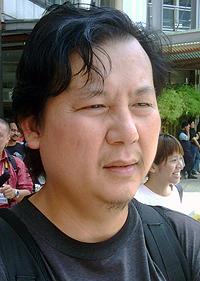 Chou Z Lam (
left
), who produces documentaries for ‘Galeri Mandarin Nasional’, described during the interview the general reaction of colleagues when someone lands in trouble.
Chou Z Lam (
left
), who produces documentaries for ‘Galeri Mandarin Nasional’, described during the interview the general reaction of colleagues when someone lands in trouble.
“They say ‘If you make the big boss angry, you won’t have any opportunities’,” said Chou with particular reference to the Chinese-language media where internal controls are stronger.
“They also say that if we (all) want to remain in the media, (then) we should (reconsider) our approach (to presenting the issues) and do it in a different way.”
Chou said he does not agree because his focus is on raising issues that affect the rights of the people - in this case, those relocated because of the Bakun Dam project in Sarawak.
“When my programme was taken off, I asked for an explanation - (if I had not done this), I would have let them (my audience) down especially (with the Sibu by-election coming up on May 16).”
‘Remain impartial’
Chou and Wong, have claimed that there are no clear guidelines for programme content in the two networks. In any case, their decisions are driven by higher considerations.
 Saying he had experienced censorship of his work when he was in the Chinese print media, Chou pointed out that the media is a channel for the voiceless.
“Journalists should (also) think of themselves as citizens and never forget their duty to (assert) their rights, which are exactly the same as (that of) others,” he said.
Wong stressed the need for journalists to remain impartial, saying this will be their strongest line of defence in the event of disputes.
“ ...Tell the truth and ... try to diversify (the scope of coverage). It is enough (when you are) not biased to any party and ...act independently. If you do this, (then) automatically there (will be) no ‘sensitive’ issues,” he said.
The bottom line, added Wong, is that journalists must be aware that they cannot function as puppets, but must rise to the standards demanded of the profession.
“Bear in mind (that you must) always have an ethical compass in your heart. That will direct you to do things correctly. Train it and persevere ... to resist temptation,” he said, offering advice to journalists.
It is a timely reminder, since both Wong and Chou expect that it will be a hard slog to stick to journalism standards under the current administration.
Ever since Najib Abdul Razak became premier a year ago, there have been various instances of pressure on the media.
 For instance,
Malaysiakini
was instructed to remove ‘offensive’
video footage
of protestors kicking and stepping on a cow head in Shah Alam, along with a related press conference by Home Minister Hishammuddin Hussein.
For instance,
Malaysiakini
was instructed to remove ‘offensive’
video footage
of protestors kicking and stepping on a cow head in Shah Alam, along with a related press conference by Home Minister Hishammuddin Hussein.
However, the news portal defied the order on the grounds that it was merely doing its job in reporting the two events.
On the broadcast front, ntv7 anchor Florence Looi was demoted to field reporting after panelists and viewers on her talk-show made apparently unflattering comments about Najib's performance during his first 100 days in office.
In the latest Freedom House p ress freedom ranking , Malaysia was placed 141 - two notches up since last year - but still in the bottom 32 percent of countries in the ‘not free’ category.


Are you sure you want to delete this comment?
This action cannot be undone.