




Don't single out palm oil for EU compliance
Palm oil should not be singled out for sustainability compliance unless other competing oils are practising the same, delegates to the International Palm Oil Sustainability Conference 2010 were told today.
Extensive scientific studies should be carried out to determine the true situation, said the Malaysian Palm Oil Council (MPOC) chief executive officer Yusof Basiron, obviously referring to the misinformation circulated on palm oil by Western green non-governmental organisations (WEGNGOs).
Palm oil should not be singled out for sustainability compliance unless other competing oils are practising the same, delegates to the International Palm Oil Sustainability Conference 2010 in Kota Kinabalu were told today.
Extensive scientific studies should be carried out to determine the true situation, said the Malaysian Palm Oil Council (MPOC) chief executive officer Yusof Basiron, obviously referring to the misinformation circulated on palm oil by Western green non-governmental organisations (WEGNGOs).
Lamenting that other competing edible vegetable oils, like soyoil, rapeseed and canola, were not subjected to similar requirements, he said Malaysia should therefore commission more scientific studies.
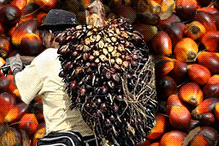 Yusof said if legislation was passed in the European Union and Australia, on the basis of non-scientific evidence, this would be discriminatory to trade and unnecessarily drive oil palm farmers to poverty in Indonesia and Malaysia.
"It will be interpreted totally as trade protection measures and the affected countries will have to retaliate.
"For example, Malaysia and Indonesia could possibly stop buying German cars on the basis that they are unsustainably produced through the use of electricity from coal-powered plants, and coal emits carbon dioxide causing global warming.
"Malaysia and Indonesia, will have to stop importing beef and lamb products from Australia and New Zealand as these animals emit methane from their gut which is a potent Green House Gas (GHG) which also causes global warming," Yusof said in his presentation on Comparative Green House Gas Emissions of Coal Mining and Oil Palm Plantations.
Leads to global warming
More than 300 local and international delegates are attending the conference, which over two-days discussed, among others, European policies towards palm oil, green house gas emission from coal mining and oil palm plantations and, whether to develop or conserve Sarawak’s peat land.
WEGNGOs claim deforestation in developing countries must be stopped at all costs as it causes GHG emission which leads to global warming and lost of habitat conservation for the orang utans.
To them, palm oil is the only commodity that needs to be developed according to sustainable practices while local NGOs are supportive of oil palm development as it benefits local communities equitably.
Yusof said this is a sad state of affairs as the WEGNOs are not protesting against deforestation in Canada where 100,000 hectares of land are cleared yearly for planting crops including rapeseed, to compete with palm oil, nor are they insisting on a roundtable on sustainable soya oil (RSSO) or protest against habitat loss of bears and wolves.
"Sustainability should embrace caring for the planet, people and profits but the WEGNGOs only focus on sustaining the planet. Sustainability to them is restricted only to 'no deforestation' by oil palm farmers in developing countries," he added.
Favour their own edible oil
Yusof also said WEGNGOs should instead focus and campaign for GHG emission reduction in their own countries such as through closing down polluted coal mines.
"Coal is better left un-mined where it can remain deep underground as carbon instead of being burned as fuel to emit carbon dioxide and pollutants.
"The United Kingdom produces 18 million tonnes of coal annually and emits 66 million tonnes of carbon dioxide but this goes undetected.
"This emission can be totally avoided if coal mines are closed down and replaced with alternative low carbon energy sources," he pointed out.
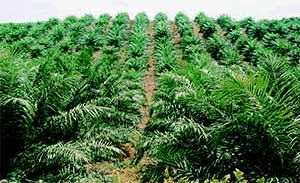 Yusof also said the RSPO (Roundtable on Sustainable Palm Oil) was clearly redundant.
"What are we protecting?" he asked, explaining later that Malaysian palm oil was already sustainably produced under its own code of good practices.
"Our forests are already protected by many conservation laws and adhere to sustainable practices for certified timber production," he added.
Saying that Malaysia had earned the right to conduct trade in palm oil as it has contributed to equitable share of responsibility, Yusof added that the country should not be asked to clear the mess (GHG) of other developed countries.
In conclusion, he said the palm oil trade should not be victimised just because the commodity is an export of small developing countries.
It is clear that most European countries want to restrict palm oil imports from developing countries so as to favour their own edible oil, which is more expensive and less sustainable.
Malaysia and Indonesia are leading exporters of palm oil as they jointly account for 90 per cent of world’s palm oil production.
Exports of Malaysian palm oil in 2009 recorded an increase of 2.9 per cent to 15.87 million tonnes and is widely used in the food sector in the United States, China, India, Pakistan and the European Union.
- Bernama


