




'No' to proposal to up levies on foreign workers
Employers in Sabah are up in arms against federal government proposals to up the existing levies on foreign workers.
Employers in Sabah are up in arms against federal government proposals to up the existing levies on foreign workers.
Instead, they are demanding cuts in levies, standardisation, simplification and more incentives to encourage employers to hire local workers.
The incentives, it is suggested, could be in the form of tax rebates.
Federation of Sabah Manufacturers (FSM) president, Wong Khen Thau, warned that the new proposals, if implemented, would up production costs and eventually result in even more illegal immigration. Moreover, it defeats the purpose of offering amnesty to illegal workers already in the country, he stressed.
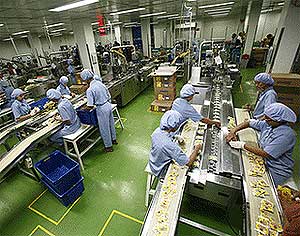 "We have always been advocating a reduction in the levies," pleaded Wong who expressed shock that the federal government was now actively contemplating the very opposite. "The country will always need foreign workers to do jobs that were shunned by locals."
Wong was commenting on indications from federal government that the levies would be increased four-fold to reduce the country's dependence on foreign workers.
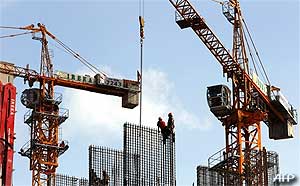
Annual levies in Sabah presently stand at RM960 in manufacturing and RM930 in construction while plantations pay RM400.
He lamented that the proposed new levies were too complicated. The higher levies would reportedly be in tandem with a bond posted by employers to prevent their foreign workers from absconding.
The FSM chief stressed that the question of reducing the number of foreign workers in the country through higher levies does not arise. Employers would still need foreign workers even if the levies were increased, he continued. "So, why make it difficult for the employers and the workers? This can only affect the economy at a time when there is so much competition due to globalisation."
Wong said that there are about 500,000 legal foreign workers in Sabah and a further 300,000 illegal workers, by conservative estimates.
The FSM numbers exclude family members entering by the back door to join the breadwinner. The Immigration Department does not allow dependents to join breadwinners in the state.
Foreign workers necesssary
Wong agrees that these are huge numbers but opines that the country could only lower their numbers and not wipe them out completely. He pointed to even labour-rich China now being among the countries where the locals shunned certain jobs categorised as the 3Ds - dirty, difficult, and dangerous.
"As a society becomes more affluent, the local people would not want to do 3D jobs," stressed Wong. "It's the same as in the United States, the United Kingdom and the other countries which traditionally attracted migrants in search of work and better economic opportunities."
 Politicians across both sides of the divide, chambers of commerce and various industries in Sabah are adding their voice on the subject of higher levies.
Sabah Housing and Real Estate Developers Association (Shareda) president Susan Wong urged the federal government to consider allowing monthly payment of a reduced levy amount to overcome the problem of workers absconding. The bond payment is inappropriate, she added, since the levy was already a form of bond.
She also sees the need for locals to be trained at the public's expense to reduce the dependency on foreign workers.
"More employers would be willing to pay the levies if it is reduced and payment by monthly installments is allowed," said Wong. "This would discourage employers from resorting to illegal immigrants as workers."
Sabah Employers Consultative Association (SECA) chair Alan Khoo wants the federal government to focus on reducing the cost of doing business in the country "so that our competitiveness would not be further eroded".
 According to him, there were already too many levies in the country in the form of cess payments and windfall taxes, among others.
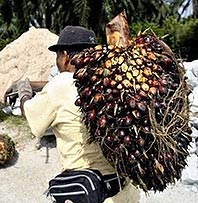
All these, he added, are increasing overhead costs which have particularly hit the oil palm industry which faces intense competition from Kalimantan.
One complaint in Sabah is that Indonesian workers in the state are being lured back across the border by competitive wage rates in South Kalimantan and also without the burden of the levy.
Taking up the cudgels
The Kota Kinabalu Chinese Chamber of Commerce and Industry (KKCCCI), meanwhile, will be taking up the cudgels on behalf of local employers. It plans to submit a 200-page memorandum to the federal government on the levy issue and other woes that the business community faces in Sabah.
The memorandum would be the outcome of KKCCCI deliberations scheduled for June 20 in the Sabah capital.
"We will focus on the 10th Malaysia Plan (2011-15)," said KKCCCI president Sari Nuar. "Given a choice, workers would prefer to be employed nearer to their homes and this holds true whether they are locals or foreigners."
The KKCCCI stand has struck a chord, in part, with opposition politicians who feel that the local business community should not take it upon itself to create jobs for illegal immigrants and other foreigners.
They are not sure that the state government and the local community benefits from the presence of foreigners in the state. Sabah continues to be the poorest state in Malaysia, they point out, followed by Sarawak.
"It's better for certain labour-short sectors in the state, like plantations, to shift to neighbouring countries which have a surplus of labour," said Cigma (Common Interest Group Malaysia) deputy chair Daniel John Jambun. "The state government can still benefit by backing companies which are willing to relocate and taking a stake in them."


