




Penans: The forest is our life
Traditional hunter-gatherers leading a nomadic life deep in the forests of Sarawak and satisfied with the bounty nature has always provided them. This has been the history of the Penan for centuries.
That is until civilisation hit them in the form of buzz saws and bulldozers, and their home began to shrink in alarming fashion. Their quality of life has been on the decline ever since.
Traditional hunter-gatherers leading a nomadic life deep in the forests of Sarawak and satisfied with the bounty nature has always provided them. This has been the history of the Penan for centuries.
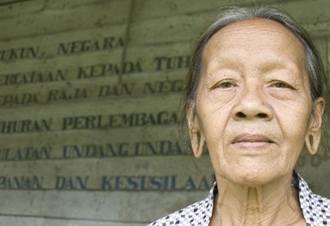 That is until civilisation hit them in the form of buzz saws and bulldozers, and their home began to shrink in alarming fashion. Their quality of life has been on the decline ever since.
Most of the Penan now live in settled communities. I visited some who are semi-nomadic, spending most of their time in the forest but who now, at the request of the government, have a base camp. I also visited a community which had settled, but so unhappy that it was considering returning to nomadic life in the forest, and other communities who have been settled for many years.
So-called ‘selective logging’ had devastated forests belonging to all the Penan I met, but to differing degrees. One community had seen all their land logged, much of it six times, others still had half of theirs intact.
The companies are only supposed to take the thickest trees, and leave alone those the Penan rely on such as sago, rattan and fruit trees. The reality, however, is that many of these trees, so essential to the Penan, are destroyed when they get in the way of logging roads or when felled trees are dragged through the forest indiscriminately.
Bulldozers destroy lives
The wild boar, deer and monkeys that the Penan hunt flee, making it very difficult for these original people to survive in this denuded forest.
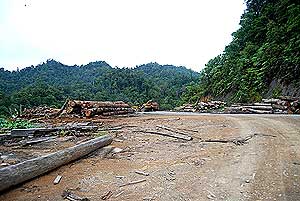 One semi-nomadic man told me, “To us Penan, we do not like to hear bulldozers in our land. What makes us Penan happy are the sounds of birds and hornbills in our forest, not the sound of bulldozers.”
Another said, “We don’t want progress that comes to destroy our land.”
The Penan live in harmony with their forests and their land. They hunt selectively, leaving sanctuaries for the animals so they can continue to thrive. This is in stark contrast to the loggers who crash through the forest, felling the trees they want for timber and destroying many others in their path.
Some people believe that ‘progress’ means the nomadic Penan should be settled, and that all Penan should abandon hunting and gathering in favour of agriculture - as though hunting and gathering were somehow a more backward way of life.
However, if their forests are intact, they can easily feed their families by hunting and gathering, with far less effort and more reliably than they can by planting crops. Hunting and gathering is no more backward or advanced than agriculture, they are just different ways of life.
Overrun by ‘progress’
Many of the settled Penan spoke wistfully about the time when they were nomadic, before the loggers came, and how much easier life was then.
One of them told me, “When we lived in the forest it was easy. We didn’t have all the things we have now, but it was okay because we could get everything we needed from the forest. Now we have lots of things but it is harder to get food and we have lots of diseases like malaria and the young people drink alcohol. In the past the rivers were clean and we could drink the water, now even if we boil it we can become sick.”
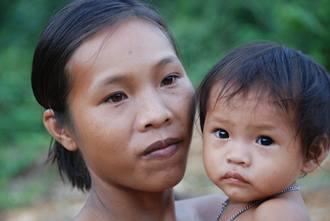 The companies now have been forced to cut thinner and thinner trees and soon this will no longer be financially viable.
Rather than allow the Penan’s forest to regenerate, vast tracts of their land are being leased to plantation companies - for oil palm or fast growing trees for pulp and paper.
Although it is extremely hard for the Penan to survive from their forests once they have been logged, there are still some animals and food they can track there. However, once the land is covered with oil palm or the fast growing acacia tree nothing is left for the Penan.
One community I visited, that had half of their land destroyed by logging, was recently approached by a local manager of a logging company, telling them they wanted to plant oil palm on their land.
He told them that they would be given some of the profits from the plantations and asked for their agreement. When they didn’t accept his offer, he threatened them that the company would sell its rights to their land to gangsters who would plant oil palm, with or without their permission, and that they might hurt them.
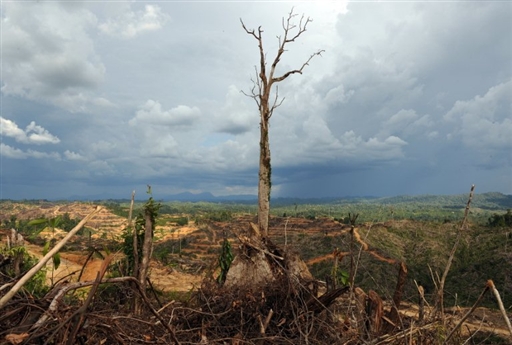 Despite their fear, the community was determined to refuse the offer.
The headman explained, “We have always said no to logging, we just say no and we build a blockade ( right ). It’s because we want our rights to our land so we can live our own way of life. We want our rights first and then we can decide what to do. If they tell us, 'We’ll give you this and that', we’ll say no, because they haven’t given us our rights.”
In another village a man told me, “They forced us to accept logging; they never asked permission from us. We Penan do not want plantations. We will have no land to live on and we cannot survive with plantations. We can only live if our land is not destroyed.”
‘Forest our livelihood’
The forest is central to the Penan, even to those who have been settled for many years. Without their traditional way of life the Penan will not be able to survive as a people.
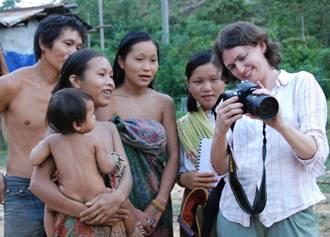 The Penan’s right to their land is enshrined in international law and recognised by the United Nations Declaration on the rights of Indigenous Peoples.
Sarawak’s government must ensure that no logging, plantations or dams are allowed on the land of the Penan people without their free, prior and informed consent.
Without that recognition the Penan’s future looks bleak. As one Penan headman explained to me, “We are not like other people who can live with money, for us we can only live if our land is not destroyed. Without land we will not be able to survive.”
SOPHIE GRIG is a member of Survival International, a human rights organisation aims to amplify the voices of tribal people, so that those around the world can learn about their ways of life and the threats they face.


