




Inclusion and social justice through the 10MP?
COMMENT The PM’s speech was truly inspiring especially in the way he drew an analogy with a football team and that of a relay team and compared this to nation building.
The moral of this analogy is that we can succeed if we work as a team. Collective roles will ensure success in contrast with operating as individuals or separate groups in conflict.
COMMENT The PM’s speech was truly inspiring especially in the way he drew an analogy with a football team and that of a relay team and compared this to nation building.
 The moral of this analogy is that we can succeed if we work as a team. Collective roles will ensure success in contrast with operating as individuals or separate groups in conflict.
The prime minister therefore lays a strong emphasis on the theme that as Malaysians we must put aside our differences and ensure that our collective efforts “irrespective of race, religion or political opinion” will ensure “glorious success”. This is not only a vision statement but a practical guide to community living.
The prime minister recognised that the “country is at a critical juncture of its development journey” and the future of the nation is in the hands of its people who can either make the right or wrong choices.
There is a strong emphasis on the 1Malaysia theme and emphasis on all the diverse communities having a share in the economic wealth on the one hand, and at the same time the responsibility of achieving this goal through equitable sharing based on social justice and fairness.
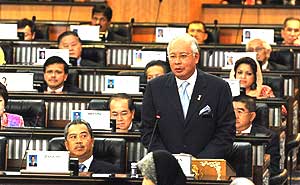 For the first time I think a prime minister’s speech (
right
) makes specific reference to the diverse multi-ethnic nature of our society, making special reference to all the ethnic communities in the country namely, “Malays, Chinese, Indians, Melanau, Iban, Kadazan, Dusun, Murut, Sikhs, Orang Asli, Serani, Siamese and all other ethnicities of our nation”.
For the first time I think a prime minister’s speech (
right
) makes specific reference to the diverse multi-ethnic nature of our society, making special reference to all the ethnic communities in the country namely, “Malays, Chinese, Indians, Melanau, Iban, Kadazan, Dusun, Murut, Sikhs, Orang Asli, Serani, Siamese and all other ethnicities of our nation”.
While stating this is a mouthful, yet it is important to take the opportunity to state it and demonstrate inclusiveness as the prime minister’s vision.
The challenge therefore is, how do we foster stronger collective effort in enhancing the potential of all the ethnic communities and other socio-economic groups? This is the dimension that we must work together collectively and ensure that as a nation we will continue to progress.
Opportunities for the poor
One of the ten premises of the 10th Malaysia Plan (10MP) highlights the equalisation of opportunities and safeguarding the interest of the vulnerable. In line with this premise is the third strategic thrust, which is “moving towards inclusive socio-economic development”.
The emphasis is in ensuring that development is not just holistic and comprehensive but also inclusive of all groups so that no group feels marginalised.
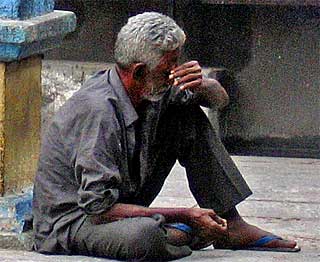 In addition to equal opportunities and inclusiveness, the prime minister also spoke of social justice, acknowledging that the difficulties faced by the citizenry must be addressed. In his speech he went on in detail to outline the measures for the bumiputera community and other disadvantaged groups such as Orang Asli and natives of Sabah and Sarawak, and people living in Chinese new villages and estates.
He also made specific reference to displaced plantation workers. It is indeed commendable that there is a clear policy commitment towards addressing the concerns of the poor, low income, disadvantaged and vulnerable groups in an inclusive and sustainable way.
In the 10MP there are specific programmes to enhance the economic participation of urban poor households. Five key strategies are identified, namely industry specific skills centres, micro enterprise support programmes, mentor-mentee programmes, incubator concepts and establishing business clusters. These are commendable.
 The missing element for social justice, inclusiveness and fairness is the failure to mention the Malaysian Human Rights Commission, which is an independent body to monitor any violation pertaining to economic, social and cultural rights.
In the case of good governance, the 10MP makes an explicit commitment to strengthen the role of the Malaysian Anti Corruption Commission (page 326 of the document).
In the same way, strengthening human rights compliance will clearly illustrate a further commitment towards inclusion, justice and fairness, especially when certain sections feel sidelined. They can have an independent avenue to review their disadvantage or marginalisation.
Effective implementation
The 10MP has proposed a very strong monitoring of delivery and implementation. In measuring success there is a major shift from output based to outcome measures in evaluating success. This is the right step forward.
The public frequently complain about ineffective delivery and therefore a real commitment towards ensuring effective and efficient delivery is most critical. In this context the 10MP has established four performance-oriented units to monitor and track the delivery of priority areas namely through the implementation coordination unit, project management unit, performance management and delivery unit and a new unit called the economic delivery unit.
 In addition the prime minister in his speech affirmed that the cabinet committee for Indians and another cabinet committee for bumiputeras of Sabah and Sarawak will likewise address their
respective concerns.
Another very positive note in the 10MP in this context is the government’s promise of adopting “an open and consultative approach” whereby there is close collaboration between public, private and civil society.
This mention recognises that there are three sectors which need to work collaboratively for community nation development. Very often the civil society and community-based organisations are not adequately recognised. However, they are a vital link between the public and private sector.
Therefore the policy speech and the 10MP document provide an adequate policy statement for fostering an inclusive society for all Malaysians.
It is now our duty and responsibility to ensure that these are effectively implemented and we secure the desired outcomes. Let’s strive together and ensure its success so that every Malaysian is able to secure a better quality of life.
DR DENISON JAYASOORIA is principal research fellow at the Institute of Ethnic Studies, Universiti Kebangsaan Malaysia and a former commissioner with the Human Rights Commission (Suhakam).


