




M'sia to raise ICT impact on culture at ITU
The impact of the information technology on cultural values is among the key issues to be raised by Malaysia at the 18th International Telecommunication Union (ITU) Plenipotentiary Conference which began Guadalajara, Mexico on Monday.
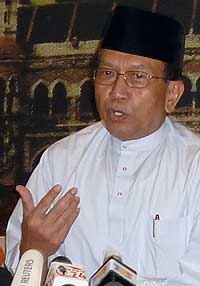
Information Communication and Culture Minister Rais Yatim said Malaysia would also raise the issue on cybercrime and invasion of individual privacy at the conference attended by more than 2,000 people from more than 160 countries.
The impact of the information technology on cultural values is among the key issues to be raised by Malaysia at the 18th International Telecommunication Union (ITU) Plenipotentiary Conference which began Guadalajara, Mexico on Monday.
Information Communication and Culture Minister Rais Yatim said Malaysia would also raise the issue on cybercrime and invasion of individual privacy at the conference attended by more than 2,000 people from more than 160 countries.
 He said he would also highlight the legal aspects, including whether the existing local regulations could tackle cybercrime without assistance from international resources.
"These are some of the issues that we should highlight and we hope to receive support from the members," he told Malaysian journalists after the official opening of the conference by Mexican President Felipe Calderon at the Guadalajara Expo Centre.
Rais is expected to speak at the plenary session on Tuesday morning.
The conference, held once in four years, will conclude on Oct 22 which will also see the election of members of the ITU supreme council and the Radio Regulations Board (RRB).
ITU’s Plenipotentiary is the quadrennial global conference that decides strategy for ITU, the UN agency for ICTs responsible for allocating global radio spectrum, creating the technical standards that fuel all ICT networks, and developing and implementing strategies to bridge the ‘digital divide’.
Malaysia to defend its seat
The election of the Union’s five top executives, along with the members of the RRB and the member states - which will comprise ITU Council for the four-year period until the next Plenipotentiary - will take place from Thursday.
It will begin with the election of the secretary-general and deputy secretary-general, and then the directors of the three specialised arms of the Union: the Radiocommunication Bureau, the Telecommunication Standardization Bureau and the Telecommunication Development Bureau.
 There are 21 candidates for the 12 seats on the RRB, and 65 candidate countries for seats on ITU Council.
The number of council seats is likely to increase at this conference, as there are several proposals on the table from ITU member states.
The accession of Timor Leste as a new ITU member in August 2010 has brought the total number of ITU Member States to 192.
Malaysia, which was elected into the ITU supreme council for the past three terms to represent Region E, namely Asia and Australasia, will defend its seat.
Similarly in the RBB, Malaysia, which is represented by Ali Ebardi, was elected for the first time at the last conference in Turkey in 2006, and will defend its seat.
Ali, who is also the Measat senior vice-president of space system development, is also the RBB chairperson.
'Broadband inclusion for all'
On the election, Rais said it would not be an issue if Malaysia failed to make it into the ITU supreme council because it had held the seat for quite some time.
 In fact, Malaysia would continue to champion the issue on information technology.
Among other things, the conference this time would discuss ITU's strategic and financial plans for 2012-2015; strategies to help advance ITU’s goal of ‘broadband inclusion for all’, new Internet addressing systems such as IPv6, the scope of the forthcoming review of the international telecommunication regulations.
The topic on enhancing the use of ICTs in mitigating climate change and delivering emergency communication in the wake of natural disasters will also be discussed.
This year’s conference will, for the first time, also include four exciting side event sessions featuring debates between experts from government and industry to discss the issues of roadblocks to ‘broadband inclusion for all’, enabling a low-carbon future, accessible ICTs for persons with disabilities and cybersecurity.
- Bernama


Are you sure you want to delete this comment?
This action cannot be undone.