




La Nina triggering heavier monsoons in M'sia
The La Nina weather pattern will trigger heavier-than-usual monsoon rains this year for Malaysia's key oil palm growing region, the country's weather office said on Friday.
The La Nina weather pattern will trigger heavier-than-usual monsoon rains this year for Malaysia's key oil palm growing region, the country's weather office said on Friday.
Director-general of the Malaysian Meteorological Department, Yap Kok Seng, said the weather condition will induce five to six episodes of heavy rain in the world's second largest palm oil producer and No 3 rubber supplier.
"Rainfall, especially over the northern and east coast states of peninsula Malaysia and Sabah, is expected to be slightly above the long term average," Yap said in emailed comments to Reuters.
La Nina is expected to end in the first quarter of next year, Yap said.
Accounting for at least a quarter of total national palm oil production, estates in Sabah state went through a dry spell
caused by El Nino earlier this year that sapped yield quality.
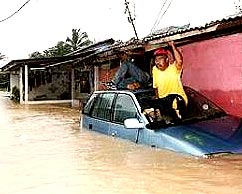 Now, prolonged exposure to moisture from La Nina may turn palm fruits rotten. Stronger floods and rains can make harvesting and logistics difficult, possibly creating a supply squeeze.
The last time La Nina hit Malaysia in 2007-2008, oil palm growing states of Pahang and Johor on the mainland experienced
floods that created a scramble for palm oil supplies, pushing prices to a record of 4,486 ringgit in March 2008.
Benchmark Feb 2011 palm oil on the Bursa Malaysia Derivatives Exchange closed up 1.6 percent at RM3,318 per tonne on Thursday. That is 26 percent off the record high.
This time, Pahang and Johor are expected to have rainfall about the long term average during December and January, Yap said.
"The northeast monsoon is expected to end in March 2011.
"However, the rainfall throughout the country is expected to
gradually decrease towards the end phase of the northeast monsoon," he said.
La Nina is also expected to end in the first quarter of next year, Yap said.
- Reuters


Are you sure you want to delete this comment?
This action cannot be undone.