




He read the tides well, but not deeply
The obituaries dwelt on his vision of Penang as an industrial hub and his success at gaining foreign investments that made it so, cliché-ridden narratives (for example, ‘Father of Industrialisation’) which tend more to obscure than illuminate the historical record.
Left out in the paeans to Dr Lim Lim Chong Eu was his worldview: he saw politics as a play of forces rather than of ideas...
The obituaries dwelt on his vision of Penang as an industrial hub and his success at gaining foreign investments that made it so, cliché-ridden narratives (for example, ‘Father of Industrialisation’) which tend more to obscure than illuminate the historical record.
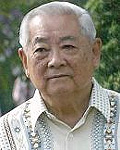 Left out in the paeans to Dr Lim Lim Chong Eu was his worldview: he saw politics as a play of forces rather than of ideas.
From that standpoint, the catalyst of Penang’s reinvention as an industrial hub after it had lost its free port status will go down in history as a politician whose apostasy helped smother what in the late 1960s was a promising flowering of multiracial democratic opposition in the form of Parti Gerakan Rakyat Malaysia.
It was Chong Eu’s decision to accept Prime Minister Abdul Razak Hussein’s invitation to join the BN in the post-May 13 period - after Gerakan had toppled the Alliance in Penang in the seminal general elections of 1969 - that dealt a debilitating blow to the cause of multiracial politics.
Gerakan’s obliteration in the 2008 general election was merely the much-deferred outcome of a decision in favour of abandoning the party’s multiracial underpinnings taken by Chong Eu in the aftermath of May 13 by joining the BN.
An assembly of political activists
Founded in 1968, Gerakan was an auspicious coming together of left-wing politicians like Dr Tan Chee Koon; centrists like Chong Eu and the Alatas brothers, Syed Hussein and Syed Naguib; trade unionists like V David, and notable academics like Prof Wang Gung-wu.
This assembly of successful but public-spirited practitioners from the professions, rough and ready operatives from the unions, and academics aspiring to be public intellectuals, was the second flowering of multiracial opposition in our history.
The first was in 1947 when a slew of left-wing Malay leaders linked up with a motley selection of trade unionists and centre-to-right politicians that included MCA’s Tan Cheng Lock and MIC’s John Thivy, to form a multiracial alliance to press for independence.
The Putera-AMCJA drew up the People’s Constitutional Proposals, the earliest document to posit a cohesive national polity.
The successful ‘hartal’ (general strike) this coalition organised in October of 1947 was the strongest indication yet that they, not the newly-formed Umno that defeated the Malayan Union proposal of the previous year, were the strongest political group in the country.
But caught in the maw between British mercantile interests and a communist insurrection about to explode, this coalition had no chance of surviving the authorities’ failure to distinguish between socialists and militant communists.
Indonesian confrontation (1963-65) and the national security paranoia it caused put paid to the surviving remnant of the original Putera-AMCJA.
A brief period of sterility prevailed in the opposition ranks, with the DAP’s emergence in 1966 not considered as a promising development because of its Sino-centric orientation. The Malay-led Parti Sosialis Rakyat Malaysia and the Chinese-dominated Labour Party could not gain traction, while the Seenivasagam brothers' led PPP was confined to the Kinta Valley.
Then, in the late 1960s, Gerakan was formed, the result of a confluence of opposition notables from all races who regarded the Alliance as led by an effete corps, incapable of uniting and prospering the country.
Swept to victory in Penang
Chong Eu, who formed the United Democratic Party in the late 1950s after having left the MCA, which he led for a brief time during which he quarreled with Tunku Abdul Rahman over his demand for more seats, joined the Gerakan to make it a broad-based opposition force.
In the general elections of 1969, the Gerakan swept to victory in Penang and threatened, with the DAP, the Alliance’s hold in Selangor and Penang.
Just as Putera-AMCJA was derailed by the communist insurgency, so the Gerakan were unhinged by the sleeper issue of 1969: Malay poverty.
Its detonation, of which the May 13 riots were a symptom, triggered an era of Malay assertion of rights, both economic and political.
Chong Eu, adept at discerning forces burgeoning in the political arena, must have felt that the best he could do was to carve a role along the flanks of this tide.
The upshot: a two-decade run as Penang chief minister, a reign marked by the state’s transformation into an industrial hub.
The political downside to this was that Gerakan, from a genuine multiracial party retrogressed into a mono-ethnic one – blighting its beginnings.
After its incineration in the 2008 election, the retired Chong Eu once again showed agility at discerning an unstoppable tide: he discreetly began to advise Pakatan Rakyat Chief Minister Lim Guan Eng, scion of his old foe, Lim Kit Siang, on how to sustain Penang’s industrial priorities, now threatened by a global recession and the state’s entrapment in a middle-income warp.
Chong Eu was a pragmatic politician, not one to be caught in the tide’s backwash; he would much rather ride its crest or at least along its flanks.
TERENCE NETTO has been a journalist for close on four decades. He likes the occupation because it puts him in contact with the eminent without being under the necessity to admire them. It is the ideal occupation for a temperament that finds power fascinating and its exercise abhorrent.


Are you sure you want to delete this comment?
This action cannot be undone.