




BN eyes snap polls as Pakatan loses momentum
Recent gains by ruling coalition are paving the way for snap elections next year which could give Prime Minister Najib Abdul Razak fresh impetus to pursue promised reforms.
The BN coalition that has ruled this southeast Asian country for 53 years was hit by record losses in national elections two years ago. But strong wins in recent local polls and a recovering economy have opened a window for Najib to call early elections, though he does not have to hold one until 2013.
Recent gains by ruling coalition are paving the way for snap elections next year which could give Prime Minister Najib Abdul Razak fresh impetus to pursue promised reforms.
The BN coalition that has ruled this southeast Asian country for 53 years was hit by record losses in national elections two years ago. But strong wins in recent local polls and a recovering economy have opened a window for Najib to call early elections, though he does not have to hold one until 2013.
Najib has delivered measures such as granting new bank licenses, and cut the country's fiscal deficit, but shied away from big subsidy cuts. He also reversed tack on controversial race-based preferential equity ownership rules for the majority ethnic Malay population, wary of upsetting the critical vote bank who would be hit initially by such measures.
Analysts expect that Najib will be willing to push through reforms after the next general election, but only if he manages to win a strong mandate.
Political conflict
Political tensions spiked after the 2008 general election. The BN ceded control of five of 13 states and lost its two-thirds majority in parliament to an opposition led by former deputy prime minister Anwar Ibrahim.
Pakatan Rakyat is however beginning to show signs that it is losing momentum, defeated in two recent by-elections amid a rift in Anwar's own party.
 Doubts are increasing whether the opposition is able to mount a serious threat to the status quo but even if they only
hold their ground Najib would still be in trouble.
Najib needs to regain the ruling coalition's two-thirds control of parliament and control in at least two of the five
states it lost to stamp his mark on power.
Any less and he would come under pressure: from Malay activist groups opposed to some of his economic reforms, and
from within his own party Umno that anchors the BN.
The political uncertainties since 2008 have weighed on foreign investment. But hot money has flowed into the Malaysian bond market this year, reversing investment outflows and pushing the ringgit currency to 13 year highs against the dollar.
Malaysia, however, has slid off the investment map for many who prefer its faster reforming neighbours such as Indonesia.
Foreign ownership of the stock exchange stood at just 21.2 percent of market capitalisation in September, down from 26.2 percent in 2007.
What to watch :
- Elections in the Borneo state of Sarawak, widely expected by March next year. Unhappiness among minority ethnic Chinese in the ruling coalition's bastion state could lead to a loss of its two-thirds majority in the state legislature. This would embolden the opposition and weaken Najib's position ahead of national polls.
- Concurrent versus separate polls. The possibility that country's four opposition-run states would run their own state polls separately from national elections could prolong political tensions.
- Election signals. Najib will begin a nationwide tour in January to ready his own party for polls. It takes several months to complete, meaning the earliest that general elections could happen would be from March onwards.
- Younger voters. Both the opposition and government are actively wooing a large and growing number of first time voters whose political allegiances are not fixed and who could end up the deciders.
- Opposition leader Anwar Ibrahim's sodomy trial. Charged in 2008 for sodomising a former male aide, Anwar claims the case is a political conspiracy by the government. A verdict is likely sometime next year. A guilty verdict would anger Anwar's supporters and could escalate political tensions sharply in the country, leading to a pullout of foreign money from stocks, bonds and the ringgit. But with limited foreign portfolio investment in Malaysia, the impact will be muted.
Economic reform
Najib has pledged to reform a decades old affirmative action policy favouring Malays with economic privileges such as business and replace it with a New Economic Model (NEM) to promote greater economic competition.
 Investors complain that abuse of the policy spawned a patronage- ridden economy, making Malaysia less attractive to
investors than neighbouring states.
Najib has rolled back elements of the policy, axing a rule that firms must offer stakes to Malays, but his plans face growing opposition from conservative Malay rights groups supported by many within Umno.
Najib cut fiscal deficit from a 20-year high of 7 percent of gross domestic product in 2009 to 5.6 percent this year and has promised to lower it to 5.4 percent in 2011.
What to watch :
- The phased roll out of the New Economic Model, and how far Najib will accommodate conservative Malay pressure groups.
- The introduction of a Goods and Services Tax (GST) which has been postponed twice. The government says it remains committed to introducing the tax with an initial rate of four percent.
- Continuing roll-out of details of the Economic Transformation Programme (ETP), an ambitious plan aiming to attract $444 billion worth of investment in the next 10 years in order to double the country's national income.
Race and religion
Race and religion have always been explosive issues in Malaysian politics. Najib took power pledging a more inclusive approach to ethnic Chinese and Indian minorities, but some in his Umno party are casting this approach aside in a bid to woo conservative Malays.
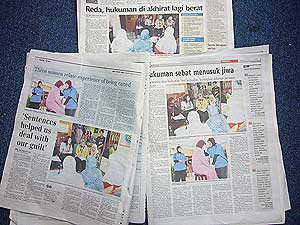 The caning of three women under strict Islamic laws in February for having illicit sex signaled the government's increasing adoption of a stronger Islamic agenda, and this has worried some investors.
A heated row over the use of the word "Allah" by Catholics, which sparked attacks on religious establishments, is also threatening to prolong minority unhappiness with the government.
What to watch :
- Efforts to resolve religious disputes. The government set up an interfaith committee to promote religious harmony and is trying to reach an out of court settlement with the Borneo Evangelical Church over the "Allah" dispute.
- If the government tries to woo Muslim voters with conservative policies, investors may be spooked.
- A severe worsening of tensions could raise the spectre of sectarian unrest, but this is not regarded as likely for now.
Corruption
Malaysia used to be regarded as one of the region's more reliable countries, but worsening corruption and a perceived
lack of judicial independence have damaged investment. Malaysia was ranked a record-low 56th position in anti-corruption body Transparency International's global ranking last year, and remains in the same position this year.
What to watch :
- Government efforts to deal with a scandal over a port trade zone close to Kuala Lumpur that exposed links between politics and business. False government guarantees given when the bonds were sold have triggered concerns among holders of $1 billion of bonds that they might not be repaid.
- Reuters


