




German media abuzz over Volkwagen's entry into M'sia
The entire German media landscape is abuzz over the entry of German automaker Volkswagen (VW) in Malaysia which will be built up as a Southeast Asian hub to foray into the lucrative Asian markets.
The entire German media landscape is abuzz over the entry of German automaker Volkswagen (VW) in Malaysia which will be built up as a Southeast Asian hub to foray into the lucrative Asian markets.
The Dec 21 inauguration of VW's assembly plant in Malaysia and the signing of an agreement by Christian Klingler from VW's board of management with the Malaysian partner company, DRB Hicom, in the presence of Malaysian Prime Minister Najib Razak, was widely reported in the German media.
Over the years, German newspapers and the trade media have been closely monitoring VW's moves in Malaysia, right from its abortive flirt with Proton to the successful conclusion of talks with DRB Hicom.
After all, the German industry is eyeing greener pastures abroad as the traditional markets show signs of saturation and even declining consumption.
Its modern infrastructure, distribution network and manufacturing capabilities makes Malaysia the most viable auto-manufacturing country in the Asean region, despite its high duties.
The German media describes this as giving "direct protectionism" to Proton and have factored it into VW's strategy to tap the markets of the other Asean countries whose collective population of 500 million exudes a magnetic appeal to the German automaker.
Growth is VW's corporate mantra for its future global aspirations.
First Passat model to be rolled out
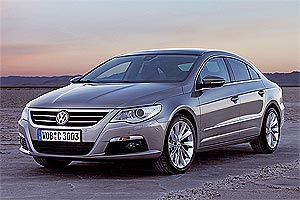 By the end of next year, VW expects to roll out the first Passat model (
right
) from its assembly lines.
By the end of next year, VW expects to roll out the first Passat model (
right
) from its assembly lines.
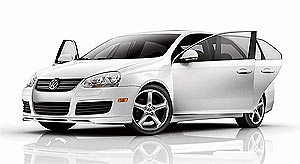
Later, possibly in 2012, VW will start assembly of another model called Jetta ( below ).
The operation will consist of assembly from parts delivered or, to use the auto-manufacturing jargon, on CKD basis.
From the initial capacity of a "few thousand vehicles" per year, VW will gradually increase the output.
The agreement signed in Malaysia between VW and DRB Hicom was the next logical step after the two inked a memorandum of understanding (MoU) last summer.
 According to VW, the Malaysian partner has the largest automobile assembly network in Malaysia, with its Pekan and Malacca plants producing cars and commercial vehicles.
Over and above, with its countrywide distribution network, the DRB Hicom is Malaysia's leading car trader and importer.
Klingler's remarks in Malaysia, that tapping the market potential of the Asean region had assumed great importance in VW's long-term growth strategy, resonated well in the German media, some of which carried pictures of Prime Minister Najib along with Klingler inspecting a Passat model.
Eyeing giant markets of India and China
VW's strategic planners were, apparently, impressed by the fact that more than 570,000 vehicles were sold in Malaysia this year.
The Southeast Asian region is virtually a new terrain for VW which, at one time, even thought of completely withdrawing from the region after its attempts to tie up with Proton ended in failure.
Asean's automobile market is highly attractive after the two giant markets of India and China.
VW, going by what Klingler said in Malaysia, would be systematically building up its presence in Malaysia and, through it, in Southeast Asia, utilising the existing structures and capacities.
The strategy is also aimed at using growth to propel itself to become the world's leading automobile manufacturer, ousting the present leader Toyota from this ranking, at the latest by the year 2018.
These calculations could well come to fruition; after all, VW is not only Germany's but also Europe's leading automaker.
- Bernama


Are you sure you want to delete this comment?
This action cannot be undone.