




MTUC and others do not have locus standi, court told
The Malaysian Trades Union Congress (MTUC) and other individuals and groups do not have locus standi (legal standing) to access the water concession agreement and the Syarikat Bekalan Air Selangor (Syabas) audit report.
This is the position of the federal government, senior federal counsel Azizah Nawawi, who is appearing for the government and the Water, Energy and Telecommunications Minister, told the Court of Appeal today.
The Malaysian Trades Union Congress (MTUC) and other individuals and groups do not have locus standi (legal standing) to access the water concession agreement and the Syarikat Bekalan Air Selangor (Syabas) audit report.
This is the position of the federal government, senior federal counsel Azizah Nawawi, who is appearing for the government and the Water, Energy and Telecommunications Minister, told the Court of Appeal today.
She said the interested parties were only the federal government, the Selangor government and Syabas.
Azizah told the three-member bench of the court that trite law is that if the MTUC and the individuals have no legal standing, then they should not be given such rights.
 “The application by MTUC and the individuals was misconceived as they should not be granted access to such information. There is no law in Malaysia where someone can have access to information.
“It is unlike in Australia or India, where there are such laws. If there is such a federal law, they can be granted access to the documents. Hence, confidential or documents classified as ‘ Rahsia ’ cannot be accessed by anyone, except the parties concerned, as this is a tripartite agreement which is deemed confidential under the Official Secrets Act,” she said.
Headed by Justice Zaleha Zahari, the other members on the bench were Justices Abu Samah Nordin and Mohd Hishamudin Mohd Yunus.
The minister and the federal government are appealing the landmark judicial review decision of the High Court in Kuala Lumpur on June 28, 2010, which granted access to MTUC and the individuals to access the classified documents, which are to be made public.
They were seeking the documents, which were deemed confidential, following the proposed price hike to the water tariff in 2006.
The appellate court, which heard submissions from Azizah and from the respondents led by Malik Imtiaz Sarwar late in the afternoon, will deliver its judgment on Thursday.
'High Court judge erred'
The senior federal counsel said MTUC as a federation of trade unions had not shown that it was adversely affected by the decision of the minister and federal government and hence, it had no legal standing.
Azizah, who is head of the civil division in the Attorney-General’s Chambers, also submitted that High Court judicial commissioner Hadhariah Syed Ismail, who delivered the judgment, had erred in law by going into the merits of the minister's decision.
“The audit report is tabled as part of the cabinet papers and is therefore deemed confidential. Pointing to the merits of the minister’s decision is overstepping the legal bounds,” she said.
This prompted Abu Samah and Hishamudin to question whether it is right to deem that all documents brought before the cabinet should be considered confidential.
“If let’s say the cabinet has your picture, will that be deemed classified?” asked Abu Samah.
“If there is a menu of food listed during the cabinet meeting, then should such a matter also be deemed classified?” queried Hishamuddin.
Such documents are usually annexed to the cabinet papers, which are classified confidential, but there are questions as to whether other materials provided should be deemed to be placed under the OSA.
Malik: Access to water a basic right
Malik contended that meaningful access to water was a basic human right.
“If it is a basic human right, then connection to this precious entity is also a right. The access to water is monopolised by Syabas in Selangor, Kuala Lumpur and Putrajaya.
“Hence MTUC and the other individuals as consumers have the right to gain access to such documents as there was a proposed hike in tariff. I would like to bring to the appellate court’s attention that the issue of legal standing was not brought up before in the High Court, and it should not be raised here,” Malik submitted.
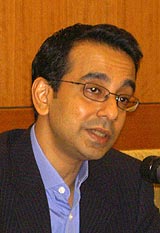 He said the respondents would be adversely affected by any tariff hike decision as they were consumers.
Malik ( left ) also told the court that Hadhariah in her landmark judgment had seen the documents upon the consent of the Selangor government and Syabas.
This resulted in the three judges questioning whether Syabas and the Selangor government had consented that Hadhariah had seen the document, the appeal could be rendered academic as they had allowed disclosure to the judge.
Malik said not granting access to such documents was wrong as it was not part of the cabinet documents and did not affect national security.
“Cabinet documents are records of decisions and deliberations including those of cabinet committees. Citizens should be granted access to information relevant to matters of governance, in particular a right to know about the affairs of the government which has been elected.
“This is an essential characteristic of the democratic form of government, which is entrenched in our federal constitution,” he said, arguing that the High Court decision should be upheld.
Court not convinced disclsure would be detrimental
Hadhariah, in her decision, said classifiying the agreement and audit report under the OSA was disproportionate to the aims of the Act and was against the principles of good governance, accountability, transparency, and (that) the interests of rakyat should come first.
“Since the government has failed to fulfil those principles, the court is compelled to do so.”
In her 19-page judgment, Hadhariah ruled that the court was not convinced that such a disclosure would be detrimental to national security or public interest.
“In fact, I am of the opinion that the truth is the contrary. It also cannot be in the spirit of OSA, to extend protection in cases where the government believes there will be public discussion and criticism of the government’s action,” the judicial commissioner said.
Hadhariah said having read the audit report herself, she concluded it contained information relevant to the concession agreement, in particular to the issue of raising the water tariff.
Saying that she could foresee public discussion and criticism of the government, the concession agreement and audit report should have been released in tandem as the report made certain comments and references to provisions and concessions in the agreement.
“The disclosure will serve the public interest in keeping the public informed of the working of the government, as well as promote discussion on public affairs,” she said.
“In this era of transparency, accountability and priority given to the needs of the rakyat... it is only fair for such documents to be made public. I am of the view the court should lean in favour of the aggrieved party in matters involving public interest,” said Hadhariah.
However, on July 2, Hadhariah allowed a stay application by the government.
MTUC and the other respondents wanted the disclosure of the concession agreement dated Dec 15, 2004, between the federal and Selangor governments and Syabas. They also sought the audit report justifying an increase of 15 percent in the water tariff scheduled for 2006.


Are you sure you want to delete this comment?
This action cannot be undone.