




Hammer, phone directory in 'chest fracture' theory
A lawyer representing the Bar Council threw the Teoh Beng Hock royal commission of inquiry (RCI) into a tizzy when he put forward his theory on how the chest bone of the DAP political aide came to be fractured.
A lawyer representing the Bar Council threw the Teoh Beng Hock royal commission of inquiry (RCI) into a tizzy when he put forward his theory on how the chest bone of the DAP political aide came to be fractured.
"While punching can cause external bruising, (a fracture to the chest bone without the presence of bruising) can also be caused by putting a telephone book on the chest and then using a hammer to hit it," said Christopher Leong.
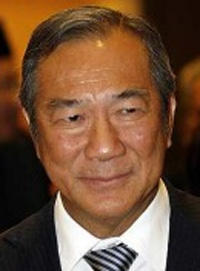 Startled, commission chairperson James Foong
(left)
quipped: "I think you have read up a substantial amount on the methods of torture. But you should put it that way and ask (the witness) that directly.”
Startled, commission chairperson James Foong
(left)
quipped: "I think you have read up a substantial amount on the methods of torture. But you should put it that way and ask (the witness) that directly.”
In an equally light-hearted response, Leong said: "Like you, I watch a lot of (popular American crime drama) CSI .”
Earlier during the morning’s proceedings, Foong had asked Leong to explain the purpose of his incessant questioning of government forensic pathologist Dr Khairul Aznam Ibrahim about the possible causes of the fracture of Teoh’s sternum (chest bone) and jaw.
"Going by your line of questioning, with the neck lock and the fracture of the chest bone, your proposition is that he may have had a direct hit on his chest...,” noted Foong.
"So what are your alternative theories? Was he being punched so hard before he fell? Because if he was, we should see external marks (on the chest), but there weren't. And then we wouldn't achieve what we are looking for.
Leong told the panel: "I am also here to get educated and to establish the causes of injuries.”
But Foong said: "We are not here for a medical course. There could be a 101 causes. What we're here to determine is whether there was a homicide, suicide or it was a case of a dead body being thrown out.”
Khairul maintained that it was more likely that the fracture to the sternum was caused by the fall.
It was previously established that Teoh had landed on his feet first and then buttocks, before falling on his right side of the body.
He could have kneed himself in the chest and jaw when he landed, causing the two hard bones to fracture, said Khairul, who was one of the first few to perform the autopsy on Teoh’s body.
Likely injuries
Cross-examined by Muhammad Shafee Abdullah - who is acting for the Malaysian Anti-Corruption Commission (MACC) - Khairul pointed out that it would be unlikely for someone who was thrown off the building to sustain injuries similar to those seen on Teoh.
“There would then should have been signs of struggle on the body of the victim to prevent himself from being thrown out. And he may not have had a choice on how he landed. The tendency of him not landing on his feet is higher,” said Khairul.
Shafee also revisited the suicide angle, asking the forensic pathologist from the Tengku Ampuan Rahimah Hospital about possible injuries that could be sustained if a person were to jump off a building.
“If someone jumps off a building when he is still alive, he may try to land on his feet... If the victim is alert, he may even try to break the fall while he is committing suicide, due to the natural instinct to survive,” he replied.
The RCI, set up to
 probe the circumstances of Teoh’s death in 2009, began its hearing on Feb 14 and will present its report to the Agong by April 25.
It will also assess the interrogation procedures of the MACC.
Teoh was found dead on the fifth floor landing of Plaza Masalam, Shah Alam on July 16, 2009, after being questioned overnight by the Selangor MACC on the 14th floor of the same building.
After an 18-month-long inquest, the coroner had delivered an open verdict, saying that the death was neither suicide nor homicide.


Are you sure you want to delete this comment?
This action cannot be undone.