




State polls crucial to Chinese future, says SUPP
The forthcoming Sarawak state election will be crucial to the Chinese in the state as they have to decide whether they want to be represented in the state government or otherwise, Sarawak United People's Party president Dr George Chan Hong Nam said.
He believed however that pragmatic thinking among the community would help them make a wise decision to determine the community's political future.
The forthcoming Sarawak state election will be crucial to the Chinese in the state as they have to decide whether they want to be represented in the state government or otherwise, Sarawak United People's Party president Dr George Chan Hong Nam said.
He believed however that pragmatic thinking among the community would help them make a wise decision to determine the community's political future.
"I have asked many of them and three-quarter of them said the Chinese should be in the government. Whether they will translated this into votes in the coming election, we can't be totally sure.
"However, we can tell them for sure that it is important to get our best representatives in the government. Young, middle-aged or old, you have the choice," he told Bernama in an interview in Kuching.
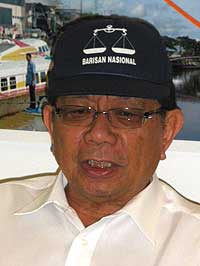 Chan, who is deputy chief minister, said the arguments by opposition parties that the Chinese should vote in more opposition representatives to voice out in the state assembly are flawed because doing so without being in the government
would not solve problems.
"For example, it is a known fact that if you are in a family, it would be easier for you to solve issues than those who are not in the family," he said.
Moreover, he said, many issues affecting the Chinese community in the state had been gradually solved, including the land premium issues and land for the Chinese schools where the state government had agreed to come in and reduced the burden.
This includes the repayment for the land premium renewal fees which had been made before June 1 last year, the removal of Section 47 of the state land code in Bako and land for Chinese independent schools.
"Some already starting to get back their refunds for the land premium, like those in Kenyalang Park. Apart from that, matters related to the UEC examination are also being address by the prime minister," he said, adding there were not much issues left unresolved.
During the interview, Dr Chan also touched on the party's candidates for the state election which he said had "more or less" been finalised and that all of them were considered to be "winnable candidates".
SUPP will perform better
SUPP has decided to retain all its 12 incumbents: Ranum Mina (Opar), Tan Joo Phoi (Batu Kawah), Jerip Susil (Bengoh), Francis Harden Hollis (Simanggang), Johnicol Rayong (Engkilili), Soon Choon Teck (Dudong), Wong Soon Koh (Bawang Assan), Vincent Goh (Pelawan), Dr George Chan (Piasau), Andy Chia (Pujut), Lee Kim Shin (Senadin) and David Teng (Repok).
The party has also decided to field new faces for its seven other seats: Padungan, Pending, Batu Lintang, Kota Sentosa, Meradong, Bukit Assek and Kidurong.
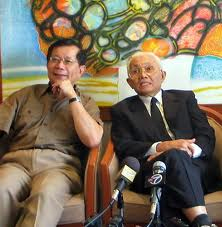 "I've spoken to the chief minister (about it) but have not formally submit the names. I can't reveal them at the moment," he said.
In the last state election, SUPP lost eight of 19 seats it contested but gained one additional seat when independent Engkilili assemblyperson Johnicol Rayong joined the party last year.
Chan said SUPP secretary-general Sim Kheng Hui had also lifted the suspension of the Meradong branch, effective last Tuesday, enabling it to move in full force ahead of the coming election.
The branch was suspended for almost two years following internal dispute over the branch's leadership.
Chan believed that SUPP, which has prepared itself for the state election since last year, would perform better than it did in the 2006 state election.
He said although the party lost the constituencies which had more than 80 per cent Chinese voters, it still managed to win the seats which had between 50 to 80 per cent Chinese voters.
For instance, he said, in his constituency Piasau, the number of voters was significantly lower in the 2006 election because some of the voters originally in Piasau had been shifted to the newly-created Senadin and in neighbouring Pujut.
"However, I still managed to win by a majority about 4,000 votes, which meant that I still had the support of about 70 per cent even though the number of voters was much smaller," he said.
Over the past few years, the party had recruited more than 30,000 new members, mostly young members, he added.
"If we are doing bad, nobody would want to join us. The party is actually not doing bad but the defeat in some seats in 2006 created the perception that we are (in a) bad (shape) and that we are going to lose badly in the coming state election," he said.
- Bernama


