




S'gor MB wants end to 'major irritation'
INTERVIEW Life at the top in a state government can be lonely. But it gets harder when members of one’s political party clamour for posts or contracts.
INTERVIEW Life at the top in a state government can be lonely. But it gets harder when members of one’s political party clamour for posts or contracts.
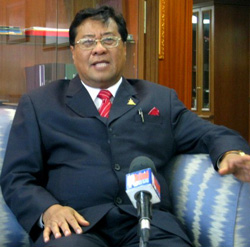 Selangor MB Abdul Khalid Ibrahim should know - he is up to his neck with demands from PKR which heads the Pakatan Rakyat-governed state.
Looking back on almost three years as head of the state administration, Khalid - never the consummate politician - said the incessant lobbying is a “major irritation”.
Interviewed at his office on the top floor of the state secretariat building in Shah Alam, he was forthcoming about the headaches of administering the country’s richest state.
As an example, he cited a recent exco discussion on revamping the waste disposal system, which had sent chills down the spine of some members who were anxious about who would be awarded the contract.
“We were evaluating the role of (solid waste disposal company) Alam Flora and the subcontractors. Among the (items of) discussion was about who (would) get the contract. We said, ‘You must hit hard on selection, the process must be perfect, transparent, and we must get the right people for the job’,” he disclosed.
“And some of our members said, ‘Eh if we do that, (we’ll come) under pressure by party members (who) don’t get contracts’.”
Khalid did not state how he resolves such dilemmas, but his aides have since claimed that the MB usually hands over applications to the respective heads of department without expressing special support for these.
However, he sees a solution in Germany and Sweden, where a state-funded foundation makes grants available to lawmakers regardless of their political ideology.
In the case of Germany, a law passed in 1992 enables political parties to receive funding from the state if they win a certain percentage of valid votes in an election. The funds are disbursed annually.
While adopting this remains an incipient idea, Khalid appeared upbeat about what he called “a willingness to change”.
“Rather than parties getting commissions from jobs or their own businesses in order to contribute to the (party’s coffers), why doesn’t the state put up a fund for the parties, and distribute (the money) based on the number of votes?
“People are coming to us complaining about political survival. Why don’t we solve it at macro level? It may, in the end, eliminate corruption.”
It would also end the practice of political parties having to supplement their income through government contracts, he noted.
Khalid is planning to enlist speakers from Germany and Sweden, as well as Indonesia where the policy is in its fledgling state, to expand on the idea in Selangor.
‘BN will get money too’
If his administration approves the proposal, Khalid pledged that it will be implemented impartially - awkward though it may be to make funds available to the 20 BN assemblypersons in the state legislature.
“(If this were to be implemented at federal level), of course BN would get the lion’s share. But they cannot (then) be corrupt as well,” he said.
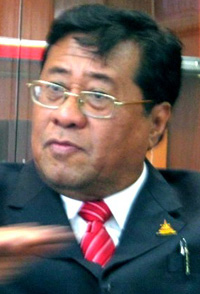 Sensing disbelief, the MB responded in almost paternal manner: “It will take a few years before people understand or appreciate what we want to do. Our ultimate goal is to enhance democracy and the way government is managed.”
He dismissed the question if this is a Utopian dream: “How (is it that) Germany can have (such a foundation) and not Malaysia? It is not impossible. We just need a core reason first, (and) get it handled well.
“Of course, their politics may be intellectually higher. Germany has an old democracy, (while) the American democracy is 300 years old. The British Parliament has been around for many years (and even has a history of) chopping off heads.
“I’m not saying that evolution is systematic but we should also learn the best from the results. (Look at) Indonesia - 20 years ago, we were laughing at how they handled themselves democratically. And now, they may have (the last laugh) on us.”
The crux of implementation will boil down to two things - the level of corruption, and how much an elected representative earns as member of parliament or state assemblyperson.
Khalid is familiar with both positions, as he is simultaneously MP for Bandar Tun Razak and assemblyperson for Ijok.
“The fundamental issue is that the salary is not enough to fund political activities, therefore they (elected representatives) need support from others. But ... when you get support from others, by the laws of nature they would expect something in return.
“Then you’d be (involved) in a conflict of interest. On the one hand, you need to take care of the (people’s) interests. On the other, you need some party support for funding.
“So when making decisions, you (would) not (be) free. If funding is no longer an issue, decision making will be concentrated on what is fair and deliverable.”
Tomorrow: ‘I was annoyed about Khusrin's appointment’


