




Fast backward: What happened in Bukit Merah
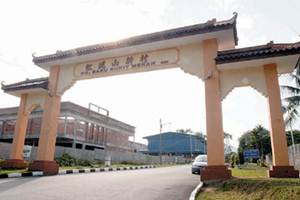
News of the setting up of a rare earth refinery in Pahang is sending jitters down the spines of Malaysians who remember the drawn-out battle against a similar plant in Bukit Merah, Perak.
News of the setting up of a rare earth refinery in Pahang is sending jitters down the spines of Malaysians who remember the drawn-out battle against a similar plant in Bukit Merah, Perak.
Malaysiakini recalls what happened.
 1982
Asian Rare Earth (ARE), a joint-venture between main shareholder Mitsubishi Chemical industries Ltd, Beh Minerals, Lembaga Urusan dan Tabung Haji and several bumiputera businesses, begins operating its plant at Jalan Lahat, Bukit Merah.
1982
Asian Rare Earth (ARE), a joint-venture between main shareholder Mitsubishi Chemical industries Ltd, Beh Minerals, Lembaga Urusan dan Tabung Haji and several bumiputera businesses, begins operating its plant at Jalan Lahat, Bukit Merah.
1984 6700 residents of Papan (16 kms from Ipoh), where ARE is dumping its waste, sign a petition against it to the government while up to 3000 take part in several demonstrations and a hunger strike.
Up to 3000 residents including women and children take part in several demonstrations and a hunger strike.
Meanwhile, environmentalists, radiation experts, physicists and industrial waste experts from abroad visit the site and declare it unsafe with radiation up to 800 times the accepted levels.
1985 Residents of Bukit Merah obtain a stop work order from the High Court.
1986 Atomic Energy Licensing Board (AELB) deems the site safe, after an ARE clean up, as only some parts have more than acceptable radiation level.
1987 AELB issues a licence to ARE to resume work, to demonstrations involving up to 10,000 residents. More than 20, including women, were injured in one incident while 60 were detained by police. None were charged.
Eight residents take legal action against ARE, and up to 3000 marched 8 kms to court on the last day of proceedings. More than 100 were in the next month detained under the Internal Security Act and released after two months.
1989 Two children aged five and 11 and a 19-year-old man were diagnosed with acute leukemia. Other cases like brain cancer, septicemia and other complications are reported.
Seemingly healthy children exposed to radiation were tested and found to be less healthy than those in Carey Island, although the children of Bukit Merah were better nourished.
According to 1986 statistics, Bukit Merah should have only one case of leukemia in thirty years. By the time the plant shuts down, eight cases would have been diagnosed. Seven patients will not survive.
There are also reported cases of birth deformities involving children of workers at the plant.
1992 The Bukit Merah residents win their suit against ARE but the High Court's shutdown order is stayed upon ARE's appeal to the Supreme Court. The proceedings are adjourned.
1994 ARE announces that it will cease operations even though the case is pending.
2011 : Mitsubishi is reportedly engaged in a RM100 million clean-up effort in Bukit Merah, and contributes hundreds of thousands of ringgit to the local community.


Are you sure you want to delete this comment?
This action cannot be undone.