




MACC officer complains police didn't listen to him
A dispute on time difference took the spotlight at the royal commission of inquiry investigating the death of political aide Teoh Beng Hock, as an investigator from the anti-graft agency said police did not listen to him.
A dispute on time difference took the spotlight at the royal commission of inquiry investigating the death of political aide Teoh Beng Hock, as an investigator from the anti-graft agency said police did not listen to him.
Malaysian Anti-Corruption Commission (MACC) assistant enforcement officer Arman Alies told the inquiry today that when the police recorded his statement several days after Teoh’s fatal fall, they “didn’t jot down the (accurate) times” he mentioned that he had interviewed Teoh.
Teoh was interrogated by Arman and his colleague Mohd Ashraf Mohd Yunus when he was brought in a day before he died.
Following the death all MACC officials at their Selangor headquarters were interrogated by the police, and Arman said when it came to his turn the cops turned a deaf ear when he told them that he was interviewing Teoh from 10.30pm to 11.50pm on July 15, 2009.
He was responding to questions by the Bar Council’s lawyer, Christopher Leong, who raised that there were contradiction in Arman’s police statement and his testimony at the inquest.
“In the (police) statement you said the interview (with Teoh) was from 10.15pm to 12.40pm and in the inquest you said the interview was from 10.30pm to 12.30pm, now which is correct?” asked Leong.
Amran maintained that his memory does not fail him and he remembers correctly that he was only with Teoh for about one hour and 10 minutes.
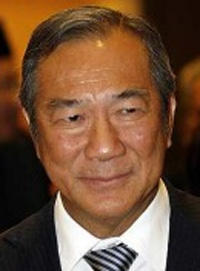 “It was the police officer at the Selangor police contingent headquarters who did not take down the times I said,” he complained to the panel today.
Chief commissioner James Foong ( left ), however, did not sympathise with Amran and snapped, “You mean (the situation) was just as Teoh (in his letter) had said that you all refused to take down his statement (verbatim)? It’s just like that, isn’t it?” he said, referring to a note believed to be handwritten by Teoh hours before he died.
‘Look at your own house first’
“You complain about other people’s department, you look at your own house first” said Foong.
Arman and Mohd Ashraf were tasked to take down Teoh’s statement on allegations pertaining to misuse of state funds by his employer Seri Kembangan assemblyperson Ean Yong Hian Wah.
Teoh, who was taken to the 14th floor of Selangor MACC office in Plaza Masalam on July 15, 2009, was found sprawled on the fifth floor landing of the same building the next day.
A coroner’s inquest into his death came out with an open verdict after two years in January, unable to pinpoint whether Teoh’s death was homicide or suicide.
The royal panel was formed immediately after to determine the matter and also check if the MACC’s interrogating procedures had violated human rights.
Leong suggested that Amran had used the spare time between “one hour 40 minutes to two hours 20 minutes” to intimidate Teoh, but Amran disagreed.
Prior to this, Leong put it to Amran that they did not need Teoh’s “assistance” in checking documents and invoices relating to Yong’s alleged offences.
“The invoices were dated back to 2008, so it would be simple to go through the two 2008 files,” said the lawyer, but Amran said he was afraid the invoices would be misplaced.
Leong pressed on that he was already familiar with the files and did not need Teoh, to which Amran responded, “The four files I’m familiar with. Teoh is more familiar with the documents in it”. He added that Teoh was treated as someone to provide information and in that process he and Mohd Ashraf were needed to help “tag suspicious-looking documents”.
At this juncture, Foong interrupted Amran and said: “Why is it so difficult to tag these documents that you need Mohd Ashraf’s help? Look, I tagged it myself.”
Before the inquiry adjourned for the day, MACC lawyer Muhammad Shafee Abdullah told the panel that he would not be able to furnish them with handwritten diaries of the anti-graft enforcers.
Commissioner T Selventhiranathan had asked Muhammad Shafee to submit diaries kept by enforcement officers to the inquiry.
‘MACC’s handwritten diaries destroyed’
“They don’t keep them any more, the diaries are not bilateral documents which are shared. In fact, the diaries are typed out into a 119 statement (as provided for under the Criminal Procedure Code) and the books are then destroyed,” said Muhammad Shafee.
“The handwritten ones were used in practice, but that was in the good old days where the superiors would endorse handwritten notes,” he said.
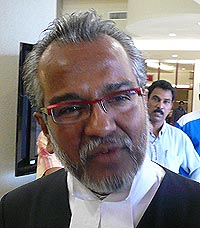 This, however came as surprise to Leong, who said: “I am astonished as I’ve never heard of police diaries being destroyed”.
Muhammad Shafee ( left ) immediately disputed Leong in a rather agitated manner, saying that the diaries are now typed out to make it official and insisted that was so that a wrong perception is not created.
“I don’t want it to stick into the public minds. Never have I in all my years as a defence lawyer seen an investigating body reveal everything. Never in the history of Malaysia has all been disclosed.
“The MACC has also taken this very positively and they agree to everything,” he said.
“Let us not argue. We will send our investigator to check it out. Datuk Seri (Muhammad Shafee), maybe you have have been misinformed, so let’s just check it out,” said Foong, also conveying his appreciation to MACC for being helpful.


