




Nuclear plant beset by new problems
The cooling system at the number two reactor at the quake-damaged Fukushima No 1 nuclear power plant in Japan has failed, Jiji Press reported Monday, citing operator Tokyo Electric Power Co (Tepco).
The cooling system at the number two reactor at the quake-damaged Fukushima No 1 nuclear power plant in Japan has failed, Jiji Press reported Monday, citing operator Tokyo Electric Power Co (Tepco).
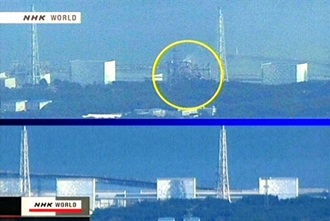 The No 1 and 3 reactors at the same plant have experienced the same problem, followed by explosions in the buildings surrounding those reactors in the wake of last Friday's 8.9-magnitude quake and devastating tsunami.
The No 2 reactor has totally lost its cooling function, public broadcaster NHK said, citing the country's Nuclear and Industry Safety Agency.
Japan is continuing in its efforts to avert a catastrophic meltdown at the power plant in the wake of the quake and deadly tsunami.
Prime Minister Naoto Kan has said the plant is still in an "alarming" state, a blast at its No 3 reactor earlier shook the facility and sent plumes of smoke billowing into the sky.
The plant's operator TEPCO said that 11 people were injured in the blast, which authorities said was probably a hydrogen explosion.
The chief government spokesman Yukio Edano said Tepco reported that the reactor was probably undamaged and there was a low possibility of a major radiation leak at the plant, 250km northeast of Tokyo.
Another explosion blew apart the building surrounding the plant's No 1 reactor on Saturday but the seal around the reactor itself remained intact.
Authorities have declared an exclusion zone within a 20km radius of the plant and evacuated 210,000 people.
Tens of thousands feared dead
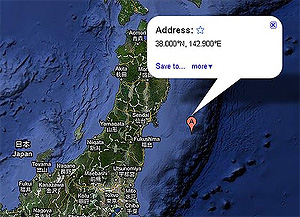 Meanwhile panic selling saw stocks tumble on the Tokyo bourse, with carmakers, banks and electronics firms taking a hit on fears for the economy as power shortages prompted rolling blackouts and plants remained closed in quake-hit areas.
Tens of thousands of people arere feared dead as Prime Minister Naoto Kan said 15,000 people had been rescued so far.
Alone in the town of Onagawa in Miyagi prefecture, one of the areas hardest-hit in Friday's disaster, more than 1,000 bodies were found, Naoto Takeuchi, local police chief, told a news conference.
Takeuchi also said about 1,000 bodies were also found in Minami Sanriku in the prefecture.
Takeuchi said the death toll in the prefecture alone could exceed
10,000.
The number of confirmed dead and missing after the earthquake and tsunami has risen to 5,000, police said.
Tens of thousands remained unaccounted for after Friday's
disaster, news reports said, and the whereabouts of about 2,500
tourists visiting the disaster-stricken areas had not been
confirmed, the Japan Tourism Agency said.
Twin devastations
As the nation struggled with the devastation wrought by the twin disasters of a shattered land and a surging sea, tales of terror, death and miraculous survival emerged.
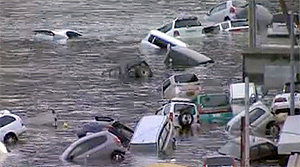
Miki Otomo, whose home near Sendai was destroyed, said she quickly piled into the car in a desperate bid to outrun a churning torrent of wood, mud and metal.
"The tsunami wave was coming and I grabbed grandfather and our dog and drove. The wave was right behind me, but I had to keep zigzagging around obstacles and the water to get to safety," she told AFP .
But many were not so lucky. Miki Otomo's sister was in a bus when the wave bore down on it.
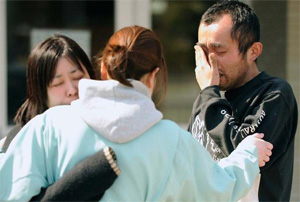 "The bus driver told everybody to get out of the bus and run. My sister was able to get away but some people just couldn't run fast enough," she said.
The slower passengers were engulfed by the swirling waters, the image of their deaths seared into the survivors' memories.
Otomo is now living at an evacuation centre in an area school with about 1,000 other exhausted survivors who cheated death.
A new tsunami scare triggered evacuations on the devastated northeast coast after a large wave was spotted rolling in to shore, but authorities later lifted an alert.
With ports, airports, highways and manufacturing plants shut down, the government has predicted "considerable impact on a wide range of our country's economic activities".
Tokyo's stock market plunged more than six percent in afternoon trade as investors absorbed the impact, including power outages and plant shutdowns.
 The yen surged to a four-month high after the central bank pumped a record amount of money into financial markets while shares in auto makers were hammered more than 10 percent after they were forced to close factories.
Leading risk analysis firm AIR Worldwide said the quake alone would exact an economic toll estimated at between $14.5 billion and $34.6 billion (10 billion to 25 billion euros), without taking into account the effects of the tsunami.
Japan's worst crisis since WWII
Kan said in a televised national address Sunday that Japan was facing its worst crisis since the end of World War II -- which left the defeated country in ruins.
"The current situation of the earthquake, tsunami and the nuclear plants is in a way the most severe crisis in the 65 years since World War II," said the premier, who was dressed in an emergency services suit.
Rolling power outages were due to start later Monday. Millions of people have already been without electricity since the disaster hit Friday, forcing the shutdown of nuclear plants in the affected areas.
Japan relies on nuclear energy for about a third of its power needs.
Edano said Sunday it was likely a partial meltdown had occurred at the Fukushima number-one reactor. A meltdown occurs when a reactor core overheats and causes damage to the facility, potentially unleashing radiation into the environment.
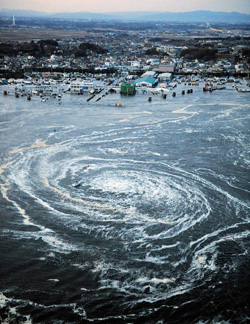 France's Institute of Radiation Protection and Nuclear Safety said "very large" amounts of radioactivity were "produced simultaneously with the explosion" at Fukushima Saturday.
The United Nations said a total of 590,000 people had been evacuated in the quake and tsunami disaster, including 210,000 living near the two Fukushima nuclear plants.
The colossal 8.9 magnitude tremor sent waves of churning mud and debris racing over towns and farmland in Japan's northeast, destroying everything in its path and reducing swathes of countryside to a swampy wasteland.
The police chief in badly hit Miyagi prefecture said the death toll was certain to exceed 10,000 in his region.
In the Miyagi port town of Minamisanriku alone some 10,000 people were unaccounted for - more than half the population.
Authorities overwhelmed
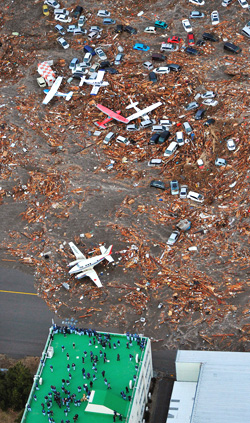 The national police agency said the confirmed death toll now stood at 1,597, but groups of hundreds of bodies were being found along the shattered coastline.
Many survivors were left without water, electricity, fuel or enough food, as authorities appeared overwhelmed by the monumental scale of the disaster.
Japan committed 100,000 troops - about 40 percent of its armed forces - to help earthquake and tsunami survivors as the world rallied behind the disaster-stricken nation and a US aircraft carrier began ferrying in food.
Japan sits on the 'Pacific Ring of Fire', and Tokyo is in one of its most dangerous areas, where three continental plates are slowly grinding against each other, building up enormous seismic pressure.
The immense force of Friday's quake has moved Honshu - the main Japanese island - by 2.4 metres, the US Geological Survey said.
- Agencies


