




Nuke plants: Time for rethinking
COMMENT The tragedy unfolding in Japan following the massive earthquake and ensuing tsunami is heartbreaking. It is an unfolding crisis.
It is tragic that panic over radiation leaks from the Daiichi plant is diverting attention from other threats to survivors of March 11 9.0 magnitude quake and tsunami, such as the cold or access to fresh water, food and fuel.
The tragedy unfolding in Japan following the massive earthquake and ensuing tsunami is heartbreaking. It is an unfolding crisis.
It is tragic that panic over radiation leaks from the Daiichi plant is diverting attention from other threats to survivors of March 11 9.0 magnitude quake and tsunami, such as the cold or access to fresh water, food and fuel.
On Friday March 18, Japan raised the severity rating of the country's nuclear crisis from Level 4 to Level 5 on a seven-level international scale, putting it on par with the Three Mile Island accident in Pennsylvania in 1979.
We should draw a lesson from Japan which is now fighting a lethal peril, right after the earthquake and tsunami. The Tokyo Electric Power Company reactors in Fukushima are releasing radioactive materials into the environment.
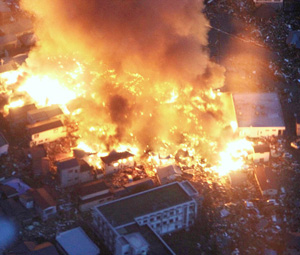 Radiation levels near the quake-stricken nuclear plant are now harmful to human health within a radius of 20 kilometres, Japan's government says after explosions and fires at the facility.
We have now had four grave nuclear reactor accidents - Windscale in Britain in 1957, Three Mile Island accident, the US in 1979 ,Chernobyl, Ukraine in 1986 and Fukushima, 2011.
The dangers from exposure to radiation are well known, such as long-term health problems - cancers and hereditary defects. Contamination of the environment and agriculture, etc. all pose many risks for people, animals and plants.
Environmental nightmare in the making
There are major concerns on the safety of nuclear power stations. The risks far outweigh the benefits.
Millions of dollars of investment in nuclear power have the potential to turn into trillions of dollars of liability and environmental nightmare.
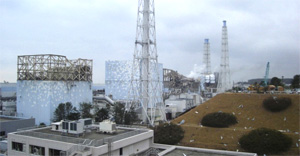 The lesson from Fukushima is that nuclear energy is inherently dangerous. As Eugene Robinson wrote in the
Washington Post
recently: "We can engineer nuclear power plants so that the chance of a Chernobyl-style disaster is almost nil.
The lesson from Fukushima is that nuclear energy is inherently dangerous. As Eugene Robinson wrote in the
Washington Post
recently: "We can engineer nuclear power plants so that the chance of a Chernobyl-style disaster is almost nil.
"But we can't eliminate it completely -- nor can we envision every other kind of potential disaster. And where fission reactors are concerned, the worst-case scenario is so dreadful as to be unthinkable."
Countries like Switzerland, Germany, Italy, and others have responded quickly to Fukushima Daiichi by reviewing their nuclear plant operations or plans to construct new reactors.
Given the current Japanese experience (and other similar incidents elsewhere in the world), we urge the Malaysian government to abandon its plans to build nuclear power plants.
There are viable alternatives such as solar/wind power, etc, which are both safer and cleaner. Importantly, energy efficiency and reducing energy consumption are better alternatives to harnessing nuclear technology. In this context, review the National Energy Policy.
If the competent and technologically brilliant Japanese cannot build a completely safe reactor, can we?
In this regard, the Malaysian government should also put a stop to the ongoing construction of the rare earth refinery plant in Gebeng near Kuantan as the radioactive elements associated with its industrial procedure are indeed a cause for public concern.
Fukushima is a reminder that when nuclear reactors fail, we cannot control what is unleashed. Malaysians, particularly the federal government, owes it to the present and future generations to stop the building of nuclear plants. Earthquakes know no boundaries.
This statement is endorsed by the following Fellows of the Asian Public Intellectual Program:
Dr Phua Kai Lit
Dr Hezri Adnan
Dr Henry Chan
Assoc Prof Mustafa Kamal Anuar
Josie M Fernandez
Dr Yeoh Seng Guan
Dato Dr Toh Kin Woon
Professor Dr Tan Sooi Beng
Salma Khoo
Dr Wong Soak Koon
Dr Shanthi Thambiah
Dr Colin Nicholas
Assoc Prof Dr Fadzilah Majid Cooke
Chi Too
Loh Yin Sang
Dain Iskandar
Dr Kam Suan Pheng
Sharaad Kuttan
Prof Dr Muhamad Salleh
Dr Lim Mah Hui
Dr M Nadarajah
And Sociologists Without Borders-Malaysia Chapter


