




WHO warns of 'serious' food radiation in Japan
The World Health Organisation (WHO) said today that radiation in food after an earthquake damaged a Japanese nuclear plant was a “serious situation”, eclipsing clear signs of progress in a battle to avert a catastrophic meltdown in the reactors.
The World Health Organisation (WHO) said today that radiation in food after an earthquake damaged a Japanese nuclear plant was a “serious situation”, eclipsing clear signs of progress in a battle to avert a catastrophic meltdown in the reactors.
Engineers managed to rig power cables to all six reactors at the Fukushima complex, 240km north of Tokyo, and started a water pump at one of them to reverse the overheating that has triggered the world's worst nuclear crisis in 25 years.
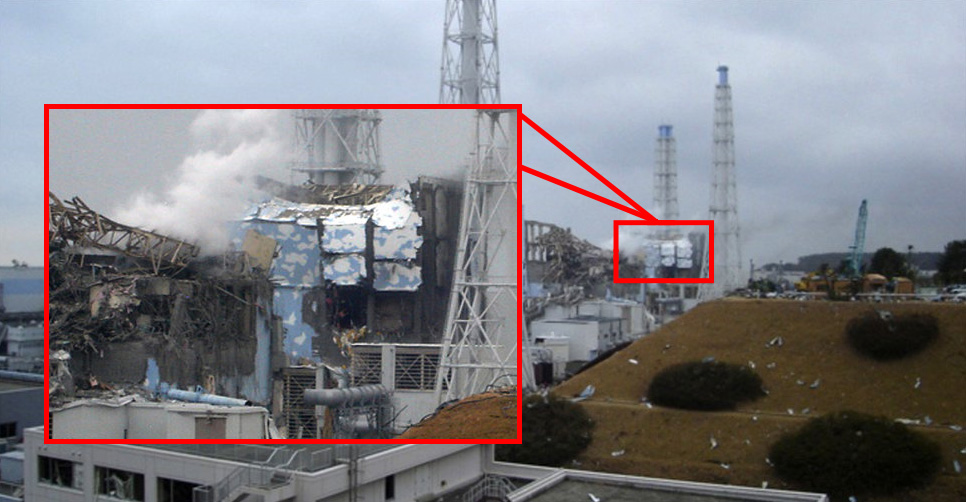 Some workers were later evacuated from one of the most badly damaged reactors when gray smoke rose from the site. There was no immediate explanation for the smoke, but authorities had said earlier that pressure was building up at the No. 3 reactor.
The amount of smoke later receded.
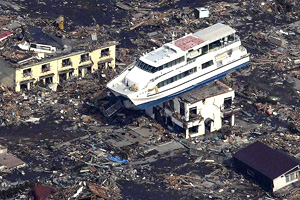
The March 11 earthquake and tsunami left more than 21,000 people dead or missing and will cost an already beleaguered economy some US$250 billion.
Overshadowing news from the facility, however, was mounting concern that radioactive particles already released into the atmosphere have contaminated food and water supplies.
 “Quite clearly it’s a serious situation,” Peter Cordingley, Manila-based spokesman for WHO’s regional office for the Western Pacific, told Reuters in a telephone interview.
“It’s a lot more serious than anybody thought in the early days when we thought that this kind of problem can be limited to 20 to 30 kilometres ... It’s safe to suppose that some contaminated produce got out of the contamination zone.”
Japan’s health ministry has urged some residents near the plant to stop drinking tap water after high levels of radioactive iodine were detected.
Cases of contaminated vegetables and milk have already stoked anxiety despite assurances from officials that the levels are not dangerous. The government has prohibited the sale of raw milk from Fukushima prefecture and spinach from a nearby area.
‘No evidence of contaminated food’
Cordingley said there was no evidence of contaminated food from Fukushima reaching other countries.
Japan is a net importer of food, but has substantial exports - mainly fruit, vegetables, dairy products and seafood - with its biggest markets in Hong Kong, China and the United States.
China would monitor food imported from Japan, the Xinhua news agency said, citing the country's quality control watchdog.
South Korea said it would expand inspections for radioactivity to processed and dried agricultural Japanese food, from just fresh produce.
 The World Bank, citing private estimates of between US$122 billion and US$235 billion for the cost, said the disaster would depress Japanese economic growth briefly before reconstruction
kicks off and gives the economy a boost.
At Fukushima, 300 engineers have worked around the clock inside an evacuation zone to contain the worst nuclear accident since Chernobyl, Ukraine, in 1986.
They have been spraying the coastal complex with thousands of tonnes of sea water so fuel rods will not overheat and emit more radiation. Hopes for a more permanent solution depend on
electricity cables reactivating on-site water pumps at each of the six reactors.
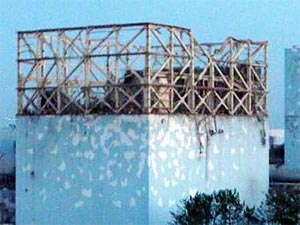
The most badly damaged reactors are No. 3 and 4, which were both hit by explosions last week.
US Energy Secretary Steven Chu, asked by CNN whether the worst of Japan's 10-day nuclear crisis was over, said yesterday: “Well, we believe so, but I don't want to make a blanket
statement.”
Radiation levels ‘appear to be falling’
US Nuclear Regulatory Commission chairman Gregory Jaczko added that radiation levels at the plant appeared to be falling.
Prime Minister Naoto Kan also said the situation at the nuclear plant was slowly improving.
 If the cooling pumps cannot restart, drastic measures may be needed like burying the plant in sand and concrete.
Easing Japan's gloom briefly, local TV yesterday showed one moving survival tale: an 80-year-old woman and her 16-year-old grandson rescued from their damaged home after nine days.
Official tolls of dead and missing are rising steadily - to 8,450 and 12,931 respectively.
The death toll could jump dramatically since police said they believed more than 15,000 people had been killed in Miyagi prefecture, one of four that took the brunt of the tsunami.
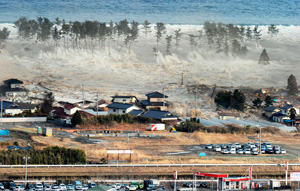
The 9.0-magnitude quake and ensuing 10m tsunami made more than 350,000 people homeless.
Food, water, medicine and fuel are short in some parts, and near-freezing temperatures
during Japan’s winter are not helping.
- Reuters


