




Election fever yet to infect Taib's home ground
While campaigning would have gone into full swing in many constituencies in the Sarawak state election, Chief Minister Abdul Taib Mahmud’s home ground was eerily quiet.
While campaigning would have gone into full swing in many constituencies in the Sarawak state election, Chief Minister Abdul Taib Mahmud’s home ground was eerily quiet.
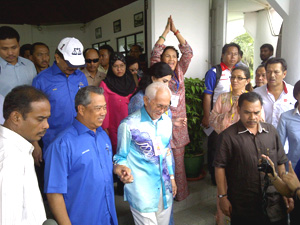 Even immediately after the nominations yesterday, there were still hardly any banners or buntings around the
Balingian
constituency where Taib (
centre
) has been the assemblyperson since 2001 (he was the lawmaker for the Asajaya state seat before that).
Even immediately after the nominations yesterday, there were still hardly any banners or buntings around the
Balingian
constituency where Taib (
centre
) has been the assemblyperson since 2001 (he was the lawmaker for the Asajaya state seat before that).
In fact, save for several longhouses which have sported posters of Prime Minister Najib Abdul Razak, Mukah town situated inside the constituency still looked pristine and well-kept.
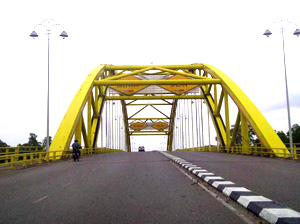 It would almost appear that Taib, having been the chief minister for 30 years, is not pressuring himself too much with the details.
In the state seat where he pulverised his opponent from PKR in the last state election in 2006, leaving Ibrahim Dayau in the dust with a mere 667 votes, he reciprocates his voters’ gestures.
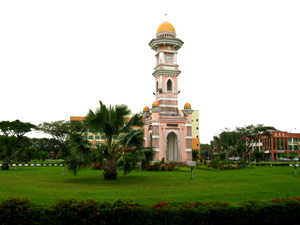 Where longhouses and villages in other parts of Sarawak have been left with
no running water
or electricity for decades, the ones in Balingian are made of brick and concrete.
Where longhouses and villages in other parts of Sarawak have been left with
no running water
or electricity for decades, the ones in Balingian are made of brick and concrete.
Some even had Astro dishes on their roofs for 24 hours of viewing pleasure and new Japanese cars in the driveways.
And that was just on the way to Mukah town, about two-and-a-half hours’ drive away from Sibu.
Freshly-paved roads
Greeting the constituency itself is freshly-paved roads, with palm oil plantations lining the sides of the single-lane roads.
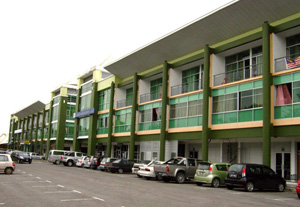 Upon reaching the town centre in Mukah, one could possibly be amazed at the modernity and the careful planning it enjoys, as if it was Taib himself who monitored the town’s progress.
The roads are wide and well-kept with hardly a pothole in sight, sheltered with broad rain trees.
Though a small town with only six short roads going through it like a grid, new buildings and shoplots spring up on each sides.
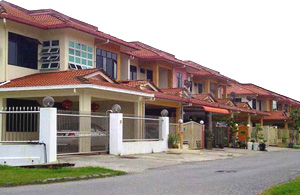 The buildings however don’t look more than 10 years old.
But to credit the chief minister for the sudden and rapid development of his constituency may be a little far-fetched when Mukah was not exactly the boondocks to begin with.
 Historically, it started out as a fishing and trading port, situated strategically at the mouth of the Mukah river by the South China Sea with its hinterland a major sago producing area.
Now, it thrives on the recent palm oil plantations which have encompassed a large part of the Bailingian landscape.
Life has been good
But driving through Mukah and Balingian, there was no compelling sense of want observed of the locals. Young kampung boys zoomed around their villages wearing English Premier League football jerseys (though they could have been imitations) on shiny scooters or motorcycles.
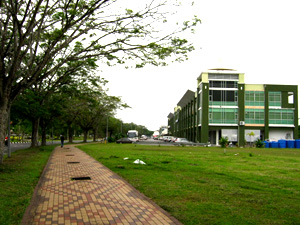 The fishing village of Kampung Telian in the area also do not look like any ordinary village in peninsular Malaysia.
While there are still several wooden structures around the fishing ports and jetties by the river, many of the other ‘village houses’ look more like concrete bungalows, with fresh paint jobs.
Speaking of bungalows, they too are aplenty here in Mukah. Apart from the well-planned residential areas, there are also several lots of mansions that could put those in the Klang Valley to shame.
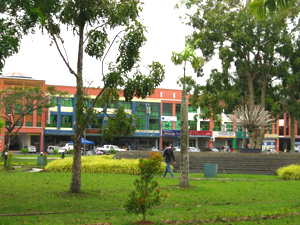 But one distinct characteristic, unlike the other Sarawak towns where the obvious display of wealth is restricted to only the Chinese, Balingian gives a general sense of well-being among most if not all of its inhabitants.
And when polling day comes on April 16, it would truly require a Sarawak miracle to off pull an upset against Taib.
With 11,792 voters, the state seat of N51 has about 70% Melanau voters, 17% Iban voters and 13.2% Chinese voters.


Are you sure you want to delete this comment?
This action cannot be undone.