




HK firm seeks to revive rare earth mining in Perak
Despite the storm brewing over the Gebeng rare earth refinery, the Perak state government is teaming up with a Hong Kong-listed company to explore and mine rare earth minerals at Bukit Merah, near Ipoh.
Despite the storm brewing over the Gebeng rare earth refinery, the Perak state government is teaming up with a Hong Kong-listed company to explore and mine rare earth minerals at Bukit Merah, near Ipoh.
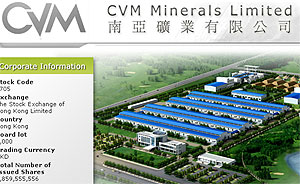 According to an announcement at the Hong Kong Stock Exchange by CVM Minerals Ltd, the company had signed a memorandum of understanding (MOU) on April 18 with Perbadanan Kemajuan Negeri Perak (PKNP) for the joint-venture exercise.
PKNP is the investment arm of the Perak state government, but a state exco member, Dr Mah Hang Soon, has confirmed that the project had yet to be discussed by the state cabinet.
It said that the joint-venture is for the purposes of "the exploration and mining of rare earth and other potential minerals and activities related thereto over the land situated at Bukit Merah, Perak".
It also disclosed that the company, through its Malaysian subsidiary CVM Metal Recycle Sdn Bhd, had on April 18 submitted an application for a licence from the Perak land and mineral office, to explore the concession area which is about 250 hectares.
Exit clause specified
Once the licence is granted, CVM Minerals and PKNP would enter into an agreement setting out the terms and conditions of their participation in the project.
According to the proposed joint-venture, CVM Minerals would be the major shareholder while PKNP would control 135,300,000 shares of CVM Minerals, approximately 4.73 percent of the entire issued share capital.
However, if the licence is rejected by Perak state government, the MOU would be terminated.
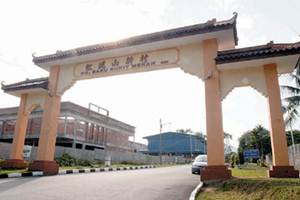 The company claimed that in the early nineties, two rare earth processing plants had operated at Bukit Merah to produce mixed rare earth products.
According to the CVM Minerals' official website, it was registered and listed in Hong Kong but the headquarters is located in Kuala Lumpur with a Hong Kong branch. Its board of directors and management team consist mainly of Malaysians.
The company is currently operating a magnesium smelter at the Kamunting Industrial Park, Perak. Its vision is "to become the first primary magnesium producer in the South-East Asia".
Gov't yet to discuss project
Meanwhile, Mah, who is in-charge of local government, consumer affair, environment, transportation and non-Muslim affairs, said that the state government has not deliberated on the matter.
"(The state exco) have not discussed this because we have not been informed," he said when contacted.
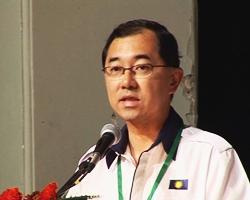 "I'm very concerned about this project," he said, adding that the government will study the proposal with due diligence before making a decision on the licence application.
However, Mah ( right ) said that he had seen the MOU after being informed by journalists today.
He said the MOU states that the project will only involve mining activities and not actual processing of the rare earth mineral which can lead to radioactive exposure.
Repeated attempts to contact Perak Menteri Besar Zambry Abdul Kadir for comments have been futile.
Fury over Lynas plant
The recent revelation of the Lynas Advanced Material Plant in Gebeng, some 25km northeast of Kuantan, Pahang, sparked much public outrage over fears of potential radiation poisoning that could effect communities living in and around the industrial area.
Both the Australian mining giant and the government repeatedly gave assurances that the plant's operations will produce negligible levels of radiation and is not the same as the controversial Asian Rare Earth factory run by Mitsubishi Chemical between the 1980s and 1990s in Bukit Merah.
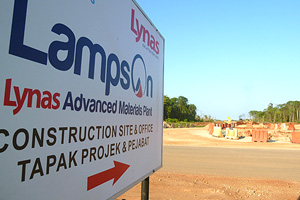 Detractors however brushed aside the assurances, questioning Lynas' rationale for building its rare earth processing plant in Pahang when it has to ship in its raw material from its mine in Mount Weld, Western Australia, some 2,500km away.
They also stressed that concerns over radiation poisoning is inevitable as there has not been any clear plans until now on how and where the plant's waste material - allegedly a major source of radiation - will be disposed.
The government, apparently bowing to public pressure, however announced recently that it would establish an "independent, international expert" panel to carry out a one-month conclusive study on whether or not the plant is safe.


Are you sure you want to delete this comment?
This action cannot be undone.