




MACC reports 'strong showing' in 2010
The Malaysian Anti Corruption Commission today reported a record performance for last year, with a 119 percent jump in the number of cases it took to court.
The Malaysian Anti Corruption Commission today reported a record performance for last year, with a 119 percent jump in the number of cases it took to court.
MACC chief commissioner Abu Kassim Mohamed said 381 people were charged in court during the whole of last year, with a success rate of 71 percent or 270 convictions.
The 2010 figures far outdid the MACC performance in 2009, when it took 174 cases to court and obtained 111 convictions or a 64 percent success rate.
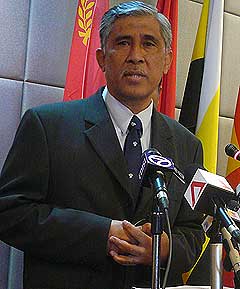 However, Abu Kassim (
right
) said, these cases represented only those taken to the sessions or lower courts.
However, Abu Kassim (
right
) said, these cases represented only those taken to the sessions or lower courts.
"If we were to include those in the higher courts, such as the Appeals Court and others, the figures would probably be higher," he told reporters after a briefing on the commission's 2010 annual report to the parliamentary special committee on the MACC this morning.
Abu Kassim said the commission was also encouraged by the total number of people arrested for giving bribes, which hit a record high in the history of Malaysia's anti-graft efforts.
"Last year we made 944 arrests, which is the highest number since the anti-graft agency was established in Malaysia in 1967. Of that number, 414 were caught for giving bribes, which is a big jump."
He credited the increase in arrests of bribe-givers to constant efforts by the government in raising awareness within the public service to act against bribery and corruption.
Parliamentary panel chairperson Mohd Radzi Sheikh Ahmad (BN-Kangar) said his six-member committee, split evenly between backbenchers and opposition MPs, expects to spend five days going through the MACC annual report, starting from May 9-10 and continuing from May 16 to 18.
"We will go through the report, and call the MACC for clarifications if need be. Once we are done, we will present the report, with our recommendations, to the Prime Minister (Najib Abdul Razak), who we expect will table it in Parliament."
'Give MACC a chance '
 Radzi said the committee was hopeful it could come up with its recommendations before the next meeting of Parliament is convened in June.
Panel member Abdul Rahman Dahlan (BN-Kota Belud) urged members of the public to give their support to the anti-graft body, which he said was still very much a "work in progress".
Rahman ( right ) said much of the MACC's structure and the laws governing it were adopted from the world-renowned Independent Commission Against Corruption (ICAC) in Hong Kong, which he said faced much the same challenges when it started out some 30 years ago.
"It took the ICAC a long time to get to where it is now. In the beginning they were faced with a very sceptical public service, but they kept on doing their work and now they are among the best in the world.
This is the second year the MACC has presented its annual report since it was restructured from the previous Anti Corruption Agency on Jan 1, 2009, under the MACC Act 2008.
However, Abu Kassim refused to entertain any questions that was not related to the report.


