




'Malaysia is world's best place for rare earth refining'
In a brief video posted on its Facebook website, Australian mining company Lynas described the east coast of Malaysia as one of the "best places in the world" to build its rare earth plant.
In a brief video posted on its Facebook website, Australian mining company Lynas described the east coast of Malaysia as one of the "best places in the world" to build its rare earth plant.
 In the 26-second interview footage, Lynas Corp's executive chairman Nicholas Curtis explains why the Lynas Advanced Material Plant (LAMP) was not located in Australia in spite of getting all the approvals to construct the refinery there.
He said that the original plan was to build it in Australia but "it doesn't work".
"Australia is not, unfortunately, competitive in the chemical industry to where the east coast of Malaysia is. It is one of the best places in the world to build the factory."
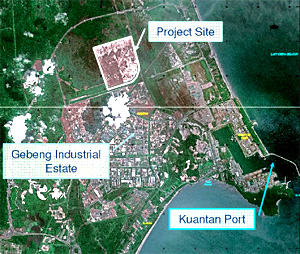 Curtis said Lynas liked the business environment and infrastructure of Malaysia and "most importantly, the people".
However, he did not elaborate further in the footage.
The recent revelation about the construction of LAMP in Gebeng, some 25km northeast of Kuantan, Pahang, sparked much public outrage over fears of potential radiation poisoning that could effect communities living in and around the industrial area.
'Radiation levels will be negligible'
Both the Australian mining giant and the government repeatedly gave assurances that the plant's operations would produce only negligible levels of radiation and that this would not be the same as the controversial Asian Rare Earth factory run by Mitsubishi Chemical in Bukit Merah, Perak, between the 1980s and 1990s.
However, opponents of the project have brushed aside the assurances and questioned Lynas' rationale for building its rare earth processing plant in Pahang, to which it had to ship in the raw material from its mine in Mount Weld, Western Australia, some 2,500km away.
They also stressed that concerns over radiation poisoning were inevitable as there has so far not been any clear plan on how and where the plant's waste material - said to be a major source of radiation - would be disposed.
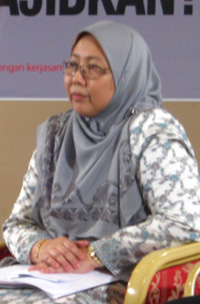 Bowing to public pressure, the government recently announced that the UN nuclear agency International Atomic Energy Agency (IAEA) would organise an expert panel to advise the government of Malaysia on the potential radiation risks of the plant.
The panel will review the Lynas project's compliance with relevant international safety standards and good practices and provide an independent expert opinion on the radiological safety aspects of the project.
However, PKR Kuantan MP Fuziah Salleh ( right ), who is spearheading the opposition to the project, has questioned the impartiality of IAEA, citing a report that states one of the agency's functions as the promotion of nuclear energy.
Residents stage rally
Meanwhile, at least 100 residents of Balok and its surrounding areas staged what they claim is their fourth in a series of peaceful demonstrations against the Lynas plant to be built in nearby Gebeng.
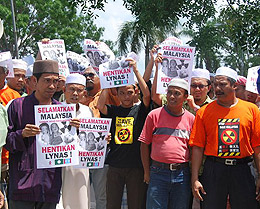 Held after Friday prayers at Masjid Al Fatah in Balok, the rally was organised by the Balok Residents’ Anti-Lynas Action Committee and lead by PAS Youth chief Nasaruddin Hassan and Pahang PAS Youth chief Suhaimi Saad.
The protesters held up banners and placards, which among others read “ Selamatkan Kuantan, Hentikan Lynas ” (Save Kuantan, Stop Lynas).
 One banner also used the 1Malaysia logo, stating
1Bantah Kilang Radioaktif (rare earth) di Gebeng
(1Protest against the Radioactive Factory (rare earth) in Gebeng).
One banner also used the 1Malaysia logo, stating
1Bantah Kilang Radioaktif (rare earth) di Gebeng
(1Protest against the Radioactive Factory (rare earth) in Gebeng).
During the protest, both Nasaruddin and Suhaimi accused Umno of allegedly adding a racial dimension to the Lynas issue.
They claimed that Umno has been going to Malay villages, allegedly telling the Malays that only the Chinese are against the Lynas project.
“Radioactivity is a universal issue,” both said during the rally.


Are you sure you want to delete this comment?
This action cannot be undone.