




MRT tender awards due next month
The first batch of tenders awarded for the Klang Valley Mass Rail Transit (MRT) project could be announced any time from the middle of June.
The first batch of tenders awarded for the Klang Valley Mass Rail Transit (MRT) project could be announced any time from the middle of June.
According to project owner Syarikat Prasarana Negara Bhd, the outcome of the first and second pre-qualification tenders will be jointly announced within a month of the deadline of the second pre-qualification exercise.
With the deadline falling on June 16, this would mean that the outcome could be known later that month or by the middle of July at the latest.
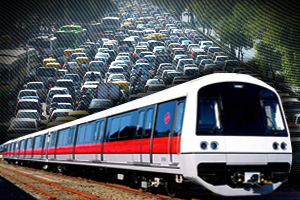 The first and the second pre-qualification exercises are for elevated civil works, stations and depot construction packages, particularly for the Sungai Buloh-Kajang line.
Prasarana Project Development division group director Zulkifli Mohd Yusoff said this at a briefing for about 200 contractors at the Petaling Jaya Civic Centre this morning.
The briefing - the second to be held - was specifically to clarify the revised pre-qualification criteria for the MRT project.
Prasarana - a wholly-owned unit of the Minister of Finance Inc - had announced last week that it had revised the criteria for the pre-qualification exercise.
At a glance, it would appear that the criteria have been relaxed, doing away with the requirement that the bidder’s company must have a paid-up capital of at least RM10 million. This would mean that even a RM2 ‘shell’ company can bid for a project.
“The paid-up capital is no longer a mandatory requirement when we evaluate the bidders, but we will still look at the financial capability of the contractors,” said Zulkifli.
After previously having forbidden companies from forming joint-ventures (JVs) and consortiums, Prasarana is now allowing up to three companies to form a JV or a consortium, provided that the lead partner represents more than 50 percent of the consortium.
Malay contractors’ groups had bemoaned the strict regulations, saying that these were a “major obstacle” and “unfair to bumiputera contractors”.
With that, the Malay Chamber of Commerce Malaysia urged the government two weeks ago to hand over the entire project to it because bumiputera companies are failing to win tenders.
But with the revised conditions, the Malay Contractors Association is optimistic that its members will be able to bid for 30 percent of the project.
When approached by reporters after the briefing, head of the central procurement department Abd Malik Azman said it has always been government policy to reserve some contracts for bumiputera companies.
Less stringent criteria
As with most other construction projects, the MRT project has less stringent criteria for bumiputera companies.
In the ‘open’ category, contractors intending to bid for jobs up to RM400 million must have a five-year annual average turnover of RM150 million and a track record of handling a building project of at least RM150 million.
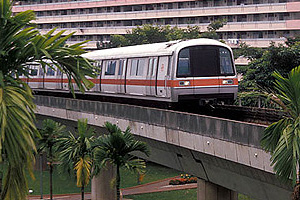 Contractors bidding for jobs more than RM400 million must have an annual turnover of RM250 million, and handling at least one building project costing more than RM200 million.
However, bumiputera contractors bidding for contract packages of more than RM250 million only need to show RM50 million as the annual average turnover, with a track record of having had a construction contract worth RM80 million.
The MRT project is the country’s most expensive infrastructure project to date, with CIMB Research estimating the cost at RM56 billion compared to the government estimate of RM36.6 billion.
Of the six work packages, the first two are underway in the form of the first and second pre-qualification exercise for elevated civil works.
The underground pre-qualification exercise will commence early next month, with the track, rail systems and rolling stock packages due in the third quarter of the year.
The MMC-Gamuda Joint Venture has been appointed as the project delivery partner and will not be allowed to bid for any contract except for the tunnelling aspect, considering its work on Kuala Lumpur’s SMART Tunnel.
The Sungai Buloh-Kajang line, the first of the three lines planned, will have an estimated length of 51km, with 9.5km of this underground. It is expected to have 35 stations and a daily ridership of 400,000 people is anticipated.


Are you sure you want to delete this comment?
This action cannot be undone.