




Australia-Malaysia asylum deal a lost cause
COMMENT The asylum deal between Australia and Malaysia is undoubtedly an attempt to tackle human trafficking and people smuggling rather than addressing the needs of asylum seekers and refugees.
While the policy will inevitably harm asylum seekers and refugees further, it is unlikely this approach would be effectively in tackling Australia's human trafficking and people smuggling problem.
A significant barrier to curbing human trafficking is the inability to verify its nature. Inaccurate data on human trafficking is linked to difficulties in differentiating human trafficking from other forms of irregular migration.
COMMENT The asylum deal between Australia and Malaysia is undoubtedly an attempt to tackle human trafficking and people smuggling rather than addressing the needs of asylum seekers and refugees.
While the policy will inevitably harm asylum seekers and refugees further, it is unlikely this approach would be effectively in tackling Australia's human trafficking and people smuggling problem.
 A significant barrier to curbing human trafficking is the inability to verify its nature. Inaccurate data on human trafficking is linked to difficulties in differentiating human trafficking from other forms of irregular migration.
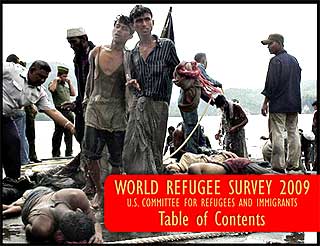
For example, the inabilities of states to distinguish between political asylum seekers and trafficked persons, as in the case of the Rohingya from Myanmar in Malaysia have led to perilous living conditions for these people.
Furthermore, anti-trafficking measures are predominantly concentrated in criminal and immigration law enforcement resulting in the ‘re-victimisation' of persons like the Rohingya, who not only suffer from their intermingled state of political and economic migration, but are consequently subjected to criminal inquiry by law enforcement agencies.
Essentially, what this complexity calls for is a broader and more nuanced study of irregular migration, so that its various composites - including refugees, trafficked persons, economic migrants - can be understood and identified.
Encouragingly, in March this year 41 Asia-Pacific countries met for a 4th Regional Ministerial Conference on People Smuggling, Trafficking in Persons and related Transnational Crime (Bali Dialogue), held in Bali.
Pie in the sky dialogue
A significant outcome of the negotiations was its emphasis on ‘managing migration' to effectively address the varying problems and needs of persons subjected to the spectrum of irregular migration: economic migrants, human trafficking, people smuggling and asylum seekers.
 The Bali dialogue indicated through its Regional Cooperation Framework 2011, that consistent assessment processes for asylum seekers be established and anti-trafficking measures developed with greater sensitivity to economic, social and political root causes of irregular migration.
Such an approach would be able to surmount the hitherto conflation of all irregular migrants as illegal or trafficked migrants.
Following the Bali Dialogue, Australia and Malaysia made an asylum deal. The deal between Australia and Malaysia is significant for South-East Asia because it is a first formal engagement of a South-East Asian country (Malaysia) in matters related to asylum seekers and refugees.
According to the UN High Commissioner for Refugees, the South-East Asian region to date has generated 100,000 refugees while the Asia - Pacific region hosts more than 3.5 million in situations of protracted displacement.
The deal is specifically intended to dampen irregular maritime arrivals into Australia, connected to tackling "human trafficking" and "human smuggling".
The use of trafficking and smuggling syndicates by asylum seekers to reach Australia is common, evidenced by events such as the Tampa Affair in 2001. According to Australian Immigration Minister Chris Bowen, most refugees heading to Australia first fly to Kuala Lumpur before starting their boat journey to Australia via Indonesia.
Shuffling of responsibilities deal
However, other asylum seekers without proper documentation utilise illegal maritime migration as their only option to reach Australia, a preferred place for asylum.
 Australia's signatory status to the Refugee Convention is a sense of assurance to asylum seekers that they will receive their due protections.
However, according to the deal, refugee status determination will be undertaken in Malaysia to thwart the business model of human smuggling/trafficking syndicates.
The prospect of being shuffled back to Malaysia ought to discourage illegal maritime migrants against making the risky journey to Australia.
Accordingly to the deal, 800 asylum seekers will be transferred to Malaysia, a non - signatory state to the Refugee Convention.
Malaysia's approach towards asylum seekers has been mainly arbitrary detention, with little progress towards their basic human rights protection and integration into society after processing.
Similarly, but as a signatory to the Refugee Convention, Australia's approach reflects little regard for the rights and protection of asylum seekers or refugees.
For example, the Refugee Convention prohibits discrimination based on the migration means of asylum seekers.
This means that despite their illegal entry, Australia has an obligation to ensure the rights of asylum seekers are protected by allowing their access to be processed in Australia.
Malaysia's image problem issue
Instead, by diverting these persons to Malaysia, where current conditions of detention/processing centers are unacceptable, Australia could be refouling asylum seekers.
As seen, the policy maintains a narrow approach of considering irregular migrants as prima facie illegal migrants, despite the fact that most irregular maritime migrants into Australia are eventually given refugee protection.
 Therefore, the Bali Dialogue has been unsuccessful in propelling states towards a greater sensitization towards asylum seekers and refugees.
If frameworks and structures under the asylum deal have not been developed to improve conditions to respond to the needs of asylum seekers and refugees, it is unlikely the trend of irregular maritime migration will cease.
In ongoing debates concerning the asylum deal, calls for Malaysia to ratify the Refugee Convention as a prerequisite to the asylum deal have been prominent.
Undoubtedly, ratification by Malaysia will create access for refugees to employment, welfare and legal services, as guaranteed by the Refugee Convention.
However, ratification of the Convention does not entail a guarantee that states will fulfill their commitments.
For example, despite its signatory status, Australia maintains a questionable culture of detaining asylum seekers through its indefinite detention policy.
This policy's violations of international human rights law is encapsulated by The Refugee Council of Australia.
If such approaches to the Refugee Convention are not addressed, similar future regional asylum deals would encourage a lower standard among states towards the fulfilment of their obligations.
Overall, the Australian - Malaysian asylum deal concentrated on treating asylum seekers as prima facie illegal maritime migrants overshadows states' commitments at the Bali Dialogue to broaden their conception of and response to irregular migrants.
MANPAVAN JOTH KAUR is a research analyst with the Internal and Cross-Border Conflicts Programme of the Centre for Non-Traditional Security (NTS) Studies, at the S Rajaratnam School of International Studies (RSIS), Nanyang Technological University.


Are you sure you want to delete this comment?
This action cannot be undone.