




M'sia committed to independent judiciary - PM
Prime Minister Najib Abdul Razak said today that Malaysia is committed to safeguarding and ensuring the continued independence of the judiciary.
Prime Minister Najib Abdul Razak said today that Malaysia is committed to safeguarding and ensuring the continued independence of the judiciary.
 He said an independent judiciary was a central component of democracy, and one of the most important reasons for national achievement.
"Safeguarding and ensuring the continued independence of the judiciary is an ideal that Malaysia is wholly committed to. It must be said that the Malaysian judiciary has experienced a fair measure since Merdeka (independence).
"The first three decades after independence were relatively free from turbulence, but the late 1980s saw turbulent changes and controversy, which attracted considerable public criticism and speculation.
"The erosion of public confidence in the judiciary was recognised and
measures were expressly taken to fortify the safeguards of judicial independence," he said at the opening of the Commonwealth Magistrates' and Judges' Conference 2011 (CMJA) in Kuala Lumpur.
The text of the prime minister's speech was read out by Minister in the Prime Minister's Department Mohamed Nazri Abdul Aziz. Also present at the conference was Chief Justice Zaki Azmi.
Najib also said that the judicial accountability would go a long way towards establishing confidence in the system and the judges.
'Judiciary must meet citizens' needs'
"The common purpose was to enhance and strengthen the administration of justice and access to justice. Enhancing and encouraging continuing development of judicial skills so as to enhance judicial performance, as well as introducing a diverse range of initiatives to promote and facilitate a transparent, efficient and expeditious delivery system achieved this.
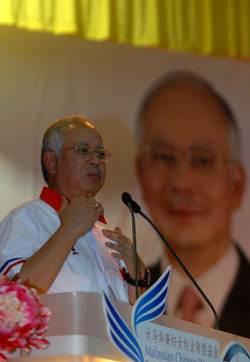 "Strengthening the judiciary as an institution is a continuously evolving process. In Malaysia, a pluralist society, it is critical that the court meets the needs of its citizenry, by improving and increasing access to justice.
"We have heralded a comprehensive list of reforms that have drastically improved the efficiency of the Malaysian court.
"The future of judicial reform is important to ensure the country's continued economic growth and to protect the civil liberties and freedom of its diverse, multi-ethnic and multi-religious population.
"I trust that this forum will provide an amenable environment for inter-judicial dialogue with an eye to exchanging views, experiences and ideas on how pluralism can subsist and operate within our jurisdictions without giving rise to considerable conflict.
"In short, how to build a positive and constructive approach to pluralism for the future. Perhaps a common approach may be fashioned, if not a common remedy," he said.
The aim of this conference is to promote a better understanding among judicial officers of all ranks and from all parts of the Commonwealth on diverse issues, to explore various approaches to those issues in different parts of the Commonwealth, to maintain the rule of law throughout the Commonwealth and to serve the people of the Commonwealth.
The subjects for deliberation include current trends in the areas of
Alternate Dispute Resolution, Corporate and Commercial Law, Human Rights, Legal and Judicial Ethics, Family Law, Judicial Independence & Accountability and other contemporary legal topics, which will be addressed by some of the finest judicial minds in the world.
A total of 320 participants from 32 countries are taking part in the
four-day conference.
- Bernama


