




Youth seeking change become polls wild card
ANALYSIS Rising prices and the glacial pace of government reforms are dictating the battle for Malaysian votes as a young middle class demanding greater democracy emerges as the wild card in the next general election.
The battle lines for support have traditionally been drawn along ethnic and urban-rural divides, but youth is become a growing force as reflected in a rare anti-government street protest this month calling for electoral reform.
The rally in downtown Kuala Lumpur on July 9 drew more than 10,000 people, a significant number in a country which has seen no more than a handful of protests in the last decade. Many who turned out were under 40, underscoring one of Prime Minister Najib Abdul Razak’s biggest challenges ahead...
ANALYSIS Rising prices and the glacial pace of government reforms are dictating the battle for Malaysian votes as a young middle class demanding greater democracy emerges as the wild card in the next general election.
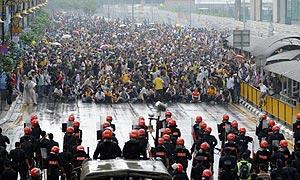 The battle lines for support have traditionally been drawn along ethnic and urban-rural divides, but youth is become a growing force as reflected in a rare anti-government street protest this month calling for electoral reform.
The rally in downtown Kuala Lumpur on July 9 drew more than 10,000 people, a significant number in a country which has seen no more than a handful of protests in the last decade. Many who turned out were under 40, underscoring one of Prime Minister Najib Abdul Razak’s biggest challenges ahead.
 “If this group turns up to vote and are riled up, it will prevent the ruling coalition from getting back its two-thirds majority in parliament which it lost to the opposition in 2008,” said Ibrahim Suffian, director of the independent opinion polling outfit Merdeka Centre.
Najib, who came to power in 2009, does not have to call a general election until 2013 but it could happen as soon as next year as the government seeks a mandate to introduce investor-friendly reforms.
In order to win over the young voters, who make up just under half of the population of 28 million, Najib has to address the rising cost of living and move faster on reforms such as giving a greater voice to dissenting views, simplifying the voting process and reviewing the policy of detention without trial.
Prices up, wages stagnant
For these voters who were born after the country’s worst racial riots in 1969 overhauled the country’s economic landscape, the security of jobs and limited freedom of expression are no longer enough.
Malaysia's average annual per capita income is about US$7,000 (RM21,000), compared with over US$40,000 (RM120,000) in neighbouring Singapore and consumers argue that wage increases have not kept pace with the rise in the cost of living.
As the impact of global food and fuel inflation filter through to the economy, the government has cut back on some subsidies and increased the price of staples such as sugar, electricity and diesel for some commercial users.
Annual inflation raced to a 26-month high of 3.3 percent in May and economists expect it to rise further in the coming months.
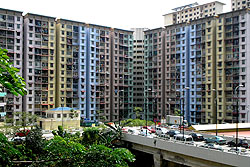 The government has tried to soften the blow by making available to the needy affordable housing and cheaper daily necessities. In June, the authorities opened the first of a chain of government-run discount grocery stores.
Najib has also launched a campaign to offer 42,000 houses in the capital to Malaysians who earn less than US$2,000 (RM6,000) a month and job placements for fresh graduates in government-linked companies.
Some analysts say urban voters’ unhappiness over the slow pace of political and social reforms could pose a trickier problem.
The crowd of protesters on July 9 wanted changes in the voting process but analysts say the anger only touches the surface of issues in a country where authorities are worried that street protests and a proliferation of alternative views could unseat the government.
Police fired repeated rounds of tear gas and briefly detained more than 1,600 people as thousands of activists evaded roadblocks and barbed wire barricades.
Independent news websites
Over the years, independent news websites have been allowed to provide often anti-government views although analysts say traditional mainstream media offering the government’s ideas remain the staple of many Malaysians who have no access to alternatives.
 Young voters are increasingly critical of what they see as editorialising in state-controlled newspapers and the government’s heavy censoring of reports that find fault with its policies.
This was especially evident after the July 9 rally, when the authorities downplayed the number of protesters and slammed international criticism of their handling of the event.
“We are not dumb. We read, we learn, we conclude and most of us experienced it head on, face to face,” f0ul99 tweeted, referring to the government’s slant of the rally’s events.
Najib has promised to review laws to allow greater freedom of expression but critics say there has been no discernable progress.
Brokerage and investment group CLSA in a research note on July 11 cited a longer-term concern in light of growing calls for democracy in neighbouring Thailand and Singapore, which both held elections this year.
“The administration has to move faster on electoral reforms, as recent events in the region imply a strong momentum for true democracy, where voters’ opinions are clearly and fairly reflected in the polls,” it said.
- Reuters


Are you sure you want to delete this comment?
This action cannot be undone.