




Australia-Malaysia refugee swap could grow
Australia may expand its unique refugee swap deal with Malaysia, with Immigration Minister Chris Bowen saying the nations saw the controversial agreement as a "pilot project".
Bowen and Malaysian Home Affairs Minister Hishammuddin Hussein yesterday signed a deal under which up to 800 boat people will be sent to the Asian country from Australia, which, in return, will resettle 4,000 refugees processed by Kuala Lumpur.
Australia may expand its unique refugee swap deal with Malaysia, with Immigration Minister Chris Bowen saying the nations saw the controversial agreement as a "pilot project".
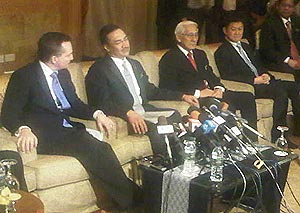 Bowen and Malaysian Home Affairs Minister Hishammuddin Hussein yesterday signed a deal under which up to 800 boat people will be sent to the Asian country from Australia, which, in return, will resettle 4,000 refugees processed by Kuala Lumpur.
"My Malaysian counterpart, Mr Hishammuddin, has made it clear he regards this as a pilot project, and if it works and is successful, then they will examine potential extensions," Bowen told ABC television late yesterday.
 "And that is completely consistent with my point of view."
The Australian minister, who was speaking from Kuala Lumpur, said the cost of the arrangement could also rise from the forecast of about A$292 million (US$316.5 million) over four years.
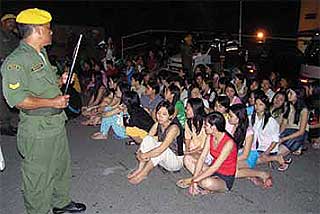
Australia has agreed to pay for the basic health care and education of the children of the 800 asylum seekers sent to Malaysia, where they will join some 90,000 registered refugees already in that country.
Unlike other refugees, they will be permitted to work to support themselves.
"We've said we would continue to fund appropriate services and support for people until they're resettled out of Malaysia," Bowen said. "That may extend beyond the forward estimates."
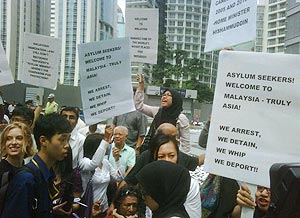 Refugee activists have attacked the deal, accusing Australia of dodging its duties to boat people and ignoring their human rights by sending them to Malaysia, which is not a signatory to the United Nations convention on refugees.
But as it struggles to prevent the wave of rickety, wooden fishing boats carrying asylum seekers from arriving in Australia, Canberra hopes the new arrangement will deter refugees from making the dangerous boat journey.
"I'm confident it will have a big impact on people's decision to risk their lives, jump on a boat, pay the money to the people smugglers just to face the prospect of being returned to Malaysia," Bowen said today.


Are you sure you want to delete this comment?
This action cannot be undone.