




'Vested political interests' blocking reform
Najib Abdul Razak will need to garner a convincing victory for himself in the next Umno elections as well as for BN in the 13th general election, if he is to dismantle barriers to reform.
Najib Abdul Razak will need to garner a convincing victory for himself in the next Umno elections as well as for BN in the 13th general election, if he is to dismantle barriers to reform.
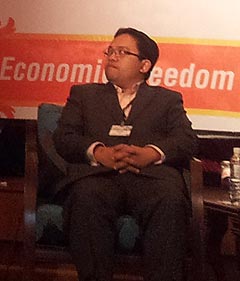 Unless this happens, said Institute of Democracy and Economic Affairs (Ideas) chief executive Wan Saiful Wan Jan
(right)
, politically-linked vested interests will continue to block such efforts.
Unless this happens, said Institute of Democracy and Economic Affairs (Ideas) chief executive Wan Saiful Wan Jan
(right)
, politically-linked vested interests will continue to block such efforts.
"It needs to happen. We cannot deny the political realities," Wan Saiful told reporters, adding that before this happens, reform initiatives can only be "moderate" in their extent.
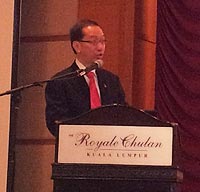
While launching the Economic Freedom of the World 2011 Report earlier today, Minister in the Prime Minister's Department Koh Tsu Koon had said that dealing with such "vested interests" was a challenge in the push toward economic liberalisation.
"We face many challenges... the obstacles in liberalising is fighting vested interests, for example in moving more and more to open tender (in government procurement exercises)," he said at the event held in Kuala Lumpur.
Commenting on the drop in Malaysia’s ranking, the minister said the index was a "good benchmark" to measure the efficacy of the government's recent transformation agenda.
"This report is based on data in 2009, so it would not have included efforts in transformation and reform instituted in mid-2009, after Najib took over leadership in government," he said.
Improvements expected
Koh said he expected the performance to improve next year, particularly in the area of size of government, following the divestment policy of the GLCs.
 "We are confident that liberalisation will lead to improvement, or else something is wrong with your figures," he said tongue in cheek.
Koh said the government is prepared to work with the Fraser Institute and its local partners, Ideas and the Centre for Public Policy Studies (CPPS), to improve on the ranking as it wants to "look at the hard facts of life".
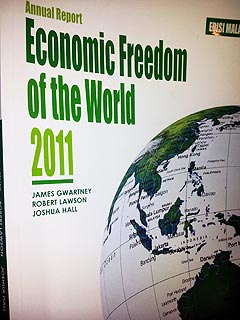
In the foreword to the Malaysian edition (below) of the report, the three authors said the 2011 index was a "barometer" for Najib's New Economic Model.
 "All the improvements and reductions seen in this year's index are due to the efforts of previous (premier) Abdullah Ahmad Badawi,” they said.
"This makes the 2011 index an important one for Malaysia...and can be used as a benchmark to measure the efficacy of Najib's efforts to make the ... economy more competitive.”
They also believe the government is making headway in improving its ranking especially in the size of government category, through cuts in subsidies.
The foreword was written by Wan Saiful; Freidrich Naumaann Foundation for Freedom project director for Malaysia, Myanmar and Cambodia Moritz Kleine-Brockhoff; and CPPS director Ng Yeen Seen.
The 2011 report, published by the Fraser Institute, was written by by James Gwartney, Robert Lawson and Joshua Hall with Jean-Pierre Chauffour and Michael D Stroup.
Related stories
Slap for M'sia in economic freedom index


