




Burmese detainee swap will tar nation's reputation
The government's plan to repatriate Burmese detainees will further hurt Malaysia's human rights record, warned rights watchdog Suaram.
The government's plan to repatriate Burmese detainees will further hurt Malaysia's human rights record, warned rights watchdog Suaram.
Suaram refugee coordinator Andika Ab Wahab said the plan would be seen as a move to legitimise Burma's junta government, which has been consistently accused of human rights violations.
"By arranging a bilateral arrangement with the Burmese government, the Malaysian government is giving greater recognition to this undemocratic and tyrannical regime," he said.
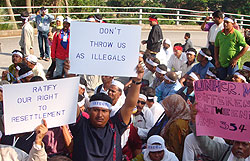 Andika said Malaysia, as a founder member of the Association of Southeast Asian Nations (Asean) and a member of the United Nations of Human Rights Council (UNHRC), should rightfully be setting an example, instead of repatriating the detainees and potentially endangering their lives.
He explained that the internal strife caused by the Burmese junta have forced thousands of civilians from, mostly ethnic minorities, to flee the country and seek international protection.
There has also been records of dissidents and ethnic minorities, including women and children, being systematically prosecuted and forced into slave labour.
Because of this, Andika argued that Malaysia is likely to be hosting mostly bona fide refugees.
"By returning these detainees (refugees) to country or places where they may face persecution or threats to their life, Malaysia is in breach of international customary law of non-refoulement which prohibits the return of people to places where they may face persecution or threats to their life or freedom," he said.
Hisham: Burma deal shows we're okay
Malaysia is not a signatory to 1951 Convention relating to the Status of Refugees which governs the definition and rights of refugees, along with legal obligations of signatories.
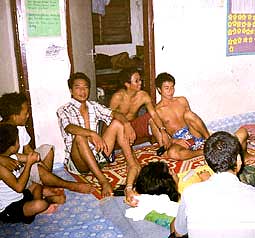 Home Minister Hishammuddin Hussein met Burmese deputy foreign minister U Maung Myint in Parliament on Monday to discuss a detainee exchange deal.
Details will be discussed from next week onwards. It is uncertain how many detainees would be involved in the deal.
"If we can carry out such an exchange with Myanmar (Burma), I don't see why we can't do the same with other countries," Hishammuddin said.
This is the second attempt at a detainee swap deal following the failed Australia-Malaysia deal.
Australian courts had blocked the country from sending refugees to Malaysia because the latter did not have the necessary legislative safeguards for refugees.


Are you sure you want to delete this comment?
This action cannot be undone.