




Dr M: Islamic banking no panacea to global woes
The Islamic banking system is not a “one-size-fits-all” cure to the woes of the current global financial crisis, said former prime minister Dr Mahathir Mohamad.
The Islamic banking system is not a “one-size-fits-all” cure to the woes of the current global financial crisis, said former prime minister Dr Mahathir Mohamad.
“There is not enough evidence to show that Islamic banking is a better option than conventional banking,” he told the audience at the Global Movement of Moderates conference dinner in Kuala Lumpur last night.
However, he observed that economies like Greece and Italy which are suffering from financial troubles, do practise conventional banking.
Using Malaysia as a counter example, he mentioned that the nation operates a dual banking system, practising both Islamic and conventional banking.
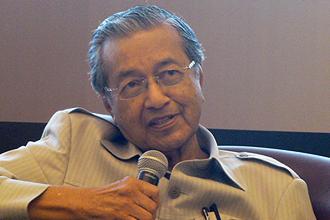 Mahathir
(left)
said that with this dual-track banking system, Malaysia does seem to be faring slightly better than those countries with troubled economies.
Mahathir
(left)
said that with this dual-track banking system, Malaysia does seem to be faring slightly better than those countries with troubled economies.
He admitted though, that as a trading nation connected to global commerce, the country would still be affected when its trading partners felt the economic pinch.
As such, the former premier believes that the practice of Islamic finance or elements of it in tandem with more conservative conventional banking, may help countries resist the global financial crunch.
Mahathir was responding to a question whether Islamic banking would provide a viable alternative to the current global financial system, as its asset-based approach is inherently resilient to over speculation, which he himself had pointed out as one of current weaknesses of the interconnected global economy.
Mixed response to gold dinar
Asked on the viability of returning to the Islamic currency of gold dinar as a world currency, Mahathir’s response was somewhat mixed.
On the one hand, he agreed that a currency backed by gold or of gold like the dinar was a better currency for international trade as its stable value would help regulate trade between nations, a return to an almost semi-barter trade, free from speculative interference of the financial markets and based on exchange of actual assets.
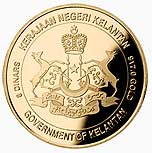 However, he added that it would not be practical to use gold as domestic currency as people are prone to hoarding the precious metal instead of spending it, making an oblique reference to Kelantan’s experiment with this method of exchange.
“There was one state in Malaysia that decided to issue dinar gold coins. But they found that people kept them instead of spending it. So the government had to find more gold to mint more coins,” related Mahathir.
He maintained that the answer domestically, and even for international trade, may not be actual gold as currency, but gold-backed currency, as this would ensure stability and make sure currencies have real value.
In this regard, he issued a challenge to the global movement that the time has come to return to the previous Gold Standard mooted during the historic Breton Woods Conference, as this was a marginally better system then the present financial model which has “failed us”.
“In Malay there is a saying, when you get lost, return to the beginning,” Mahathir offered.
He said that the major problems faced by the world economy today was the result of nations abandoning the Gold Standard and allowing currency speculation and financial instruments to run riot.
To remedy this, Mahathir advocated a return to pegging the value of currencies to gold.
He also recommended that curbs be placed on the movement, trading and speculation of currencies as well as on over-leveraging of financial instruments.
The final ingredient in his remedy was for the government to make a return to supervising trade and not leaving all to the market alone.


Are you sure you want to delete this comment?
This action cannot be undone.