




What, why and how of 1Care
Lately, a lot has been said about revamping the country's healthcare system, arguably one of the most of complex issues.
With healthcare expenses steadily rising annually and bogged down by an ailing system, the Health Ministry is advocating the need for introducing a social healthcare insurance scheme to ease the state's finite resources and the necessity for all stakeholders to share the escalating costs.
Lately, a lot has been said about revamping the country's healthcare system, arguably one of the most of complex issues.
With healthcare expenses steadily rising annually, the Health Ministry is advocating the need for introducing a social healthcare insurance scheme to ease the state's finite resources and the necessity for all stakeholders to share the escalating costs.
Malaysia's total health expenditure for 2009 was roughly RM33.7 billion, a discernible rise from RM31.87 billion in 2008, according to the World Health Organisation's (WHO) National Health Accounts.
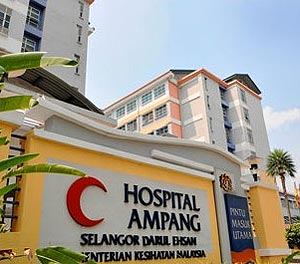 And, the Economic Intelligence Unit (EIU)'s 2011 report has it that the private sector is shouldering 50 percent of the total healthcare expenditure now compared with 24 percent in 1985.
Although the issue has been bandied about for the past three decades, apprehension over the sustainability of the proposal remains as deep as ever.
Despite the anxiety, the government dug up the reform proposal again, this time with the "1Care for 1Malaysia" label, to lessen the government's financial burden while, ostensibly, ensuring that social justice is served.
Scheme under critical scrutiny
Critics have placed the state's every move under the microscope since such a scheme was first proposed in the early 1980s, stressing that it is the government's responsibility.
The opponents, from medical practitioners, consumers groups to members of the public, claimed that the levy deducted from the household income could be as much as 10 percent.
They also argued that the scheme offers much less in terms of services such as a patient visits to the doctor capped at six times a year and primary healthcare providers made to meet key performance indicators (KPIs) and be subject to penalties.
- What is 1Care?
It is an initiative to improve access to health services, meet the growing expectations of healthcare and raise the standards of health institutions across the country with minimal, or no cost at all to the people.
Although details of the levy deductions are yet to be finalised, critics have hit out at the move, arguing that the existing two-tier system is all-inclusive and only needs improvement, provided the government pumps in more into healthcare than the current allocation of a little more than two percent of the GDP.
- Who will fund 1Care?
For starters, it would require every individual to contribute a certain percentage of his or her household income.
It is proposed that the pool of funds channelled into a national healthcare financing authority, would also bolstered by contributions from employers, similar to the compulsory deductions under 1951 Employment Provident Fund (EPF) and 1969 Social Security Act (Socso), and the government.
The government will be expected to contribute to the premiums of government pensioners, civil servants and dependants. As for the underprivileged, there will a "safety net".
- When did 1Care start?
It was proposed in the Fourth Malaysia Plan (1981-1985) as a social health insurance scheme, the blueprint had since been revived and repackaged as 1Care under Prime Minister Najib Abdul Razak in 2010.
- How will work?
Under the current system, patients have the choice of seeking treatment at either private clinics or hospitals and pay out of their own pockets, or opt for public clinics or hospitals instead, where they are charged a nominal fee for basic, government-subsidised healthcare.
Among other more technical reforms, the ministry has proposed registering patients with a primary healthcare provider (PHCP), with functions similar to a family doctor's, and who would act as the first point of contact for medical care.
Access to secondary and tertiary healthcare, such as specialised services, under the new scheme, would require the PHCP's referral.
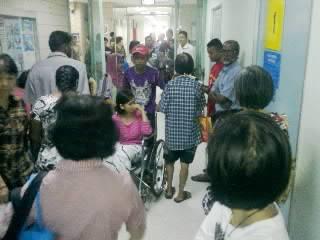 Not all medical expenses will be covered, only those in a list of basic medication they are entitled to. For anything outside that, they will have to cough out more.
Health director-general Dr Hasan Abdul Rahman had, however, affirmed that they have yet to identify what "basic" would involve as anything pertinent to one's survival is also considered basic.
- Why do we need 1Care?
All three major stakeholders will be chipping in to the fund in the effort for better access to higher quality healthcare in the public and private sectors.
Those wanting to opt out of the system would have to pay out-of-pocket or through their private health insurance.
By choosing that alternative, the need to buy and pay hefty premiums for private medical insurance, will be no longer be desirable, as all across the socio-economic strata would be accorded "equal quality care".
However, despite all the reassurance that Malaysia needs to move forward or risk having to deal with costly health services, the ministry's experts have also pointed out underlying challenges.
Some of the primary issues still bugging them are determining the accurate cost of the entire initiative, the financial risk involved and the potential for social healthcare insurance funds abuse.


Are you sure you want to delete this comment?
This action cannot be undone.